
Agrinas Palma maps one million hectares for bioethanol feedstock as Indonesia prepares for E20
By Sirkularium Editorial Team, 8 min read
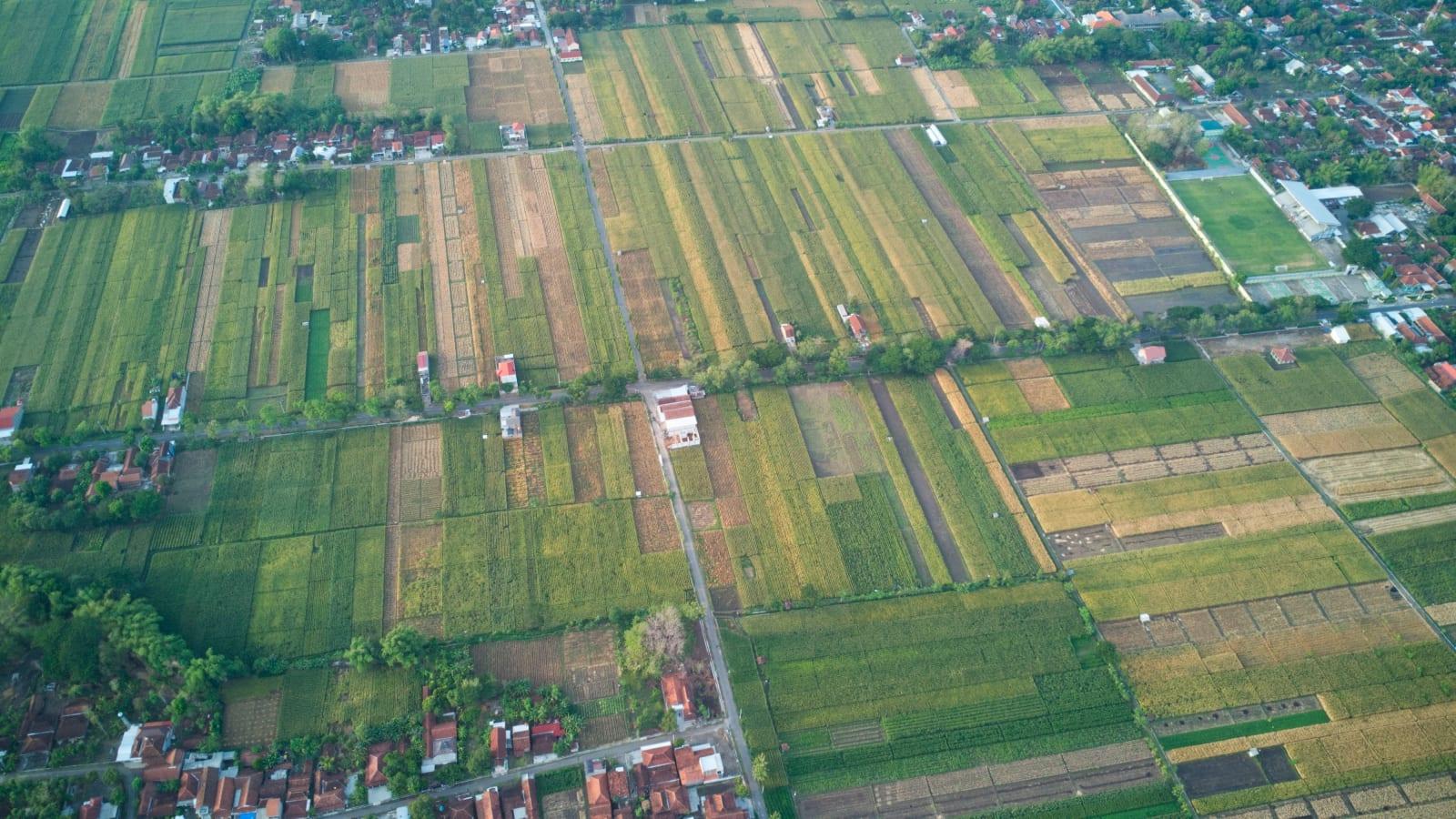
State plantation company Agrinas Palma Nusantara said on 8 October that it has mapped one million hectares dedicated to corn, sorghum and cassava for bioethanol, with a potential output of about 5 million kilolitres a year toward the 20 percent ethanol blend in gasoline. The plan moves the E20 conversation from blending targets to the farms, plants and permits that will supply it.
Indonesia's plan to blend 20 percent bioethanol into gasoline has a new answer to its biggest question, which is where the feedstock will come from. On Thursday 8 October 2026, at Menara Agrinas Palma in South Jakarta, the President Director of state plantation company PT Agrinas Palma Nusantara (Persero), Mohammad Abdul Ghani, said the company has mapped one million hectares of land dedicated specifically to bioethanol crops. According to detikFinance, he put the potential output at about 5 million kilolitres a year, set against a national requirement he estimated at 7.5 million kilolitres for the E20 programme.
The announcement follows a week of related activity. On 3 October, Agrinas Palma and the Faculty of Agriculture at IPB University held a focus group discussion in Bogor that produced a multifeedstock roadmap and eight shared directions for the industry. On 6 October, speaking at the Indonesia International Sustainability Forum in Jakarta, Coordinating Minister for Food Zulkifli Hasan said Indonesia aims to expand biofuel use, including E20 gasoline, within five years. Together, these steps show the E20 agenda moving from a blending target toward the farms, plants and permits that will have to supply it.
What Agrinas announced in Jakarta
Agrinas Palma currently manages more than 4 million hectares of plantation land placed under its care following the work of the Forest Area Enforcement Task Force (Satgas PKH). Of that portfolio, one million hectares have been mapped for bioethanol. Three crops are under consideration: corn, sorghum and cassava. Initial mapping covers parts of Sumatra and Kalimantan, and the company said soil and climate testing is still needed before it chooses which crop goes where.
Ghani was direct about the commercial case. He told reporters that the company's business and investment analysis found all three commodities feasible, with an internal rate of return above 15 percent. He also said the programme may not require funding from the state budget, provided licensing is simplified, and that it could create up to one million jobs.
"From our business and investment analysis, those three commodities are very feasible, with an IRR above 15." Mohammad Abdul Ghani, President Director, Agrinas Palma Nusantara, 8 October 2026
The company has signed a memorandum of understanding with PT Pertamina (Persero) covering the bioethanol industry from upstream to downstream, and Ghani said domestic and foreign private companies have also expressed interest. Trial planting is planned in East Kalimantan with IPB University and Mulawarman University.
One administrative step remains in front of the plan. Most of the land is still designated as forest area, and Agrinas has applied for a KHKP permit, the designation for forest areas used for food security (Kawasan Hutan untuk Ketahanan Pangan). Clarifying this status is a natural next milestone for the programme.
A roadmap shaped by agronomists
The Bogor forum on 3 October gave the plan its structure. Reports from RMOL, Kompas Lestari and IDXChannel describe a roadmap that targets up to one million hectares of cassava, sorghum and corn by 2029, with bioethanol production capacity of at least 5 million kilolitres a year. Ghani said in a written statement that the target must rest on feedstock certainty, land suitability, productivity, technology, economics and community participation, which is why a multifeedstock approach and upstream to downstream integration matter.
The forum was attended by IPB University Vice Rector I Deni Noviana, Dean of the Faculty of Agriculture Suryo Wiyono, and Dwi Susanto, Managing Director of Technology Advancement at Danantara. Its eight agreed directions read like a design brief for a new agro industry:
- Bioethanol is a national strategic agenda to reduce energy imports and support Net Zero Emission 2060.
- Supply sustainability, covering quantity, quality, continuity, variety and harvest timing, is the key variable.
- Bioethanol production should be kept separate from food supply to avoid price competition.
- Crop and location suitability must be validated through field trials.
- Industrial design should treat on farm and off farm activity as a single value chain.
- Industrial zones should build their own supporting technology, including enzymes.
- Bioethanol should become competitive without relying on subsidies.
- IPB is ready to follow up with an integrated feasibility study and field assistance.
A community partnership scheme, under which around 10 to 20 percent of production would involve surrounding communities, was also discussed as one option. The Dean summed up the mood of the forum in a short phrase reported by RMOL: success lies in the details.
Sizing the E20 supply gap
Estimates of how much bioethanol E20 will need vary, and the differences are worth stating plainly. In June 2026, The Jakarta Post reported a requirement of about 4 million kilolitres a year for the 2028 mandate. In April, Pertamina New and Renewable Energy put the figure at 3 million to 5 million kilolitres. The Bogor forum used about 7 million kilolitres, and Ghani cited 7.5 million kilolitres on 8 October. The range most likely reflects different assumptions about how much of the national gasoline market the blend will cover and over what timeframe. The Jakarta Post put national gasoline demand at about 40 million kilolitres a year, of which domestic refineries supply about 14.3 million.
Whichever estimate is used, a 5 million kilolitre contribution from a single programme would be substantial. Under the lower estimate it would cover the whole requirement. Under the higher estimates it would cover roughly two thirds, leaving room for the other projects already in motion. Today, the most visible bioethanol fuel in the market is Pertamax Green 95, an E5 blend that Kompas notes is sold only in Jakarta and Surabaya.
Every estimate of E20 demand runs into millions of kilolitres a year. A target of that size is met by farms, logistics and processing plants working as one system, not by any single facility.
Building the value chain around the farm
Agrinas is not starting from zero. On 29 July 2026, detikFinance reported that Agrinas Palma and Pertamina Power Indonesia, led by its President Director John Anis, agreed to strengthen biofuel cooperation under Presidential Instruction No. 2 of 2026. That arrangement identified about 33,000 hectares of cassava land in Kembang Janggut, Kutai Kartanegara, East Kalimantan, to supply a bioethanol plant of up to 300 kilolitres a day. The site sits about 6.5 kilometres from a jetty with river access for barges of up to 5,000 tonnes. The same agreement covered reactivating the biodiesel facility of PT Bayas Biofuels.
Other pieces of the national supply chain are also forming. In April, Kontan reported that Pertamina New and Renewable Energy signed agreements with PTPN III and Medco to revitalise a bioethanol plant in Lampung using multiple feedstocks including cassava, to build a new plant in Bone, South Sulawesi, using cassava, corn and sugarcane, and to develop molasses based production integrated with the national sugar industry through PT Sinergi Gula Nusantara. At the Presidential Palace on 16 September, according to Katadata, the President asked the Minister of Agriculture to prepare 2 million hectares of existing sugarcane land for E20 bioethanol and directed Danantara to prepare the industry.
Agrinas adds a non sugarcane pathway to this picture. Corn, sorghum and cassava have different growing cycles and regional suitability, so a mix of crops can spread harvest timing across the year, which supports the continuity of supply that the Bogor forum placed at the centre of its directions.
Sirkularium's view
The Agrinas announcement is constructive because it addresses the part of the E20 programme that usually takes longest: securing reliable feedstock at scale. Pairing a land bank with university agronomy, a national offtaker and an explicit commitment to field trials before full commitment is a sound sequence. The decision to keep bioethanol separate from food supply is also an important principle that protects public support for the programme.
For government and public institutions, four areas deserve attention. First, a single, published national estimate of E20 bioethanol demand, with its assumptions, would help investors size plants and help regions plan land use with confidence. Second, a timely resolution of the KHKP permit, together with clear sustainability criteria for converting forest designated land to energy crops, would give Agrinas and its partners the regulatory certainty they need and strengthen the programme's credibility with international buyers. Third, the efficiency of the processing plants matters as much as the size of the planted area. Distilleries are energy intensive, and residues such as cassava pulp and stillage can be converted into biogas and process heat, reducing the energy needed per kilolitre and improving the lifecycle emissions profile of the fuel. Designing these circular loops into plants from the start costs far less than retrofitting them later. Fourth, the proposed community partnership scheme of 10 to 20 percent of production can anchor local support, and regional governments in Sumatra and Kalimantan are well placed to help design it.
What to watch next: results of the East Kalimantan trial planting with IPB University and Mulawarman University, the outcome of the KHKP application, the feasibility study IPB has offered to prepare, and how Agrinas, Pertamina and Danantara divide roles between farming, processing and offtake. Sirkularium sees the shift from blending targets to integrated agro industrial planning as the right direction, and stands ready to support public institutions in designing feedstock, efficiency and circularity standards that will let Indonesia's bioethanol industry grow on firm foundations.
Annual bioethanol volumes in the E20 discussion
Values in million kL
Sources
- detikFinance, Agrinas prepares 1 million hectares of land for bioethanol production (8 Oct 2026)
- Kompas Lestari, Agrinas Palma and IPB University develop bioethanol from cassava, sorghum and corn (5 Oct 2026)
- RMOL, Agrinas Palma partners with IPB University to develop the bioethanol industry (4 Oct 2026)
- IDXChannel via RCTI+, Supporting E20, Agrinas Palma and IPB develop multifeedstock bioethanol (4 Oct 2026)
- Katadata, Coordinating Minister for Food targets E20 implementation within five years (6 Oct 2026)
- detikFinance, Agrinas and Pertamina develop cassava based fuel (29 Jul 2026)
- Kontan, Pertamina partners with PTPN and Medco to boost E20 bioethanol production by 2028 (28 Apr 2026)
- The Jakarta Post, Indonesia needs 4 million kilolitres of ethanol for E20 biofuel push (29 Jun 2026)