Banjarmasin's saltwater season shows the value of a raw water reserve
By Sirkularium Editorial Team, 8 min read
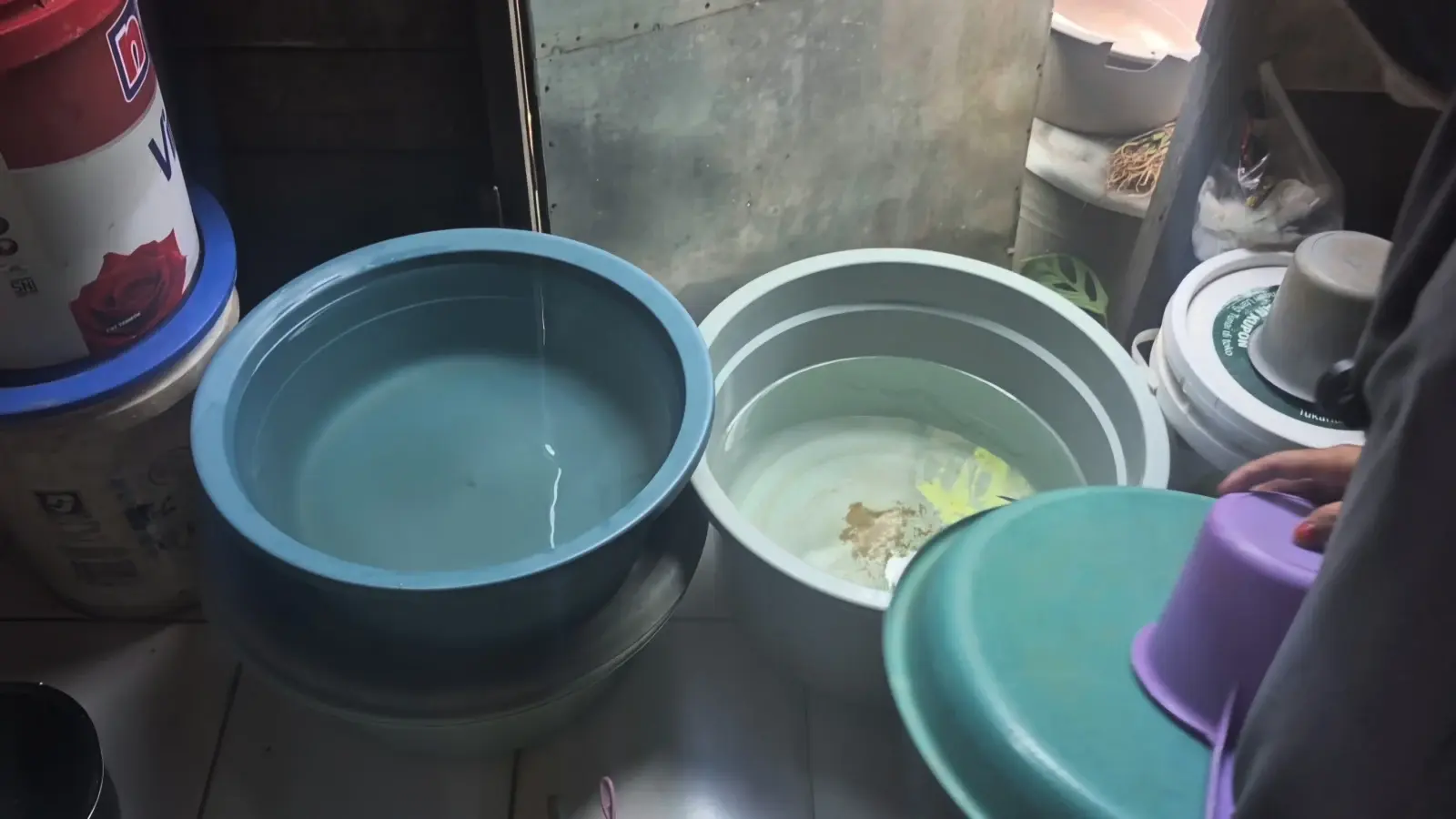
Drought and seawater intrusion cut Banjarmasin's raw water supply by about 30 percent in September. As fresh water returns to the network, the city is putting forward a 1.1 million cubic metre reservoir, and the numbers show why raw water storage is worth treating as an asset.
Banjarmasin is coming through a difficult month for its water supply, and it is coming through with a clearer idea of what the city needs next. A long dry season lowered river flows, seawater pushed up the Martapura River, and the salt reached the intake that feeds one of the city's two main treatment plants. By the end of September, the raw water available for treatment had fallen by about 30 percent.
The response is now shifting from emergency to planning. On 27 September, the regional water utility PT Air Minum (PAM) Bandarmasih reported that raw water conditions had improved enough to stop distributing saline water. On 29 September, Mayor H. Muhammad Yamin HR inspected the treatment facilities with Banjarmasin Police Chief Kombes Pol Riza Muttaqin and PAM Bandarmasih Director Zulbadi, and put forward a reservoir of about 1.1 million cubic metres as a long term reserve. The episode offers a useful case in how a city can put a value on raw water storage.
How the salt reached the taps
Banjarmasin draws raw water from two main sources. Treatment plant IPA 1 in the Sungai Bilu area takes water from the Martapura River and has a capacity of 600 litres per second. IPA 2 in the Pramuka area draws from the Tabuk River, around 11 kilometres away, with a capacity of 1,750 litres per second. Irrigation channels normally add a third source, but in September they were not functioning because of the drought.
As river flows dropped, tidal seawater moved further inland. Berita Borneo reported salt levels at the Sungai Bilu intake reaching 8,000 milligrams per litre on 10 September, well beyond what the treatment process can handle. PAM Bandarmasih supervisor Murjani explained at the time that water with that level of salt could not be processed. The utility reported that its clean water production capacity had fallen by more than half, and more than 150,000 customers across the city were affected.
From 22 September, the utility moved to an emergency distribution arrangement. In the whole of Banjarmasin Barat and in parts of Banjarmasin Tengah and Banjarmasin Utara, piped water was supplied for bathing, washing, and sanitation only, not for drinking or cooking. Jejakrekam reported that around 70 percent of residents surveyed in the three districts agreed to the scheme, which kept water flowing for household sanitation while drinking water came from other sources.
The water balance in numbers
The most useful single figure is the hourly balance. PAM Bandarmasih told Kalimantan Post that normal operations need 7,500 cubic metres of water per hour, while 5,600 cubic metres per hour were available, leaving a shortfall of 1,900 cubic metres per hour.
The issue is not the capacity of the treatment plants. It is the raw water available to them. Mayor H. Muhammad Yamin HR, Banjarmasin
The plant figures support the mayor's point. Converted to hourly terms, IPA 1 at 600 litres per second can treat about 2,160 cubic metres per hour, and IPA 2 at 1,750 litres per second about 6,300 cubic metres per hour. Together that is roughly 8,460 cubic metres per hour of treatment capacity, comfortably above the 7,500 cubic metre requirement. The constraint sits upstream of the plant, in the quantity and quality of raw water.
That distinction matters for investment. A city facing a treatment bottleneck needs a larger plant. A city facing a raw water bottleneck needs storage, catchment protection, and alternative intakes. Banjarmasin's figures point clearly to the second.
From emergency supply to a strategic reserve
While raw water was short, the city and the utility kept supply moving through several measures. Tanker trucks served neighbourhoods at the ends of the network. Distribution schedules were adjusted to make the best use of available water at set hours. Additional collection points were set up at village offices and community health centres. Fresh water from IPA 2 was maximised across all service areas, with some zones receiving lower flow and pressure. Members of the Banjarmasin DPRD, including Hj. Neli Listriani and Tugiatno, asked the utility to consider billing relief for affected customers and to deliver tanker water proactively, as Kalselpos reported.
The longer term answer the mayor has put forward is a reservoir, or embung, of approximately 1.1 million cubic metres, discussed with the Governor of South Kalimantan. The city government notes that the plan is still at the discussion stage and not yet in implementation, and no cost has been published.
A simple calculation shows what that storage would represent. At the September shortfall of 1,900 cubic metres per hour, 1.1 million cubic metres would cover the gap for roughly 580 hours, or about 24 days. Measured against the full normal requirement of 7,500 cubic metres per hour, it equals roughly six days of the city's entire treated supply. These are illustrations of scale, not design figures, but they show that a reservoir of this size would be a meaningful buffer against a repeat of this September.
Putting a value on raw water
Raw water rarely appears on a balance sheet, and its value only becomes visible when it runs short. The September episode generated real costs that a valuation can capture: tanker operations, extra distribution effort, lost production from IPA 1, the household cost of buying drinking water, and the revenue implications of any billing relief. Set against those costs are the benefits of a reserve: avoided emergency spending, continuity of service to more than 150,000 customers, and protection of public health.
A second layer of value sits upstream. The flow of the Martapura and Tabuk rivers in the dry season depends on the condition of their catchments, including forest cover, peatland, and wetland storage. Mapping those catchments with remote sensing, pairing the maps with river flow and salinity monitoring at the intakes, and valuing the water regulation service they provide would give the city and the province a clearer basis for deciding how much to invest in storage and how much in catchment protection.
Sirkularium's view
Banjarmasin's response shows a city learning quickly. The utility communicated clearly, residents largely accepted a sanitation-only arrangement during the peak, saline distribution stopped as soon as conditions allowed, and the mayor has moved the conversation toward a permanent reserve. The candid framing that the problem is raw water rather than plant capacity is exactly the right starting point for sound investment.
For the city, the province, and PAM Bandarmasih, three steps would turn this September into lasting resilience. First, record the costs of the episode in one place, including tankers, lost production, and any relief granted, so that the reservoir business case rests on observed figures rather than estimates. Second, install continuous salinity and flow monitoring at both intakes, which would give early warning of intrusion and a data series to size the reservoir correctly. Third, pair the reservoir with a valuation of the upstream catchments, since protecting the source is often the least costly way to keep raw water available in future dry seasons.
Sirkularium sees raw water reserves as infrastructure with a measurable economic return, and recommends that cities along tidal rivers in Kalimantan and Sumatra assess them in those terms. What to watch next: whether the reservoir moves from discussion to a feasibility study with the provincial government, how quickly IPA 1 returns to full operation as the rains arrive, and whether other tidal river cities adopt similar reserve planning ahead of the next dry season.
PAM Bandarmasih hourly water balance during the intrusion
Values in cubic metres per hour
Sources
- ANTARA Kalimantan Selatan, raw water supply for Banjarmasin residents shrinks by up to 30 percent
- Banjarmasin City Government, Mayor Yamin proposes a reservoir as a water reserve
- Kalimantan Post, PAM Bandarmasih stops saline water distribution as raw water improves
- Berita Borneo, 150,000 customers affected by Banjarmasin raw water shortage
- Koran Jakarta, causes of the 30 percent fall in Banjarmasin raw water
- Jejakrekam, emergency distribution for sanitation use from 22 September
- Kalselpos, DPRD Banjarmasin asks PTAM Bandarmasih for billing relief
- Megapolis, long dry season shrinks Banjarmasin raw water by 30 percent