Bauxite overtakes nickel for the first time, and Indonesia quietly rewrites how ore is valued
By Sirkularium Editorial Team, 9 min read
Bauxite displaced nickel as Indonesia's top downstreaming investment commodity in the second quarter of 2026, just months after the government overhauled the formula it uses to price minerals for royalty purposes. Together the two shifts say more about the state of resource valuation than either does alone.
A quarter that broke nickel's streak
For as long as Indonesia has tracked downstreaming investment by commodity, nickel has topped the table. Battery precursor plants, smelters, high pressure acid leaching lines and refineries built an industrial chain that pulled in more capital than any other mineral, quarter after quarter. In the second quarter of 2026, that streak ended. Bauxite investment reached Rp40.1 trillion, ahead of nickel, within a total mineral downstreaming figure of Rp108.2 trillion for the quarter, according to data presented by Investment and Downstreaming Minister and BKPM head Rosan Perkasa Roeslani.
Rosan put it plainly at the ministry's quarterly investment briefing: "Bauksit ini nomor 1, biasanya kita tahu selalu nikel. Ini ada shifting bauksit," he said, noting that both domestic and foreign investors were behind the new bauxite processing capacity coming online. He was careful to frame this as diversification rather than nickel's decline, pointing out that nickel already runs an almost complete chain, from ore and nickel sulfate through nickel matte, cathode, anode, battery cell, battery pack and now recycling, while bauxite, palm oil derivatives, rubber, timber and silica sand are the sectors the government wants to build out next.
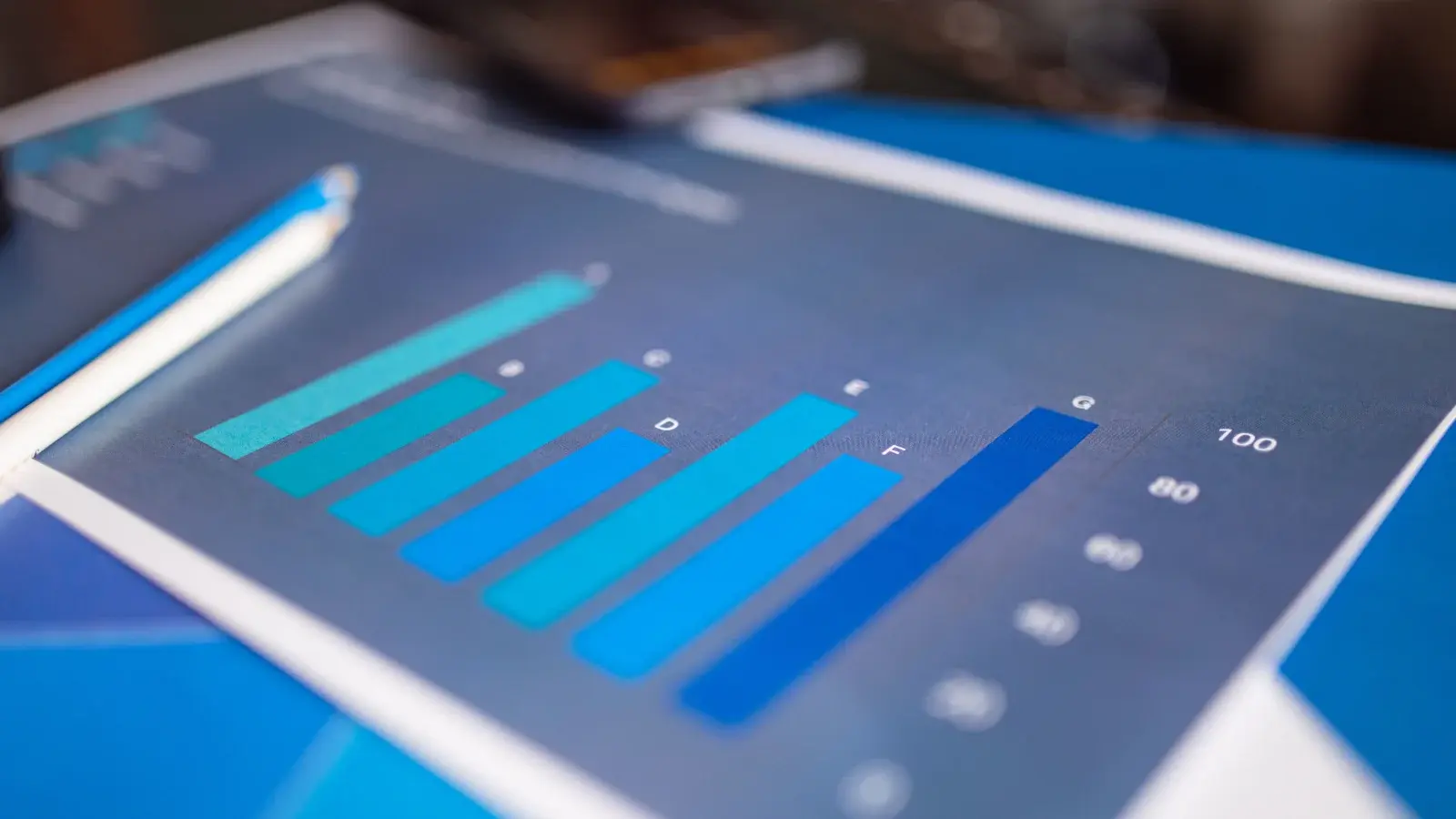
Zoomed out to the full first half of 2026, nickel still leads on a cumulative basis. Total downstreaming investment for the six months reached Rp300.1 trillion, up 6.9 percent from the same period last year and equivalent to about 29.7 percent of all realized investment nationally. Within the Rp206.5 trillion of that total attributed to minerals, nickel accounted for Rp71 trillion against bauxite's Rp53.8 trillion, with copper at Rp37.4 trillion, iron and steel at Rp30.2 trillion, silica sand at Rp5.9 trillion and other minerals making up Rp8.2 trillion. The quarterly milestone and the half year ranking are both true at once. Bauxite has not yet overtaken nickel for the year, but it did so for a single quarter for the first time, and the trend line is the story.
A new formula for what ore is worth
The investment shift did not happen in a vacuum. On April 15, 2026, the Ministry of Energy and Mineral Resources brought into force Kepmen ESDM Nomor 144 Tahun 2026, replacing the prior Kepmen 268/2025 and rewriting the Harga Patokan Mineral, or HPM, the official benchmark price used to value mineral ore for royalty and non tax state revenue purposes, and as a reference price between miners and smelters.
Three changes matter most. First, the nickel formula, previously based on nickel content alone, now also accounts for iron, cobalt and chromium content and applies revised corrective factors, so an ore parcel's price better reflects everything of value in it, not just the headline nickel grade. Second, the bauxite formula introduces a reactive silica, or R-SiO2, penalty: every 0.5 percentage point of reactive silica above a 2 percent threshold cuts the benchmark price by 1 US dollar per dry metric ton, up to a maximum reduction of 3.5 US dollars per dry metric ton, since higher silica content raises processing costs at the smelter. Third, the pricing unit itself shifts from dry metric ton to wet metric ton for nickel, bauxite, cobalt, lead, zinc, iron, copper, manganese, chromium and iron sand, folding moisture content into the price rather than assuming it away.
Ditjen Minerba Director General Tri Winarno framed the reform as a response to volatile global commodity markets that "move rapidly and fluctuate," requiring a pricing framework that is adaptive, fair and transparent. Mining companies must now coordinate with independent surveyors to supply the fuller quality data the new formulas require: nickel operations report Ni, Co, Fe, Cr and moisture content, while bauxite operations report Al2O3, R-SiO2 and moisture content.
"Bauksit ini nomor 1, biasanya kita tahu selalu nikel. Ini ada shifting bauksit," Minister Rosan Perkasa Roeslani told reporters, describing the first quarterly reversal of Indonesia's longest running downstreaming investment ranking.
Why this matters for state revenue
HPM is not a cosmetic figure. It is the direct input for calculating the royalties mining companies owe the state, which is why the reform lands the same year the Ministry of Energy and Mineral Resources set an ambitious Rp134 trillion non tax state revenue target for the minerals and coal sector in 2026, up from a Rp124.7 trillion target in 2025 that the sector ultimately beat, delivering Rp138.37 trillion in actual realization. Officials have said price gains in commodities including tin, nickel and gold are expected to help meet the 2026 target even as coal output is deliberately cut, from roughly 790 million tons in 2025 to about 600 million tons in 2026 under revised annual work plans, with contingency scenarios prepared in case prices soften.
A pricing formula that captures more of an ore parcel's true composition, byproduct minerals for nickel, penalty adjustments for impure bauxite, moisture adjusted tonnage across the board, is in effect a more granular valuation exercise applied at the point of sale. It moves the state's revenue capture closer to the ore's actual economic content rather than a single headline grade, the same principle that underlies good land and ecosystem valuation further up the supply chain.
Where the bauxite is, and what comes next
Indonesia's bauxite reserves are substantial by any measure. Industry analysts cite roughly 7.7 billion tons of bauxite ore resources and about 2.86 billion tons of proven reserves, concentrated heavily in West Kalimantan, with additional processing capacity on Bintan Island in the Riau Islands. Estimates of Indonesia's global ranking vary by source, with some placing the country third and others fourth among bauxite reserve holders worldwide, a discrepancy worth flagging rather than resolving with a single confident number.
The flagship project behind the current build out is the integrated bauxite to alumina facility in Mempawah, West Kalimantan, inaugurated in February 2026 and operated by PT Borneo Alumina Indonesia, a joint venture between state miner PT Aneka Tambang Tbk and PT Indonesia Asahan Aluminium, representing a combined investment of roughly 6.32 billion US dollars. Additional alumina and aluminum capacity is planned nearby, including a 2 million ton alumina plant proposed by PT Dharma Inti Bersama feeding a 1 million ton aluminum smelter under PT Kayong Aluminium Nusantara, targeted to begin operating in 2028. Analysts have separately urged the government to formalize a dedicated bauxite downstreaming roadmap, noting that several earlier bauxite smelter projects stalled years ago while nickel absorbed most policy attention.
Sirkularium's view
The lesson in this quarter's numbers is not simply that bauxite is having a moment. It is that Indonesia's own regulators have just demonstrated, in the HPM reform, that a commodity's price should be built from its full measurable composition rather than a single convenient figure, and that this discipline pays off in more defensible state revenue. That is precisely the argument for extending the same rigor to the land and ecosystem side of mining's ledger as bauxite operations scale into West Kalimantan and other new frontiers.
For government and public institutions overseeing this expansion, the practical takeaway is to treat economic valuation, of ore composition, of ecosystem services, of reclamation outcomes, as continuous practice rather than a one time compliance exercise triggered by an incident or an audit. Commissioning independently verified valuation work that combines GIS and remote sensing data with ground truth measurement, using established methodology such as Permen LH No. 7 Tahun 2014 for any ecological loss questions that arise, gives operators a defensible record and gives regulators a consistent basis for comparison across sites and over time. As bauxite's share of the downstreaming portfolio grows, building that valuation discipline in now, while the sector is still young in Indonesia, is considerably cheaper than retrofitting it later.
Mineral downstreaming investment by commodity, H1 2026
Values in Rp trillion
Sources
- Kompas.com, Bauxite overtakes nickel as top downstreaming investment in Q2 2026
- CNBC Indonesia, Downstreaming investment reaches Rp300 trillion in H1 2026
- Antara News, Rosan: bauxite displaces nickel as Q2 2026 investment driver
- Bisnis.com, Rosan: bauxite becomes the backbone of Q2 2026 downstreaming investment
- Indonesian Mining Association, ESDM changes nickel and bauxite benchmark pricing, effective April 15, 2026
- InvestasiKu, Kepmen ESDM 144/2026 changes the mineral benchmark price, explained
- Asatu News, Government urged to draft a bauxite downstreaming roadmap
- Antara News Gorontalo, Ministry of Energy and Mineral Resources targets Rp134 trillion in 2026 minerba state revenue