Thirty four lenders join Danantara's waste to energy panel, with interest above three times the debt need
By Sirkularium Editorial Team, 8 min read
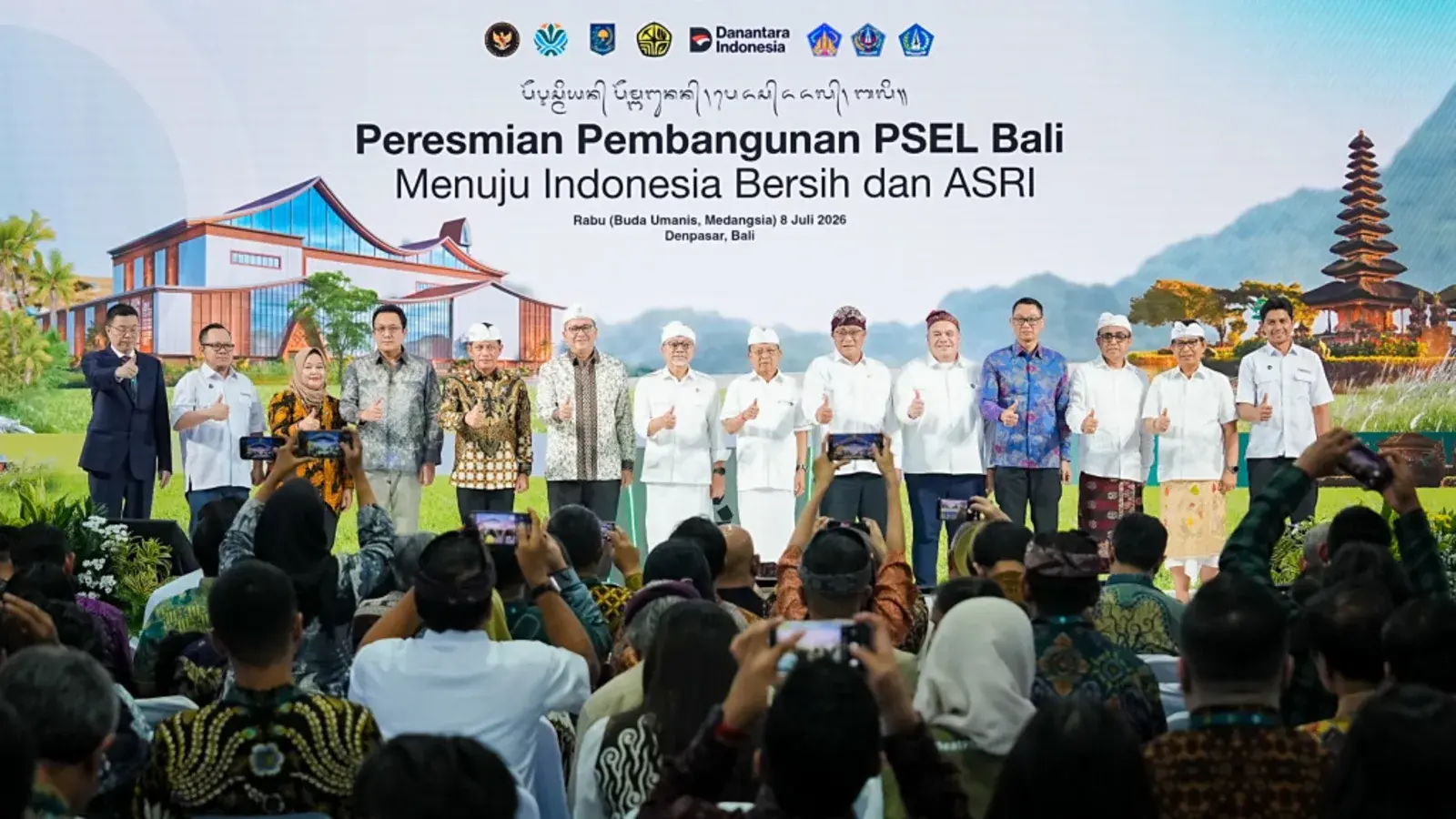
On 16 October 2026 Danantara Investment Management and its waste to energy subsidiary Denera named 34 financial institutions to the lenders panel for Indonesia's PSEL programme, reporting indicative financing interest of more than three times the programme's estimated debt requirement.
Indonesia's national waste to energy programme has passed a quiet but decisive milestone. On Friday, 16 October 2026, PT Danantara Investment Management (DIM) and its subsidiary PT Daya Energi Bersih Nusantara (Denera) announced that 34 financial institutions have been formally designated as members of the lenders panel for the Pengolahan Sampah menjadi Energi Listrik (PSEL) programme. The headline result is the depth of appetite. Indicative financing interest from the panel exceeds three times the programme's estimated debt requirement.
For a programme that asks regional governments to commit their residual waste for decades, and asks technology partners to build plants processing at least 1,000 tonnes a day, the question of who will lend the money has always sat close to the centre. This announcement gives a first, credible answer.
From an open call in July to a named panel in October
The process began on 22 July 2026, when Denera opened registration for banks and infrastructure financiers through PT Indonesia Infrastructure Finance (IIF), which serves as financial advisor and as consultant for forming the panel. Registration through IIF ran until 28 July 2026, combined with direct invitations to domestic and international institutions. Each applicant was then assessed on financial capacity, track record in executing infrastructure finance, flexibility of the solutions it could offer, and strategic fit with the PSEL programme.
Less than three months later, the panel is in place. The 34 members span a wide range of capital. According to the statement carried by ANTARA, Republika, Kontan and Koran Jakarta, they include international project finance institutions experienced in cross border lending, multilateral development banks, bilateral development finance institutions, infrastructure finance institutions and climate fund managers. On the domestic side, the panel includes the state owned Himbara banks, national private banks, international banks operating in Indonesia, and Islamic banks. No breakdown by category has been published, and the panel may still grow as the project pipeline develops.
Stefanus Ade Hadiwidjaja, Managing Director Investment at DIM, described the designation of the 34 institutions as an important achievement for the programme. He explained that the panel allows DIM and Denera to map the capacity and appetite of prospective lenders before any formal financing process begins, including the types of loans available, tenors, non cash facilities and other structures that may suit individual projects.
Indicative financing interest reaching more than three times the estimated debt requirement shows the scale of potential support for the PSEL programme. Stefanus Ade Hadiwidjaja, Managing Director Investment, Danantara Investment Management
The numbers behind the announcement
The figures released are deliberately high level. Danantara has not published the rupiah value of the estimated debt requirement, nor the absolute value of the indicative interest. What it has shared is the ratio, and the ratio matters.
Earlier reporting gives the shape of the financing model. In February 2026, Investortrust reported that PSEL projects are planned on a structure of roughly 70 percent debt and 30 percent equity, with Danantara holding at least 30 percent of the equity and technology partners also taking equity stakes. At that time Danantara Chief Investment Officer Pandu Sjahrir signalled that lending would not be limited to state banks, saying the aim was for all banks to take part. The October panel delivers on that intent, with private, international and Islamic lenders sitting alongside Himbara.
The programme's minimum feedstock requirement of 1,000 tonnes of waste a day per site, also noted in that February reporting, explains why debt sits at the heart of the model. Plants at this scale require significant upfront capital, long construction periods and stable, long tenor loans. A lender base that is diverse in both source and instrument is better able to match those needs than any single bank group.
Denera itself is young. It was established on 1 April 2026 by BPI Danantara through DIM, as an integrated waste management company and the holding entity consolidating PSEL projects across Indonesia. Its mandate is to accelerate waste processing infrastructure in collaboration with central and regional governments, technology partners and other stakeholders, within the framework of Presidential Regulation No. 109 of 2025.
Why lender depth matters for cities and regencies
For regional governments, the lenders panel can look like a matter for financiers in Jakarta. In practice it shapes what happens on the ground. A waste to energy plant only moves from groundbreaking to operation when its financing closes. Deep, competitive lender interest tends to improve the terms on offer, which in turn supports more sustainable tipping fee arrangements and stronger long term operations.
The diversity of the panel also brings specific strengths. Multilateral and bilateral development finance institutions typically bring environmental and social safeguard expertise that helps projects meet international standards. Climate fund managers can bring concessional capital where projects deliver measurable methane reductions by diverting organic and mixed waste from open dumping and landfill. Islamic banks widen the instrument set. Domestic banks bring local knowledge and rupiah liquidity, which reduces currency mismatch for projects whose electricity revenues are earned in rupiah from PLN.
M. Ramadhan Harahap, Chief Financial Officer of Denera, expressed appreciation for the participation and trust of the institutions that joined the panel. He said Denera hopes the collaboration will develop well and become the foundation for productive cooperation on the PSEL programme.
A careful reading of indicative interest
Danantara has been measured in how it frames the result, and that care is worth matching. Pandu Sjahrir stressed that financing readiness is not judged only by the size of the interest received. Every commitment must still pass due diligence and the internal credit committee of each lender before it becomes real funding. The official statement makes the same point: each financing will be subject to feasibility evaluation, due diligence, internal approval and the applicable requirements.
An indicative oversubscription is a signal of confidence, not yet a financial close. The work that turns this appetite into signed loans now moves to the project level, city by city.
This framing is constructive. It sets realistic expectations for regional partners and the public, and it puts the focus on the practical tasks ahead: bankable project documents, clear waste supply commitments from local governments, reliable data on waste volume and composition, and well defined offtake arrangements with PLN. Projects that arrive at the lenders' table with these elements in good order are the ones most likely to convert interest into funding quickly.
What comes next for the PSEL pipeline
The panel arrives at a busy moment for the programme. Sites such as PSEL Keramasan in Palembang, pictured in several reports of the announcement, are moving through construction and commissioning, while further agglomerations are progressing through partner selection and site preparation. Each of these projects will need its own financing package, and the panel gives Denera a ready map of who can lend, on what terms and in what instruments.
Several milestones are worth watching in the months ahead. The first is the initial financial close under the panel framework, which will show how indicative appetite translates into actual loan terms. The second is any disclosure of the panel's composition by category, which would help the market understand the balance between domestic and international capital. The third is whether climate finance is structured explicitly around methane reduction outcomes, which would strengthen the climate case for the programme and could lower the cost of capital.
Sirkularium's view
Sirkularium reads the formation of the 34 member lenders panel as a significant and positive step for Indonesia's waste to energy agenda. It answers one of the most persistent questions about the programme, whether capital at scale is available, with a clear signal that it is. It also reflects a sound process: an open call, an independent financial advisor in IIF, screening on capacity and fit, and transparent caveats about what indicative interest does and does not mean.
For government and public institutions, the implication is that the binding constraint is shifting from the availability of finance to the readiness of projects. Regional governments that want to benefit should prioritise three things. First, secure and document reliable waste supply, since the 1,000 tonne a day threshold depends on agglomeration level cooperation between neighbouring cities and regencies. Second, invest in accurate waste data, including composition and calorific value, so that technology partners and lenders can price risk with confidence. Third, keep upstream reduction and sorting programmes running in parallel, because well managed source separation improves feedstock quality and supports the circular economy goals that sit alongside energy recovery.
For financiers, the panel creates a structured entry point into a national infrastructure pipeline with clear policy backing under Presidential Regulation No. 109 of 2025. For the public, it is a reminder that the transition from open dumping to modern waste processing is being built step by step, with financing, governance and local readiness moving forward together. Sirkularium will follow the first financial closes under the panel and the composition of lenders as it is disclosed.
Sources
- ANTARA News, Danantara: 34 financial institutions join the PSEL lenders panel
- Republika, High financing interest as 34 institutions join Danantara's PSEL lenders panel
- Kontan, Danantara brings in 34 financial institutions to fund waste to electricity projects
- Jawa Pos, 34 financial institutions to finance PSEL, with IIF as financial advisor
- Koran Jakarta, Danantara mobilises 34 financial institutions for the PSEL programme
- Investortrust, Private banks may also finance waste to energy projects
- Republika, Danantara opens lenders panel registration for PSEL projects (July 2026)