
The National Energy Council sets bioethanol on a path toward a 50 percent blend
By Sirkularium Editorial Team, 9 min read
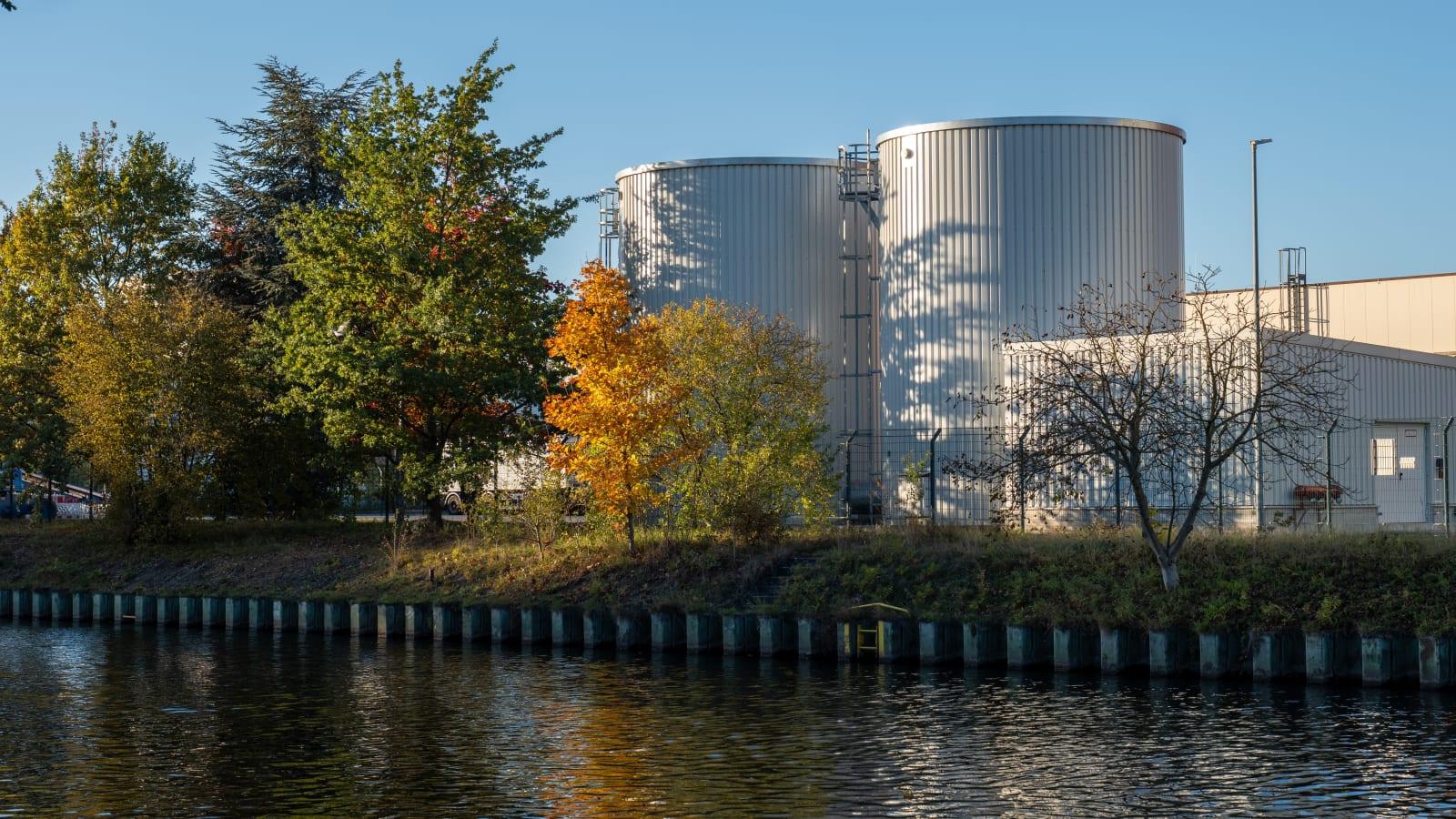
At the first plenary session of the National Energy Council in 2026, held at Merdeka Palace on 17 September and chaired by President Prabowo Subianto, the government was instructed to prepare concrete steps toward an E50 gasoline blend, following the biodiesel programme that has already removed a category of diesel from the import list. The instruction turns a blending target into an agro industrial supply question.
The National Energy Council held its first plenary session of 2026 at Merdeka Palace on Thursday 17 September, chaired by President Prabowo Subianto in his capacity as chair of the council, with Vice President Gibran Rakabuming as deputy chair and the Minister of Energy and Mineral Resources, Bahlil Lahadalia, serving as daily chair. The session brought together council members drawn from government, academia and stakeholder groups, including the Minister of Higher Education, Science and Technology, Brian Yuliarto, the Minister of Environment, Jumhur Hidayat, the Minister of Transportation, Dudy Purwagandhi, the Minister and State Secretary, Prasetyo Hadi, and the Cabinet Secretary, Teddy Indra Wijaya. Council members Satya Widya Yudha and Johni Jonatan Numberi also attended. The council convenes under presidential leadership twice a year, which gives each session weight as a setting for direction rather than routine coordination.
Several instructions came out of the meeting. The one with the longest reach concerns bioethanol.
From a proven biodiesel result to a gasoline equivalent
The reasoning presented after the session started from what has already worked. Bahlil described the biodiesel programme as the reference case, noting that the move to a 50 percent palm based blend has taken CN48 grade diesel off Indonesia's import list. That is a tangible outcome achieved through a mandate, a domestic feedstock and an established processing industry working together.
The President has instructed that the same steps be drawn up immediately so that we can build E50.
The instruction asks for the gasoline equivalent. Indonesia currently sells a 5 percent ethanol blend in a limited retail network. The published pathway moves to a 10 percent blend in 2027 and a 20 percent blend in 2028. The President's direction extends the horizon to a 50 percent blend, with no date attached, which is the appropriate way to treat a target whose feasibility depends on an agricultural build out that has not happened yet.
The scale of the prize is set by consumption. National gasoline use runs at roughly 39 to 40 million kilolitres a year, against domestic refinery capacity reported at 14.3 million kilolitres. Diesel consumption is of a similar order, around 39 million kilolitres annually. Every percentage point of blend that is met from domestic biomass is a percentage point of that volume sourced inside the country, with the value retained in Indonesian agriculture and processing rather than exported as payment for fuel.
The question is feedstock, and feedstock is an agro industrial question
An E20 mandate is estimated to require about 4 million kilolitres of bioethanol a year. E50 would require substantially more. Three feedstocks have been identified: sugarcane and its molasses, cassava, and corn.
This is where the programme becomes a circular economy question rather than purely an energy one. Molasses is not a crop grown for fuel. It is the residual syrup left after sugar crystallisation, a by product that sugar mills already produce in volume and that has historically found lower value uses. Directing it into fuel grade ethanol raises the value recovered from cane that is already being milled, before any new hectare is planted. The same logic applies to cassava and corn processing residues. For an economy that is expanding its food processing base, residue streams are an asset class that is already in existence and mostly uncounted.
Planted area is the other half. The Coordinating Minister for Food, Zulkifli Hasan, has said that around 2 million hectares of sugarcane land is being prepared across Java, Sumatra and Papua, with the Ministry of Agriculture leading the land work and Danantara designated to develop the ethanol processing industry.
In the next two years we can produce at least E20.
Land availability is the acknowledged constraint, and mapping work is under way to identify where the area can be secured. Sequencing matters here. Ethanol capacity built close to existing mills, running first on molasses and only later on dedicated cane, can begin producing while the planting programme matures. That order of operations reduces the period during which capital sits idle waiting for a harvest.
What else the council addressed
The bioethanol instruction sat inside a wider agenda on energy resilience. Bahlil reported that national fuel stocks and reserves stand at 18 to 20 days of cover, a figure the President asked to be maintained at a safe level.
The council also addressed upstream production. The direction was to accelerate exploration across basins and prospective blocks, and to apply modern technology to rejuvenate ageing wells rather than treat them as depleted. Approximately 45,000 community operated wells are to be brought into professional management under applicable regulation, with oversight against unauthorised sales. A new governance body for the oil and gas sector, placed directly under the President, was also discussed. Alongside these, the session emphasised cooperation between government, academia and business in developing future energy policy, which is consistent with the council's own composition.
For an audience working on the energy transition, the through line is import substitution built on domestic resources. Rejuvenating an existing well, formalising community production and blending domestic ethanol into gasoline are different techniques applied to the same objective, which is to meet demand from capacity that already exists or can be created onshore.
Sirkularium's view
Three practical implications follow for government and public institutions.
First, the binding constraint on E20 and anything beyond it is agro industrial, not automotive. Engine compatibility at 10 and 20 percent blends is well understood internationally. Securing 4 million kilolitres a year of fuel grade ethanol is the harder task, and it is delivered by mills, distilleries, logistics and planting programmes. Provincial governments in cane producing regions, along with the agencies responsible for land and agriculture, are therefore central actors in an energy policy, and their planning cycles should be synchronised with the 2027 and 2028 blending dates rather than run separately.
Second, residue streams deserve a formal inventory. Before new land is cultivated, the country would benefit from a published account of how much molasses, cassava waste and corn processing residue is generated annually, where it sits, and what it is currently used for. That inventory would establish how much of the 4 million kilolitre requirement can be met from material already in circulation, and it would identify competing uses, including animal feed and food industry demand, so that the ethanol programme is designed around them rather than in conflict with them.
Third, the biodiesel precedent should be studied as an institutional model, not only as a policy result. The removal of CN48 diesel from the import list followed years of mandate design, fund flows, blending infrastructure and quality standards developed in sequence. Documenting which of those instruments did the most work, and how long each took to mature, gives the ethanol programme a realistic schedule and a defensible basis for the investment it will ask of the private sector.
What to watch next is clear enough. The roadmap the ministry has been asked to prepare, and whether it attaches dates and volumes to E50. The land mapping results for the 2 million hectare programme. Confirmation of the E10 step in 2027 as the first test of whether supply can meet a doubled mandate. And the extent to which the first tranche of new ethanol capacity is sited at existing mills, which will indicate whether the residue opportunity is being captured before new planting is relied upon.
The stated ethanol blending pathway
Values in % ethanol
Sources
- ANTARA News, President leads the National Energy Council plenary session at the palace
- CNBC Indonesia, President asks the minister to prepare a roadmap for a 50 percent bioethanol blend
- detikFinance, President asks the minister to develop E50 ethanol blended fuel
- detikNews, Minister sets out the presidential instructions from the first National Energy Council meeting of 2026
- Warta Ekonomi, Targeting E50, the President orders strategic steps on the bioethanol blend
- detikFinance, E20 fuel to be produced as 2 million hectares of sugarcane land is prepared
- Liputan6, Following the B50 result, the President asks for E50 development to be prepared