Harita Nickel turns smelter slag into reclamation soil, and a national standard now lets the practice be measured
By Sirkularium Editorial Team, 8 min read
Harita Nickel is using slag from its Obi Island smelters as a soil ameliorant on 272 hectares of reclaimed mine land, a practice now written into Indonesia's national standard SNI 9420:2025. The approach converts a large processing residue into a reclamation input, with reported savings of up to 32 percent against organic fertiliser.
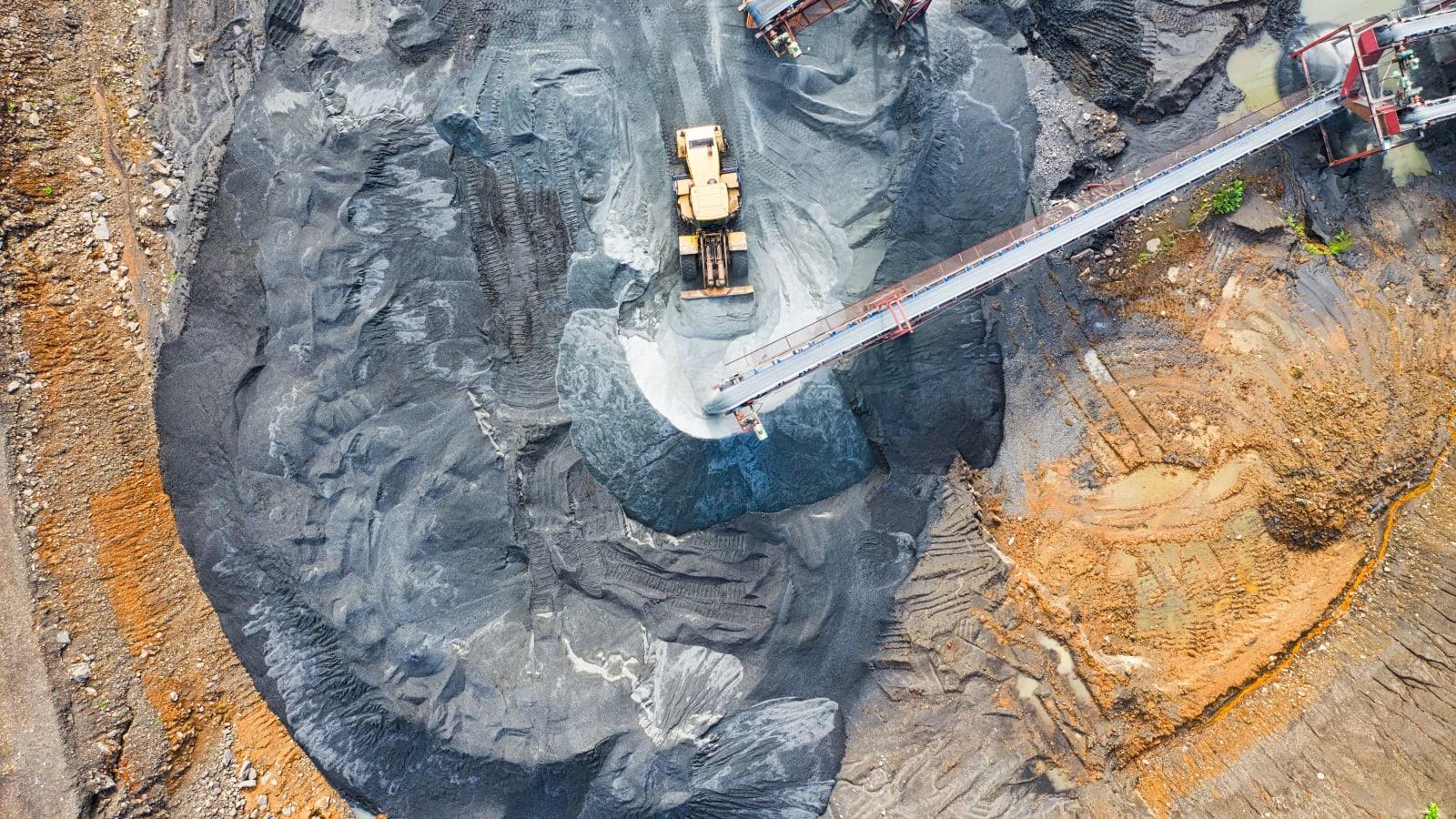
Every tonne of nickel that leaves an Indonesian rotary kiln electric furnace leaves behind a far larger volume of slag. For most of the past decade that residue has been treated as a disposal problem. On Obi Island in South Halmahera, Harita Nickel has spent the past two years treating it as a raw material, and on 24 and 25 September 2026 the company described the results: slag from its smelters is now used as a soil ameliorant on reclaimed mine land, under a national standard that did not exist two years ago.
The story was reported by OG Indonesia and Media Nikel Indonesia, and follows Harita's win of the Tailings Innovation Award in the Mining Magazine Awards 2026. It is a materials circularity story and a reclamation story at the same time, and it offers something both government and industry need more of: a residue stream with a measurable second use.
From residue to growing medium
Slag from RKEF smelting is rich in silica and magnesium and has a porous structure. Harita's argument is that these properties make it useful in the thin, nutrient poor soils left after laterite mining. After treatment the slag becomes a granular material that, in the words of Supriyanto, Vice President for Occupational Health, Safety and Management Systems, resembles sand. It is then mixed with organic material to form a planting medium.
The company ran field tests in a former mine pit in 2024, comparing growing media with and without a slag mixture and monitoring how the plants responded. Pilots running from December 2024 reported survival rates above 90 percent for cover crops and trees on slag mix media, with measurable gains in plant height and leaf count over twelve week trials, according to figures summarised by Discovery Alert. The reclaimed areas are planted with local species including red jabon, casuarina, cajuput, gofasa and gosale.
To date Harita has reclaimed 272 hectares of post-mining land on Obi. For context, CNBC Indonesia reported in June 2025 that the company had reclaimed 105 hectares between 2017 and the first quarter of 2025 and was targeting a further 66 hectares that year. If the two figures are measured on the same basis, the current total indicates substantial progress over the past eighteen months.
"Evaluation of the practices we have carried out is the basis for us to keep improving." Tonny H. Gultom, HSE Director, Harita Nickel
A standard that makes the practice replicable
The most consequential element of the announcement is not the award but the standard. SNI 9420:2025 sets out guidance for using nickel slag as a soil ameliorant in the reclamation of nickel mines. A national standard turns a single company's practice into a documented method that other operators, regulators and auditors can apply and check.
The legal basis already exists. Government Regulation No. 22 of 2021 on environmental protection and management lists slag from nickel smelting, under certain furnace technologies, as registered non-hazardous waste rather than B3 hazardous waste. That classification allows the material to be used, provided the use is set out in the operator's environmental approval and managed according to its conditions. SNI 9420:2025 adds the technical specification for one particular use.
Irdika Mansur, head of the Center for Mining Reclamation Studies at IPB University, said the innovation supports reclamation activities in a more systematic way.
Where the slag goes, and what it is worth
Soil amendment is only one of several destinations. By 2025 Harita reported recycling more than 640,000 tonnes of nickel slag, including more than 409,715 square metres of slag concrete built into roads and drainage, 2,092 artificial reef cubes placed to rebuild marine habitat, mine backfill and soil amelioration. Each of these uses replaces a material that would otherwise be bought, quarried or shipped to the island.
The cost figures need to be read carefully. Discovery Alert reports that using slag in place of conventional organic fertiliser cut reclamation costs by up to 32 percent, approximately Rp52.5 million per hectare. Separately, CNBC Indonesia reported in 2025 that Harita's full reclamation cost was around Rp250 million per hectare. Rp52.5 million is roughly a fifth of that total rather than a third, which suggests the 32 percent saving refers to the soil amendment component of reclamation rather than the whole cost of restoring a hectare. The two figures come from different reporting bases, and a consistent published cost breakdown would make the saving easier to verify.
Even on a conservative reading, the direction is clear. A residue that carried disposal cost now reduces the cost of a mandatory obligation. For reclamation guarantee planning, that matters: the value of a reclamation plan depends partly on what inputs cost, and a lower cost per hectare, if sustained and verified, changes the financial arithmetic of closing a mine well.
What the practice asks of monitoring
Using an industrial residue in soil brings responsibilities as well as savings. Academic work on slag reuse, including heavy metal leaching studies cited in the Discovery Alert review, emphasises the importance of monitoring what moves from slag into soil and water over time. The existence of a national standard, a regulatory classification and multi year field data puts Obi in a good position to demonstrate that performance, and to publish the monitoring results that give regulators and communities confidence.
Sirkularium's view
Sirkularium reads the Obi slag programme as one of the more practical examples of circularity in Indonesia's nickel sector. It links two obligations that are usually managed separately, residue management and land reclamation, and makes each cheaper and more productive by connecting them. It also arrives with the institutional pieces already in place: a legal classification under PP 22/2021 and a technical standard in SNI 9420:2025.
For government and public institutions, the opportunity is to turn this into a sector wide practice with a measurement framework attached. Three steps would help. First, reporting slag generation and slag reuse by destination as a standard line in environmental reporting would show how much of the country's growing slag volume is finding productive use. Second, reclamation plans and guarantee calculations could recognise verified slag based inputs, with cost per hectare documented on a consistent basis so that savings are comparable across operators. Third, long term soil and water monitoring on slag amended sites, published openly, would build the evidence that allows the standard to be adopted with confidence.
For mining companies, the valuation lesson is direct. Reclaimed land, avoided disposal and avoided material purchases all carry economic value, but that value is only persuasive when measured on a standard method and verified independently, with GIS mapping of reclaimed hectares and ground data on soil and vegetation condition. Obi now has the standard. The next step is a routine, public ledger of what it delivers.
Sources
- Media Nikel Indonesia, Harita Nickel manfaatkan terak nikel untuk reklamasi lahan pascatambang, 25 September 2026
- OG Indonesia, Harita Nickel kembangkan slag nikel jadi pembenah tanah untuk reklamasi pascatambang, 24 September 2026
- Mining Magazine, Harita Nickel sets new nickel slag innovation standard (Tailings Innovation Award 2026)
- Discovery Alert, What nickel slag soil restoration means for mining investors, 16 September 2026
- CNBC Indonesia, Harita bakal reklamasi 66 hektare lahan eks tambang nikel tahun ini, 15 June 2025
- Trimegah Bangun Persada (Harita Nickel), Sustainable innovation: nickel slag to improve soil quality in reclamation areas, 6 April 2025
- Media Nikel Indonesia, Harita Nickel manfaatkan terak nikel sebagai media tanam untuk reklamasi tambang, 27 November 2025
- JDIH BPK RI, Peraturan Pemerintah Nomor 22 Tahun 2021 tentang Penyelenggaraan Perlindungan dan Pengelolaan Lingkungan Hidup