State miner MIND ID cuts waste 11 percent as circular practices take hold
By Sirkularium Editorial Team, 8 min read
.jpg&w=3840&q=75)
Indonesia's state mining holding reused, recycled, or recovered more than a million tonnes of residual material in 2025, turning nickel slag and gold tailings into construction inputs while overall waste generation fell 11.3 percent.
MIND ID, the state holding company that oversees Indonesia's largest mining enterprises, reported that its group of companies reused, recycled, or recovered more than a million tonnes of residual material in 2025, part of a wider push to embed circular economy practices in mining operations. Total solid waste generation across the group fell 11.3 percent year on year, from 1,306,835.91 tonnes in 2024 to 1,159,049.16 tonnes in 2025, continuing a three-year downward trend from 1,396,034.05 tonnes in 2023.
The figures, drawn from MIND ID's 2025 Sustainability Report, cover both hazardous and non-hazardous waste streams across subsidiaries including PT Aneka Tambang (ANTAM), PT Indonesia Asahan Aluminium (INALUM), and PT Timah. Reporting on the results by ANTARA News, Republika, Tribunnews, and RRI.co.id in the first week of July highlighted a shift in how the group frames waste: not as an unavoidable cost of extraction, but as a stream of inputs that can be tracked, processed, and put back to use.
What the numbers show
Of the material diverted from final disposal in 2025, 82,876 tonnes were hazardous (B3) solid waste and 946,733 tonnes were non-hazardous solid waste, together exceeding one million tonnes. Liquid hazardous waste, including used oils, sludge, and expired chemicals, added a further 4,764.52 tonnes to the group's waste inventory for the year.
Broken down by category, hazardous solid waste fell from 270,478.08 tonnes in 2024 to 208,441.10 tonnes in 2025, while non-hazardous solid waste dropped from 1,036,357.83 tonnes to 950,608.06 tonnes over the same period. Both declines contributed to the overall 11.3 percent reduction the group reported for the year. None of the reporting outlets disclosed a group-wide baseline further back than 2023, so it is not yet possible to say whether this marks the start of a sustained trajectory or a single strong year, a distinction that will only become clear with a longer run of data.
Turning residue into construction material
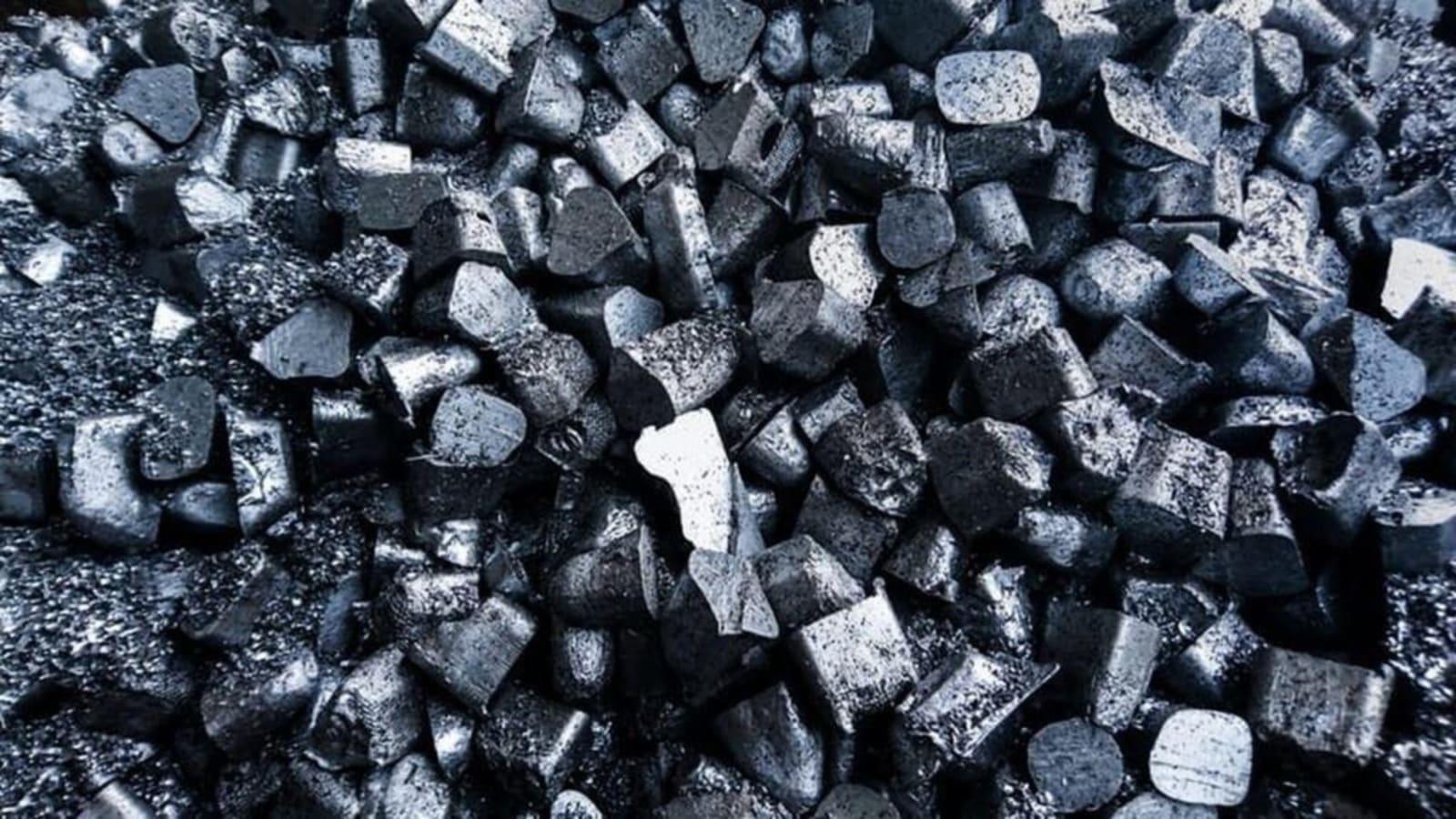
The clearest illustration of the approach sits with ANTAM. The company converts nickel slag generated during pyrometallurgical processing into a product called Pomalaa Beton, or POTON, used as road base, yard base, and material for internal construction at its own sites. Separately, ANTAM processes gold mining tailings into what it calls Green Fine Aggregate, and combines fly ash and bottom ash from its power generation with nickel slag as feedstock for concrete production.
INALUM, the group's aluminium producer, recovers internal scrap generated during smelting and casting and reintegrates it into production, reducing the volume of primary alumina the company needs to source externally. PT Timah applies physical separation methods, gravity, magnetic, and electrical conductivity, to reprocess what it calls Processing Waste (Sisa Hasil Pengolahan, or SHP), recovering 1,506.06 tonnes of tin ore in 2025 with what the company describes as further recovery potential still untapped.
Taken together, these are not pilot projects or one-off initiatives. They describe waste streams that have been redirected into standing product lines, road base material at mine sites, aggregate for concrete, recovered metal feeding back into smelting, with volumes large enough to show up clearly in group-level sustainability accounting.
Why this matters for mining governance
Eko Adhi Setiawan, an energy expert in the Department of Energy Systems Engineering at Universitas Indonesia's Faculty of Engineering, framed the results as evidence of something more fundamental than good public relations. He argued that structured waste management systems are essential to what is often called good mining practice, because the greatest risk in mining operations is not simply the volume of waste generated but the breakdown of the management chain that tracks it.
"Waste requires clear tracking covering origin, storage, transport, treatment, and final disposal documentation," Setiawan said, describing the discipline required to keep a waste stream auditable from the point it is generated to the point it is either disposed of safely or returned to productive use.
That framing matters for a sector where the credibility of environmental claims is increasingly tested by regulators, lenders, and communities living near mine sites. A tonnage figure alone tells a reader little; what makes the MIND ID disclosure meaningful is that it comes with a category breakdown, a multi-year trend, and named end uses for the recovered material, the kind of granularity that lets outside observers check the claim rather than take it on faith.
What is still missing from the picture
The disclosures, thorough as they are for group-level solid waste, leave gaps that matter to a fuller sustainability assessment. None of the reporting quantified water consumption or discharge associated with these processes, an area Sirkularium has tracked closely given how central water management is to credible mining oversight in Indonesia. Nor did the reports specify whether MIND ID's tailings dams and residue storage facilities, rather than the waste streams being actively repurposed, are being independently audited on the same schedule. Circular economy achievements at the level of individual product streams do not by themselves answer questions about the safety of legacy storage facilities.
There is also no indication yet of third-party verification for the recycling and recovery figures, beyond their inclusion in the company's own sustainability report. Independent assurance, the kind increasingly expected under Indonesia's sustainable finance taxonomy and PROPER environmental rating system, would strengthen the credibility of numbers that are, for now, self-reported.
Sirkularium's view
For government agencies and public institutions overseeing Indonesia's mining sector, the MIND ID disclosure offers a template worth encouraging more broadly: waste figures reported by category, tracked over multiple years, and tied to specific, verifiable end uses rather than aggregated into a single vague sustainability claim. Regulators drafting or refining reporting standards, including the national ESG framework the Energy and Mineral Resources Ministry has been developing for the mineral sector, should consider requiring this level of granularity as a baseline, not an aspiration reserved for state-owned champions with the resources to produce a detailed sustainability report.
The unresolved questions around water, storage facility integrity, and independent verification are not reasons to dismiss the progress. They are the next items for procurement officers, lenders, and oversight bodies to ask about when they engage with MIND ID and its peers. A mining sector that can show declining waste volumes, rising reuse rates, and named applications for recovered material is one that gives public institutions something concrete to hold it to, rather than a promise to take on trust. Sirkularium will be watching whether this year's improvement becomes a multi-year pattern, and whether the practice spreads from a state holding company with strong reporting incentives to the wider set of private operators that make up the bulk of Indonesia's mining output.
MIND ID Group solid waste generation, 2023 to 2025
Values in tonnes
Sources
- ANTARA News, MIND ID recycles more than 1 million tonnes of residual material
- Republika Online, MIND ID applies circular economy, recycles more than 1 million tonnes of residual material
- Republika Online, MIND ID scales up circular economy, mining waste keeps falling
- Tribunnews.com, applying circular economy, MIND ID uses 1 million tonnes of residual material to cut mining waste
- RRI.co.id, MIND ID circular economy succeeds in cutting solid waste generation by 11.3 percent