Indonesia's palm oil biomass could gain eight to nine times its value, IPB researchers find
By Sirkularium Editorial Team, 8 min read
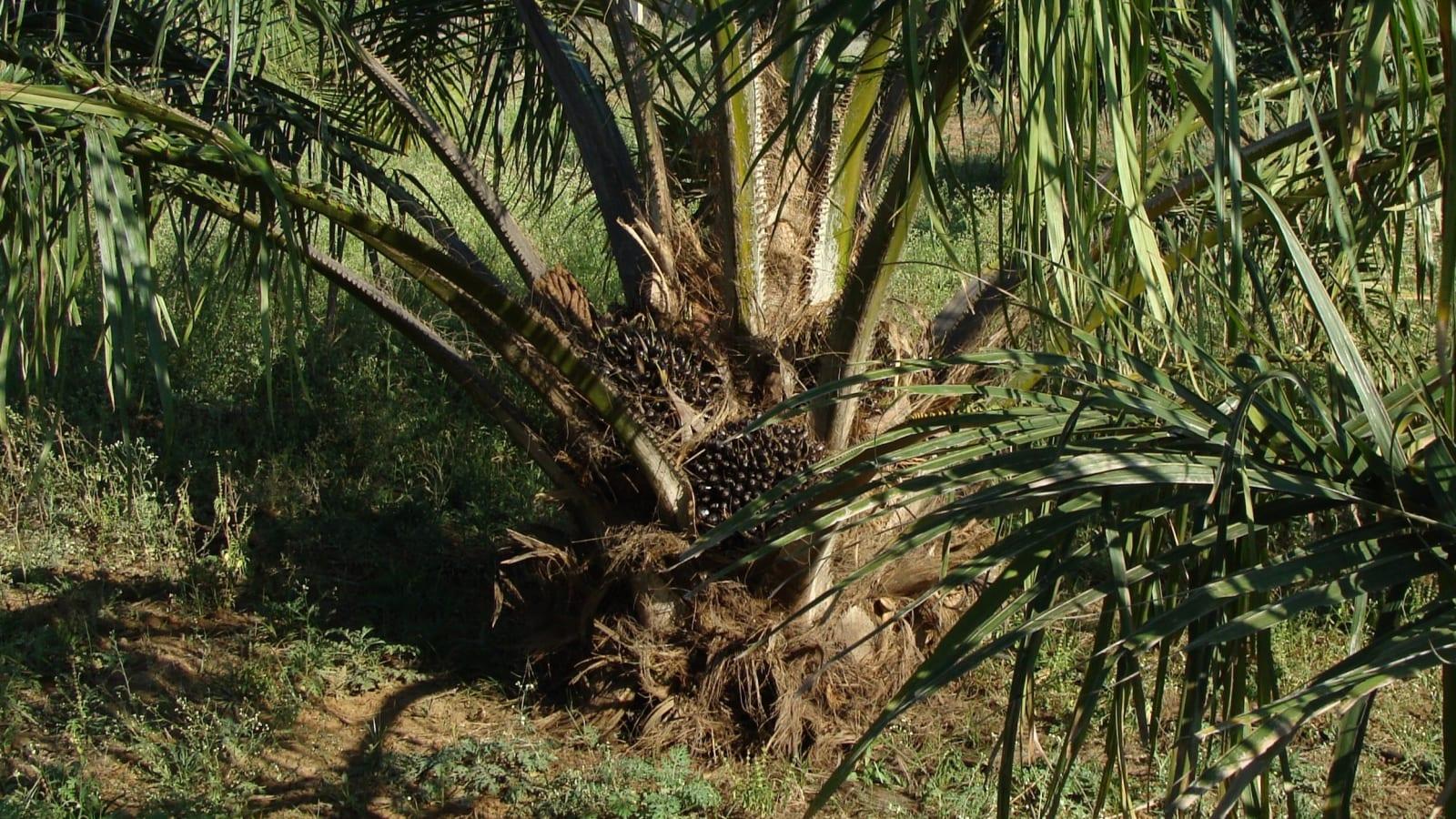
Indonesia's 16.83 million hectares of oil palm plantations produce 261.7 million tonnes of biomass a year. IPB University researchers say applying circular economy methods to fronds, empty bunches, and mill effluent could multiply that material's value eight to nine times over.
A biomass surplus larger than any other palm economy produces
Indonesia's 16.83 million hectares of oil palm plantations do more than supply the world's largest volume of crude palm oil. They also generate an estimated 261.7 million tonnes of dry biomass every year, the largest palm biomass output of any producing country, according to figures presented by Prof. Hariyadi, a professor at IPB University's Faculty of Agriculture, and reported this week by ANTARA News, JPNN, Beritasatu, Disway, Sindonews, and Viva. Most of that material, oil palm fronds and stems, empty fruit bunches, shells, fiber, and palm oil mill effluent, is still treated as a byproduct to be disposed of rather than a resource to be valued.
Prof. Hariyadi's assessment, delivered alongside Siti Nikmatin, a lecturer and researcher at IPB's Palm Oil Study Center, put a number on what that byproduct framing costs the country. Applying circular economy methods across the palm biomass stream, they said, could raise its added value eight to nine times over compared with leaving it unprocessed. For a plantation base of nearly 17 million hectares, that multiplier is not a marginal efficiency gain. It describes a second economy sitting inside the first one, largely untapped.
Where the eight to nine times comes from
The multiplier is not abstract. Reporting on the assessment identified concrete conversion paths already in use or under development: fronds and empty fruit bunches processed into compost and organic fertilizer, shells and fiber burned or gasified for biomass electricity, empty bunches and fiber blended into cement additives and construction material inputs, and palm oil mill effluent captured to cut methane emissions in a way that can generate carbon credits rather than simply venting a greenhouse gas into the atmosphere.
Each of those paths converts a disposal cost into a revenue line, and each intersects a policy the government already wants more of: renewable electricity capacity, domestic fertilizer supply, construction material inputs for infrastructure spending, and a verified carbon credit market. Nikmatin, whose research center sits within IPB, framed the appeal in exactly those terms, describing a circular model that pairs environmental benefit, better management of a waste stream that would otherwise be burned or left to decompose uncontrolled, with an economic one, new business lines that can draw in communities living around plantations and mills rather than leaving them dependent on crude palm oil price cycles alone.
Productivity first, expansion second
The biomass figures build on an argument Prof. Hariyadi has been making since at least late June, when he delivered an inaugural senior professor address at IPB proposing what he called a Nexus Baru, or New Nexus, framework for the palm oil sector. Its starting premise is blunt: Indonesian smallholder plantations, which account for a large share of the country's palm oil area, currently operate below 60 percent of their productive potential.
"Perkembangan areal perkebunan kelapa sawit di Indonesia sangat spektakuler," Prof. Hariyadi said, arguing that management of the crop must now be conducted sustainably rather than through continued land expansion. Superior seed varieties and correctly timed, correctly dosed fertilizer application, he said, matter more to closing that productivity gap than opening new plantation area.
That framing matters for how the biomass opportunity should be read. Intensifying existing plantations rather than expanding into new land raises palm oil yield per hectare and, by extension, the volume of fronds, bunches, and effluent each hectare produces for the circular economy stream to capture. The two goals, higher primary yield and higher byproduct value, reinforce rather than compete with each other, which is part of why Prof. Hariyadi presents the Nexus Baru as an integration of intensification, climate resilience, circular economy practice, and digitalization rather than four separate initiatives.
Who is meant to carry this forward
Institutionally, the assessment leans on two bodies with direct authority over how far this goes. The Badan Pengelola Dana Perkebunan, or BPDP, the government agency that manages Indonesia's palm oil plantation fund, was named as supporting downstreaming and smallholder empowerment work alongside research and development into circular economy applications. Alpenbun, the association of plantation education and training institutions, was cited as a partner in translating the research into practice at the estate and smallholder level, where most of Indonesia's palm oil workforce and land area actually sits.
That combination, a funding and policy body plus an education and training network, is a more concrete implementation path than an academic finding alone would carry. It suggests the reporting reflects an active push already underway inside the sector's institutional apparatus, not simply a university proposing an idea in isolation.
What is still holding it back
None of the outlets covering the assessment described this as a settled transition. The obstacles named alongside the eight to nine times figure were specific: high upfront investment costs for processing infrastructure, technology limitations in converting particular biomass streams efficiently, underdeveloped markets for some derivative products, and logistics and distribution costs that can erode the economics of moving bulky biomass material from scattered smallholder plots to a processing point. Smallholder capacity to adopt new practices, given how much of Indonesia's palm oil area sits outside large corporate estates, was raised as a further constraint rather than a footnote.
Those are the same categories of friction that slow circular economy adoption in most commodity sectors: capital, technology maturity, market depth, and logistics. What distinguishes palm biomass is the scale already sitting idle, 261.7 million tonnes a year, waiting on exactly those four constraints to ease before the eight to nine times multiplier becomes realized value rather than a modeled estimate.
Sirkularium's view
For government agencies and public institutions with a stake in palm oil governance, this assessment offers a template that extends well beyond the crop itself. An institution that can put a specific multiplier on the value of a resource stream currently treated as waste, and name the exact obstacles standing between that estimate and reality, has done the harder half of an economic valuation exercise. The remaining task, verifying the figure against ground data from specific plantations and mills, and tracking it over time as processing capacity comes online, is the kind of ongoing, methodical valuation work that strengthens a sector's case to financiers, regulators, and the public alike, rather than a one-time calculation produced to answer a single audit or dispute.
The same logic applies directly to Sirkularium's core resource sector focus, mining. A biomass stream with a credible eight to nine times value multiplier and a named list of financing and technology barriers is precisely the kind of output that rigorous, independently verified economic valuation, built on real production data rather than assumption, should be producing across Indonesia's resource sectors as standard practice. Policymakers weighing where to direct downstreaming incentives, and financiers weighing where circular economy investment will pay back fastest, now have a specific, sourced estimate to test rather than a general appeal to sustainability. What comes next is whether BPDP, Alpenbun, and the plantations themselves generate the ground-level data needed to confirm it.
Sources
- ANTARA News, Academics: palm oil industry circular economy needs strengthening
- JPNN, Palm biomass circular economy could produce up to nine times added value
- Viva.co.id, Indonesia has a treasure often wasted, its added value said to reach nine times over
- Beritasatu, Palm oil circular economy seen able to boost biomass added value
- Disway.id, Palm oil circular economy becomes key to downstreaming, biomass could raise added value nine times over
- Sindonews, Encouraging the application of circular economy in the palm oil industry
- IPB University, Prof Hariyadi urges intensification and circular economy to raise palm oil productivity