North Sulawesi prosecutors recover Rp15.04 billion in the Ratatotok gold mining case, as total state losses are valued at Rp45 billion
By Sirkularium Editorial Team, 8 min read
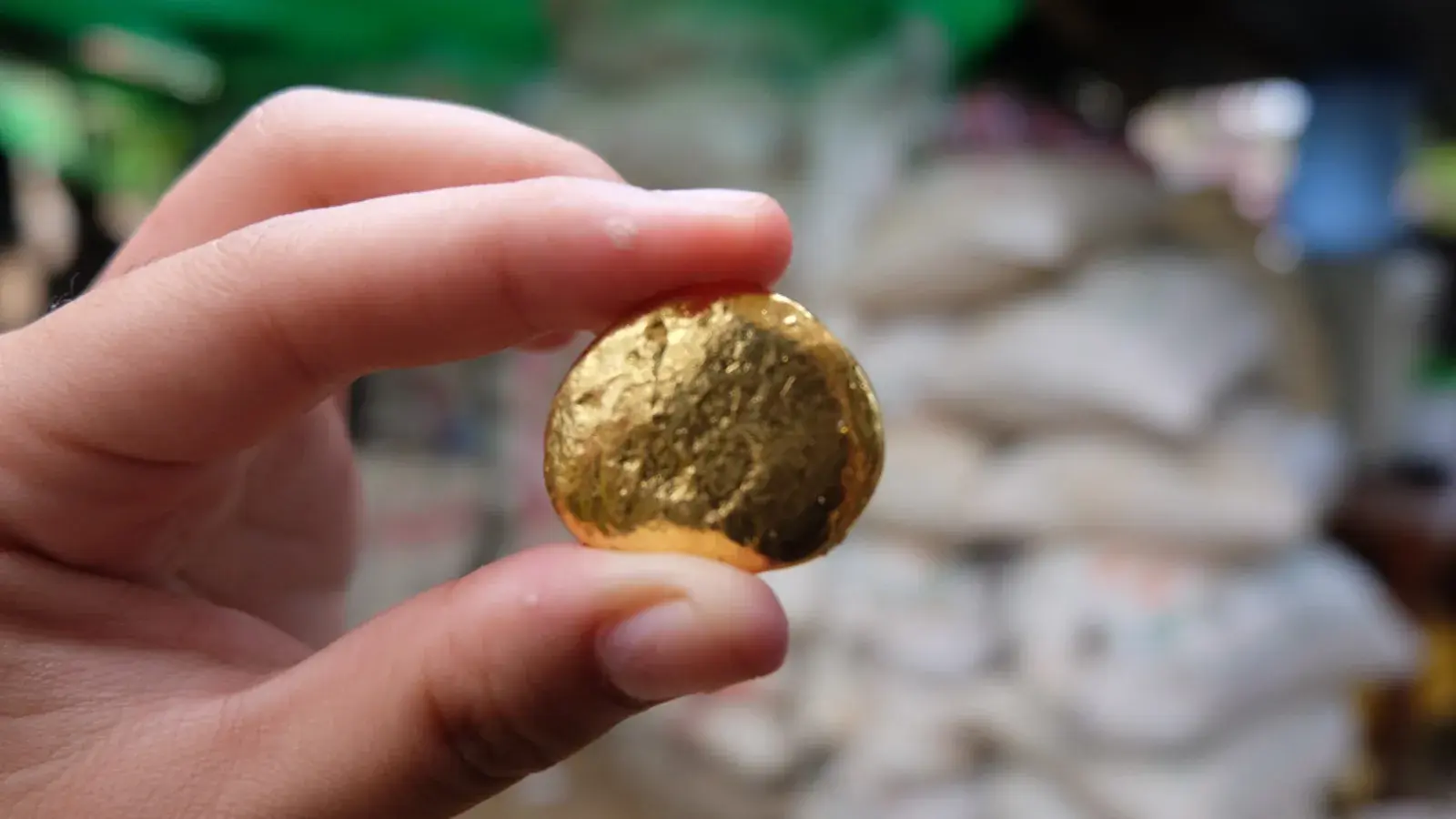
Kejaksaan Tinggi Sulawesi Utara has recovered Rp15.04 billion in state losses from the PT HWR gold mining corruption case in Ratatotok, part of a Rp45 billion valuation that separates environmental damage from illegal mineral gain. The case is an early example of Indonesian prosecutors putting a rupiah figure on mining harm rather than treating it as an abstraction.
What happened
On 22 July 2026, coinciding with Hari Bhakti Adhyaksa, the anniversary marking the founding of Indonesia's prosecutorial service, the Kejaksaan Tinggi (Kejati) of North Sulawesi announced that it had recovered Rp15,040,570,446 in state financial losses tied to an alleged corruption case in the management of a gold mining concession operated by PT HWR in Ratatotok Selatan village, Ratatotok district, Southeast Minahasa regency. The funds were deposited into an escrow account at Bank Syariah Indonesia (BSI) in Manado, where they will remain pending a final, legally binding court judgment.
Kejati Sulut head Jacob Hendrik Pattipeilohy, SH, MH, presented the recovered sum at a press conference alongside the office's deputy head and its assistants for special crimes and intelligence. He framed the recovery as evidence that anti-corruption enforcement in North Sulawesi's mining sector now extends beyond identifying suspects to actively restoring state finances.
"Pemberantasan tindak pidana korupsi tidak hanya berfokus pada penindakan para pelaku, tetapi juga memprioritaskan pemulihan aset dan pengembalian keuangan negara," Pattipeilohy said, underscoring that asset recovery, not just prosecution, is now central to how the office measures success.
Three suspects have been named in the case: BAT, a former head of the regional Energy and Mineral Resources (ESDM) office; and BDG and HJ, both foreign nationals who served respectively as PT HWR's director from 2019 to 2024 and as its operations or production manager from 2020 to 2025. BAT and BDG have been detained. HJ has been declared a wanted person after failing to respond to three summons. Investigators have questioned 45 witnesses and two expert witnesses, and conducted searches at the regional ESDM office and several gold shops in Manado and Kotamobagu.
The numbers behind the case
The Rp15.04 billion already recovered is a partial figure. Kejati Sulut has told local media that the full state loss in the case is valued at approximately Rp45 billion, split into two distinct components: an estimated Rp17 billion in environmental damage assessed across 43 hectares of concession land, and roughly Rp28 billion attributed to the value of gold processed and sold without proper authorization.
That split matters. It separates the cost of restoring degraded land, water, and ecosystem functions from the separate question of unauthorized economic gain, rather than folding both into a single undifferentiated "loss" figure. The current Rp15.04 billion recovery corresponds to a cluster covering 32 of the concession's 100 total hectares, drawn from activity between 2022 and 2025, out of an operational history investigators say stretches back to 2013.
Local reporting has also surfaced a partial breakdown of PT HWR's declared gold sales to state mining company PT Antam: approximately Rp6.88 billion in 2021, Rp4.38 billion in 2022, and Rp3.78 billion in 2023, a declining series that investigators are examining alongside the concession's actual production footprint as they refine the final loss calculation. Pattipeilohy has indicated the total could still rise as the case develops.
How prosecutors are pricing the damage
What distinguishes this case from a conventional corruption prosecution is the presence of an explicit environmental damage assessment, conducted with input from expert witnesses, as one of two named components of the state loss figure. Assigning a specific rupiah value, Rp17 billion, to damage across a defined 43-hectare area reflects the same underlying logic found in Indonesia's established environmental economic loss framework, most notably Peraturan Menteri Lingkungan Hidup No. 7 Tahun 2014, which sets out methods for calculating ecological damage, environmental economic loss, and recovery cost in cases of unauthorized land disturbance.
Treating environmental harm and illegal mineral value as two separately quantified figures, rather than a single lump sum, is a meaningful methodological choice. It allows each component to be independently verified, challenged in court, or revised as new site data emerges, and it creates a template that can, in principle, be applied consistently to other concessions rather than negotiated case by case.
Why it matters for mining governance
Ratatotok sits within a broader pattern of prosecutorial offices across Indonesia increasingly using state loss recovery, rather than criminal sentencing alone, as their primary public measure of anti-corruption effectiveness in the resources sector. For local and regional government, the case offers a concrete illustration of how a mining concession's true cost, inclusive of environmental restoration, can be documented and defended using figures that hold up to scrutiny.
It also signals to concession holders and regional ESDM offices that land use, production volumes, and sales declarations are subject to reconciliation against independent site assessment. That reconciliation function, comparing what a company reports with what the land itself shows, is precisely the kind of verification that a standing economic valuation practice, rather than an investigation triggered only after suspicion arises, is best positioned to provide on an ongoing basis.
What comes next
The investigation remains open. Pattipeilohy has said the number of suspects and the scale of the recovered loss could both grow as the case proceeds toward trial, noting that "tersangka masih bisa bertambah" and that further facts may emerge during court proceedings. The recovered Rp15.04 billion will stay in escrow until a court issues a final, binding ruling, at which point it will formally be recognized as restored state revenue.
For Southeast Minahasa and North Sulawesi more broadly, the remaining 68 hectares of the 100-hectare concession, along with the operational years outside the 2022 to 2025 cluster already assessed, represent the next phase of quantification. How prosecutors and any independent appraisers handle that remaining scope will determine whether the final state loss figure stays near Rp45 billion or moves higher.
Sirkularium's view
This case is a useful marker of where Indonesian mining governance is heading: toward treating the environmental and fiscal cost of a concession as something that can, and should, be measured with the same rigor applied to production volumes or export revenue. The Ratatotok figures, an environmental damage estimate independent from an illegal-gain estimate, both tied to a specific, mapped land area, are the building blocks of the kind of economic valuation that mining operators will increasingly need to be able to produce themselves, proactively, rather than have produced for them after a corruption investigation begins.
For government and public institutions overseeing mining concessions, the lesson is not that enforcement alone solves the problem, but that enforcement works best when it can draw on standardized, defensible valuation methodology, GIS and remote sensing data mapping the actual land condition, combined with ground verification and a consistent application of Indonesia's existing environmental economic loss framework. Operators who commission this kind of independent valuation as routine practice, rather than waiting for a Kejaksaan press conference to force the question, will be far better placed to demonstrate compliance to KLHK, to regional ESDM offices, and to the communities whose land and water the concession affects. That is the direction North Sulawesi's prosecutors have, in effect, pointed toward, and it is a direction worth reinforcing through policy rather than leaving to case-by-case litigation.
PT HWR recorded gold sales to PT Antam, 2021 to 2023
Values in IDR billion
Sources
- Kompas Regional, Kejati Sulut Selamatkan Rp 15 Miliar Kerugian Negara dari Kasus Dugaan Korupsi Tambang PT HWR
- Duta Publik, Kejati Sulut Terima Pengembalian Kerugian Negara Rp15,04 Miliar Dalam Penyidikan Dugaan Korupsi Tambang Emas PT HWR
- Manadoline, Bongkar Korupsi Tambang di Sulut, Kejati Kembalikan Kerugian Negara 15 M dari PT HWR
- BeritaManado, Momentum Hari Bhakti Adhyaksa, Kejati Sulut Selamatkan Rp15 Miliar dari Kasus Tambang Emas PT HWR
- IDN Times Sulsel, Kejati Sulawesi Utara Pamerkan Rp 15 Miliar dari Kasus Korupsi PT HWR
- IndiNews, Kejati Sulut Selamatkan Rp15 Miliar Kerugian Negara dalam Kasus Korupsi Tambang PT HWR, Penyidikan Masih Bergulir