What the Rp17.7 trillion Samin Tan verdict shows about pricing eight years of illegal mining
By Sirkularium Editorial Team, 9 min read
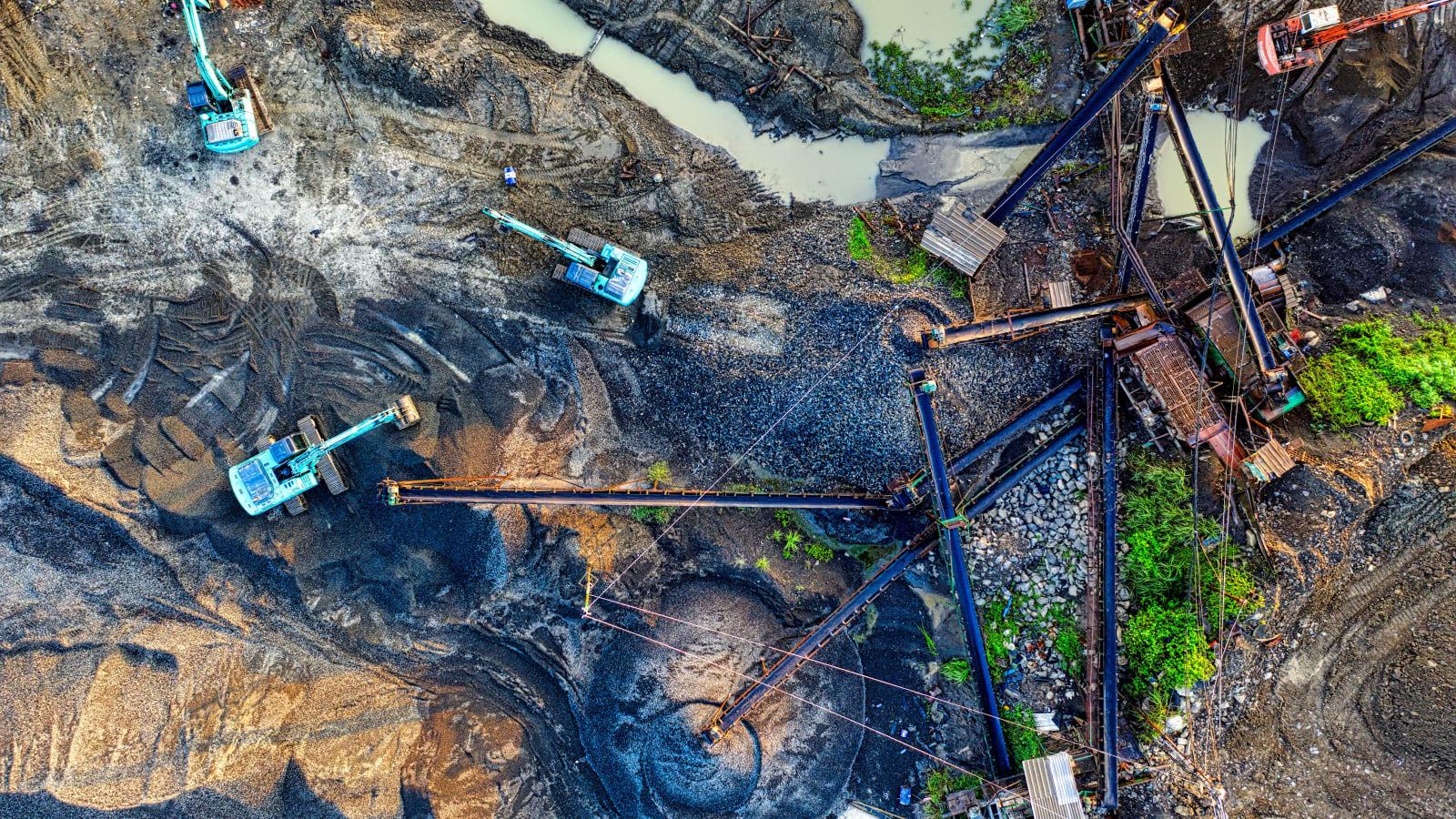
The Attorney General's Office says unlicensed coal mining by PT Asmin Koalindo Tuhup cost the state Rp17.7 trillion in financial losses alone, a figure built by prosecutors and state auditors across nearly nine years of operations. The number that has not yet been calculated, the broader economic loss to the country, is the more instructive part of the case.
What Kejagung announced
On July 16, 2026, Anang Supriatna, head of the Legal Information Center at Indonesia's Attorney General's Office (Kejaksaan Agung, or Kejagung), told reporters that investigators, working with the Financial and Development Supervisory Agency (BPKP), had arrived at a figure for the state's financial loss in the corruption case involving coal magnate Samin Tan: Rp17.7 trillion. "Kerugian negara dalam kasus dugaan korupsi yang melibatkan Samin Tan sudah keluar, yakni Rp17,7 triliun," Supriatna said, adding a distinction that matters more than the headline number itself: this figure covers only kerugian keuangan negara, the state's direct financial loss, and does not yet include kerugian perekonomian negara, the broader loss to the national economy.
The case centers on PT Asmin Koalindo Tuhup (AKT), a coal mining company in Murung Raya district, Central Kalimantan, that Samin Tan founded. AKT's coal contract of work (PKP2B) was revoked by the Ministry of Energy and Mineral Resources in 2017. Investigators allege the company kept mining and selling coal for close to eight years afterward, through 2025, by routing production through the RKAB, or annual work and budget plan, of a separate company, PT Mantimin Coal Mining. Alongside the mining allegations, prosecutors have also named Samin Tan a suspect in a related case involving falsified verification reports used to obtain sailing permits for coal shipments, and a separate, earlier case tied to non-cash fuel sales between PT Pertamina Patra Niaga and AKT between 2009 and 2012.
How the case was built
The scale of the investigation is itself notable. Prosecutors say they have gathered 1,626 documents, examined 129 pieces of electronic evidence, and questioned 80 witnesses over the course of the inquiry. Investigators seized roughly 60,000 metric tonnes of coal along with hundreds of units of heavy mining equipment from multiple locations during searches. Five suspects have now been named in connection with the mining case: Samin Tan himself; Bagus Jaya Wardhana, a director of PT AKT; Handry Sulfian, a former harbormaster at Rangga Ilung; Helmi Zaidan Mauludin, general manager of PT OOWL Indonesia; and the owner of PT Cordelia Bara Utama, added most recently in connection with the alleged falsified export documents.
That last thread, the falsified shipping paperwork, is what let an unlicensed mine keep exporting for years without triggering an automatic stop. According to Kejagung's account, verification reports used to secure the sailing permits (Surat Persetujuan Berlayar) required for each coal shipment were allegedly falsified, allowing cargo mined without authorization to move through the same export channels used by licensed operators. It is a reminder that a revoked permit only functions as a control if every downstream checkpoint, port authority sign-off, export documentation, and verification report, actually enforces it.
"Kerugian negara dalam kasus dugaan korupsi yang melibatkan Samin Tan sudah keluar, yakni Rp17,7 triliun. Ini hanya kerugian keuangan negara, belum termasuk kerugian perekonomian negara."
Supriatna's own framing of the figure is worth sitting with. Indonesian anti-corruption law and BPKP practice draw a formal line between kerugian keuangan negara, the direct, countable loss of state funds or assets, and kerugian perekonomian negara, the wider damage to the national economy, lost opportunity, degraded resources, foregone regional development, that a prolonged illegal operation can cause. Kejagung has only completed the first calculation. The second, arguably the more consequential one for Central Kalimantan's economy and environment after eight years of unauthorized extraction, is still to come.
Context: this is not the state's first Rp17.7 trillion figure this year
By coincidence, Rp17.7 trillion is also the amount Indonesia's Supreme Court ordered a group of palm oil exporters, including Wilmar, Permata Hijau, and Musim Mas, to pay in a September 2025 ruling, a case unrelated to Samin Tan but decided under a similar logic: that regulatory violations by resource companies carry a quantifiable price, and that price can and should be calculated with rigor rather than estimated loosely. Samin Tan himself was previously handed a Rp4.24 trillion administrative fine in February 2026 over the same mining dispute, which by the time of the July announcement remained unpaid. The escalation from an unpaid Rp4.24 trillion administrative fine to a calculated Rp17.7 trillion criminal loss figure illustrates how far a case can move once prosecutors and auditors, rather than a regulator alone, take up the accounting.
Why the valuation gap is the real story
For an operator or a regulator thinking about mining governance, the more useful lesson from the Samin Tan case is not the size of the number but the fact that Indonesia now routinely produces numbers like it at all. Calculating Rp17.7 trillion in direct financial loss across nearly a decade of unlicensed production, spanning permit history, export volumes, royalty and tax shortfalls, and falsified compliance paperwork, requires the same disciplined, document-heavy, cross-agency methodology that underpins the country's environmental economic loss framework, the one applied in cases such as the PT Timah tin mining valuation, where BPKP and environmental experts priced ecological damage, economic loss, and recovery cost as three distinct components.
That the kerugian perekonomian negara component in the Samin Tan case is still outstanding is not a gap in the investigation so much as a preview of how much value this kind of calculation still has to capture. Eight years of unauthorized coal extraction in Central Kalimantan will have left a measurable footprint beyond the Rp17.7 trillion already tallied: land disturbed without an approved reclamation plan, water systems affected by production the AMDAL process never accounted for, and regional revenue that legitimate royalty and tax channels never received. Whenever that second figure is calculated, it will likely draw on exactly the kind of GIS-based land assessment, water and ecosystem condition data, and standardized economic-loss methodology that Sirkularium works with mining and resource operators to apply proactively, rather than after prosecutors have already opened a file.
What comes next
The case against Samin Tan and his co-defendants is ongoing, and Kejagung has signaled the Rp17.7 trillion figure could still move as the investigation continues; Supriatna noted the calculation remains provisional pending further audit work. What is already established is enough to be instructive: a permit revoked in 2017 did not, on its own, stop production, and it took years of document collection, witness testimony, and cross-agency auditing before the state could put a number on what that gap actually cost.
Sirkularium's view
The Samin Tan case is best read as a demonstration of state capacity rather than a story about a single bad actor. Kejagung and BPKP have shown they can reconstruct nearly a decade of unlicensed mining activity and attach a credible financial figure to it, drawing on the same evidentiary rigor that Indonesia's environmental-loss methodology already applies elsewhere in the resource sector. The lesson for legitimate operators is not caution so much as opportunity: the tools that produced Rp17.7 trillion in this case, GIS-based land and production mapping, document-based audit trails, methodologically consistent loss calculation, are the same tools that let a compliant company demonstrate, proactively and continuously, that its own land use, water impact, and reclamation obligations are fully accounted for. Commissioning that kind of independent economic valuation before a regulator or prosecutor asks for it is the more efficient path, for the operator and for the government agencies, including KLHK, tasked with keeping Indonesia's resource sector both productive and accountable.
Sources
- CNN Indonesia, Kejagung announces state loss in Samin Tan case reaches Rp17.7 trillion
- Katadata, Attorney General's Office alleges Samin Tan cost the state Rp17.7 trillion
- RMOL.id, state loss in Samin Tan case estimated at Rp17.7 trillion
- AFU.id, state loss figure in Samin Tan case jumps to Rp17.7 trillion, what drove the increase
- ANTARA News, Kejagung: state loses Rp17.7 trillion from Samin Tan corruption case
- Jurnal Batam, Kejagung reveals alleged falsified coal export documents, PT Cordelia Bara Utama boss named new suspect
- Tempo.co, the case history of Samin Tan, now a suspect in Pertamina corruption case