Badung puts its own glass bottle on the table, using a regency water utility to cut single use plastic in hotels
By Sirkularium Editorial Team, 9 min read
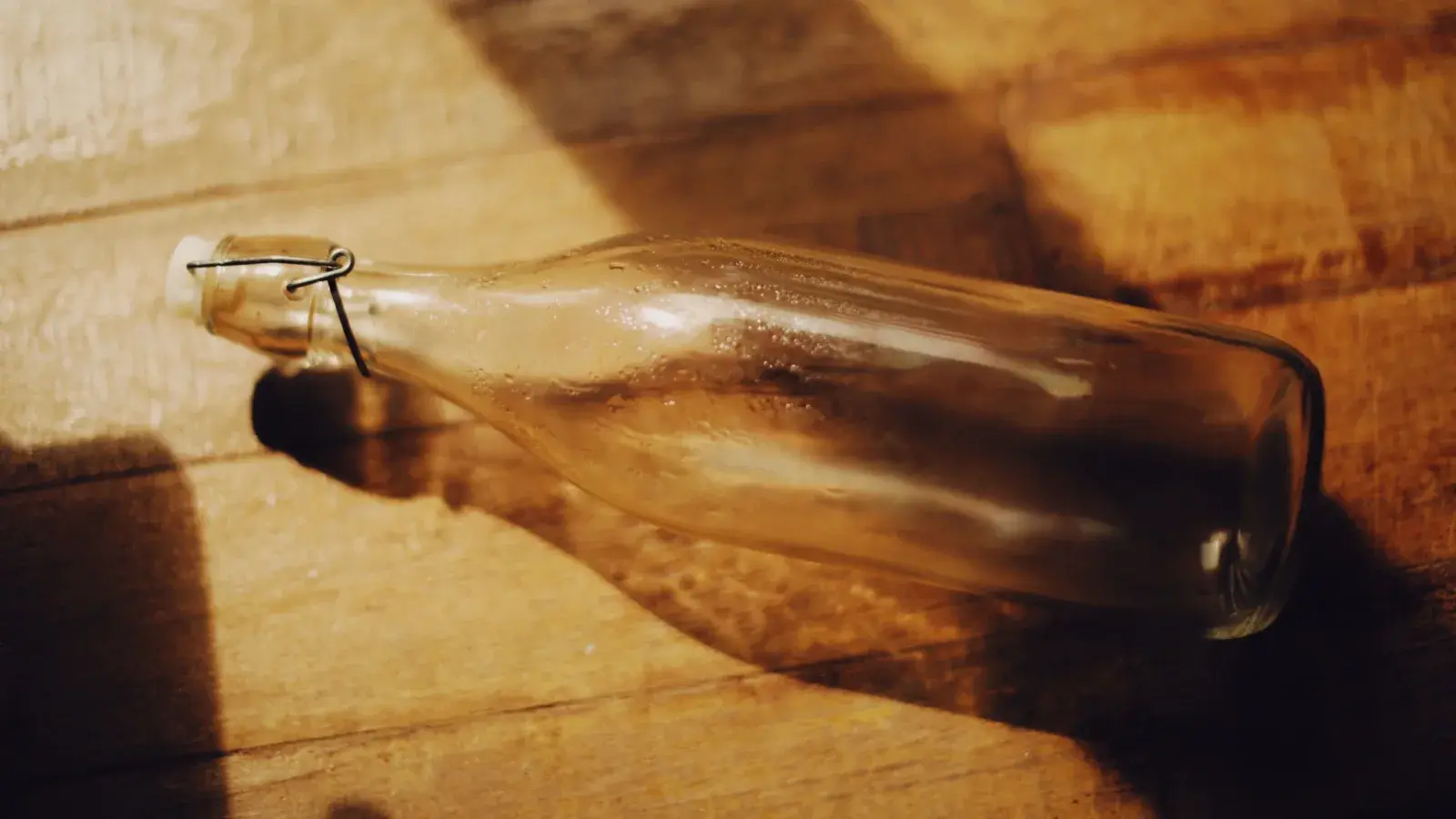
On Friday 18 September 2026 the Badung regency government and Institut Teknologi Sepuluh Nopember Surabaya soft launched Baliss drinking water in returnable glass bottles, aimed first at government offices, hotels and the tourism industry. The move gives Badung a supply side answer to a sector that accounts for 41 percent of the regency's waste.
A regency utility puts its own bottle on the table
On Friday 18 September 2026, in the Kriya Gosana meeting room at the Badung government centre in Mangupura, the regency government held a soft launch for something most local administrations do not have, a drinking water product of its own designed specifically to displace single use plastic. Regent I Wayan Adi Arnawa announced that PT Badung Hebat Jaya, together with PT ITS Badung Hebat, was releasing Baliss packaged drinking water in glass bottles. The premium glass format joins gallon and carton versions of Baliss already on the market, and the first customers in the plan are government offices, hotels and the wider tourism industry.
The partners behind it are worth naming. The cooperation runs between the Badung regency government, Institut Teknologi Sepuluh Nopember Surabaya and PT ITS Tekno Sains, with the regency water utility Perumdam Tirta Mangutama supplying the product base. ITS Rector Bambang Pramujati attended, alongside Badung regional secretary IB Surya Suamba and Tirta Mangutama directors I Made Putra Wijaya and I Made Suarsa. The regent framed the packaging choice plainly, as a format designed to reduce plastic waste in Badung. The rector framed the ambition, saying he hoped the product would serve markets beyond the regency rather than stopping at its boundary.
A regency that already runs a water utility has a lever most administrations overlook. It does not have to ask the hospitality sector to buy less plastic. It can offer the alternative itself, at a price it sets, through a company it owns.
Why packaging is the right lever in this particular regency
Badung is where Bali's tourism economy is concentrated, and its waste profile reflects that. Data presented at the regency level in May 2026 put the hotel, restaurant and cafe sector, known locally as horeka, at 41 percent of the total waste stream, with the organic fraction dominant. More than 40 percent of non household waste in Badung comes from that same sector. Over 70 percent of Badung's own source revenue derives from tourism, principally hotel and restaurant taxes, so the sector that generates the waste is also the sector that funds the services handling it.
That alignment is what makes a packaging intervention sensible rather than symbolic. Bottled water in hotel rooms, meeting rooms and restaurants is one of the most predictable plastic streams in any tourism economy, and it is a stream that a returnable glass format can genuinely replace. A glass bottle that goes back to the filler is not a recycling proposition, which depends on downstream sorting capacity. It is a reuse proposition, which removes the item from the waste stream before any sorting is needed.
Badung has been moving in this direction on the regulatory side for months. In May 2026 the regency set out clear expectations for horeka operators, that waste is separated at source, that organic material is processed on the business premises rather than sent to final disposal, that single use plastic use falls in a way that can be demonstrated, and that each business keeps a verified record of how its waste is handled. Regent Arnawa was direct about the organic requirement, saying organic waste must be managed independently at each business location and not delivered straight to final processing. Provincially, Governor Wayan Koster has asked tourism operators to treat independent waste management as an operational budget line rather than a corporate social responsibility gesture, with 401 tourism entities in Badung under structured monitoring.
The numbers behind Badung's source based programme
Badung publishes a clearer set of figures than most Indonesian regencies, which makes it possible to size the opportunity. As reported in July 2026, the regency generates 876.1 tonnes of waste per day. Of that, 614.4 tonnes, or 70.2 percent, is already managed, leaving 261.7 tonnes, or 29.8 percent, still to be brought into the system. The regency operates 47 TPS3R facilities with a combined processing capacity of 298.2 tonnes per day. Figures reported in May 2026 gave a managed volume of 661 tonnes per day against roughly 215 tonnes unhandled, so the two readings differ, and the difference is worth flagging rather than resolving silently, since measurement periods and definitions are not identical.
The delivery infrastructure underneath those totals is substantial. Household data collection has reached 91 percent, covering 122,951 of 134,270 families across 62 villages. Seventeen villages have sorting rates above 90 percent. There are 207 active waste banks. Some 662 educational institutions are participating, covering 99,250 students. Twenty one of 54 traditional markets and 327 of 1,473 modern retail outlets have adopted separation. Among more than 5,000 horeka businesses surveyed, sorting had reached 52.7 percent and independent organic processing about 23 percent.
Those last two numbers are where the Baliss launch becomes interesting. A little over half of hospitality businesses are sorting, and roughly a quarter are handling their own organic material. Both figures have room to grow, and both improve faster when the volume of material needing management falls in the first place. Every case of glass bottles that replaces a case of plastic ones lowers the sorting burden on a hotel rather than adding to it.
A university partnership that reaches past the bottle
The agreement signed in Mangupura is broader than a drink product. Three strands were confirmed at the same session. The first is the Baliss glass bottle itself. The second is the Nak Badung affirmative scholarship, under which high achieving students from Badung gain a direct pathway to study at ITS Surabaya without going through the general selection route. The third, and the one with the longest tail for waste policy, is a commitment to implement integrated environmental management technology covering urban waste handling and sustainable water management in the regency.
That third strand matters because it changes the character of the relationship. A regency buying equipment buys an asset that depreciates. A regency partnered with an engineering institute gains a design and troubleshooting capability, and the scholarship stream means some of the engineers who eventually operate those systems will be from Badung. For a regency with 47 TPS3R facilities to keep running and 261.7 tonnes a day still to bring into the system, sustained technical support is worth more than any single procurement.
Procurement is the quiet instrument
The most transferable part of this story is the customer list. Badung named government offices first, ahead of hotels and the tourism industry. That sequencing is the whole method. A regency that serves its own bottled water at every official meeting, training session and ceremony creates a base volume that makes the production line viable, demonstrates the product publicly, and removes the awkwardness of asking businesses to do something the administration has not done itself.
Public procurement is a policy instrument that costs nothing extra when the purchase was going to happen anyway. Water for meetings is already a budget line in every regency in Indonesia. Directing that existing line toward a returnable format converts routine spending into both waste reduction and revenue for a regionally owned enterprise. The revenue point is not incidental. A product that earns money is a waste intervention that does not compete with other programmes for budget, which is usually the reason good interventions stop after a pilot.
The test of this launch will not be the ceremony. It will be whether a hotel purchasing manager in Nusa Dua finds the glass option available, reliably delivered, and priced close enough to the plastic one to justify the switch.
Sirkularium's view for government and public institutions
Sirkularium reads the Baliss glass bottle as a practical example of a regency using assets it already owns, a water utility and its own purchasing power, to act on the upstream end of the waste hierarchy. Three observations follow for other administrations.
First, look at reuse before recycling. Indonesian waste policy discussion moves quickly to processing capacity, and the national build out of processing facilities is necessary. But a returnable bottle removes material from the stream entirely, and it does so without capital cost to the government if a regionally owned enterprise or an existing utility carries the production. Regencies with a water utility and a large hospitality sector have the same opening Badung has.
Second, pair the product with the reverse logistics. A glass bottle only delivers its benefit if it comes back. The operational questions to settle early are who collects the empties, at what frequency, how they are washed and inspected, and what the deposit or exchange arrangement looks like for a hotel with a thousand rooms. Badung's existing network of 47 TPS3R facilities and 207 waste banks gives it collection points that most regencies would have to build.
Third, use compliance and supply together. Badung is asking horeka operators to separate waste, process organic material on site and reduce single use plastic. Offering a regency backed alternative at the same time turns a requirement into a workable transition, which is the difference between a rule that is met and a rule that is merely issued. That combination, a clear expectation paired with an available substitute, is the part other regional governments can copy directly.
What to watch next is the move from soft launch to standing supply, meaning published pricing, confirmed distribution to hotel groups in Kuta, Nusa Dua and Seminyak, a stated return rate target for the bottles, and whether the ITS partnership converts into a concrete urban waste technology project during 2027.
Badung's daily waste balance and processing capacity, 2026
Values in tonnes per day
Sources
- detikBali, Badung regency releases glass bottled drinking water to cut plastic waste
- Bali Post, Badung and ITS Surabaya release the environmentally friendly Baliss glass bottle
- Kilas Bali, detail of the Badung and ITS cooperation at Puspem Badung on 18 September
- Update Bali, Badung launches the Baliss glass bottle alongside the Nak Badung scholarship
- Bali Post, Badung makes source based waste results an indicator for the Mangupura Award
- Bali Post, 41 percent of waste comes from the hotel, restaurant and cafe sector
- Bali Post, Badung tightens rules for the hotel, restaurant and cafe sector
- Bali provincial government, Governor Koster on tourism businesses managing their own waste