
Jakarta sets a firm date to end open dumping at Bantargebang
By Sirkularium Editorial Team, 9 min read
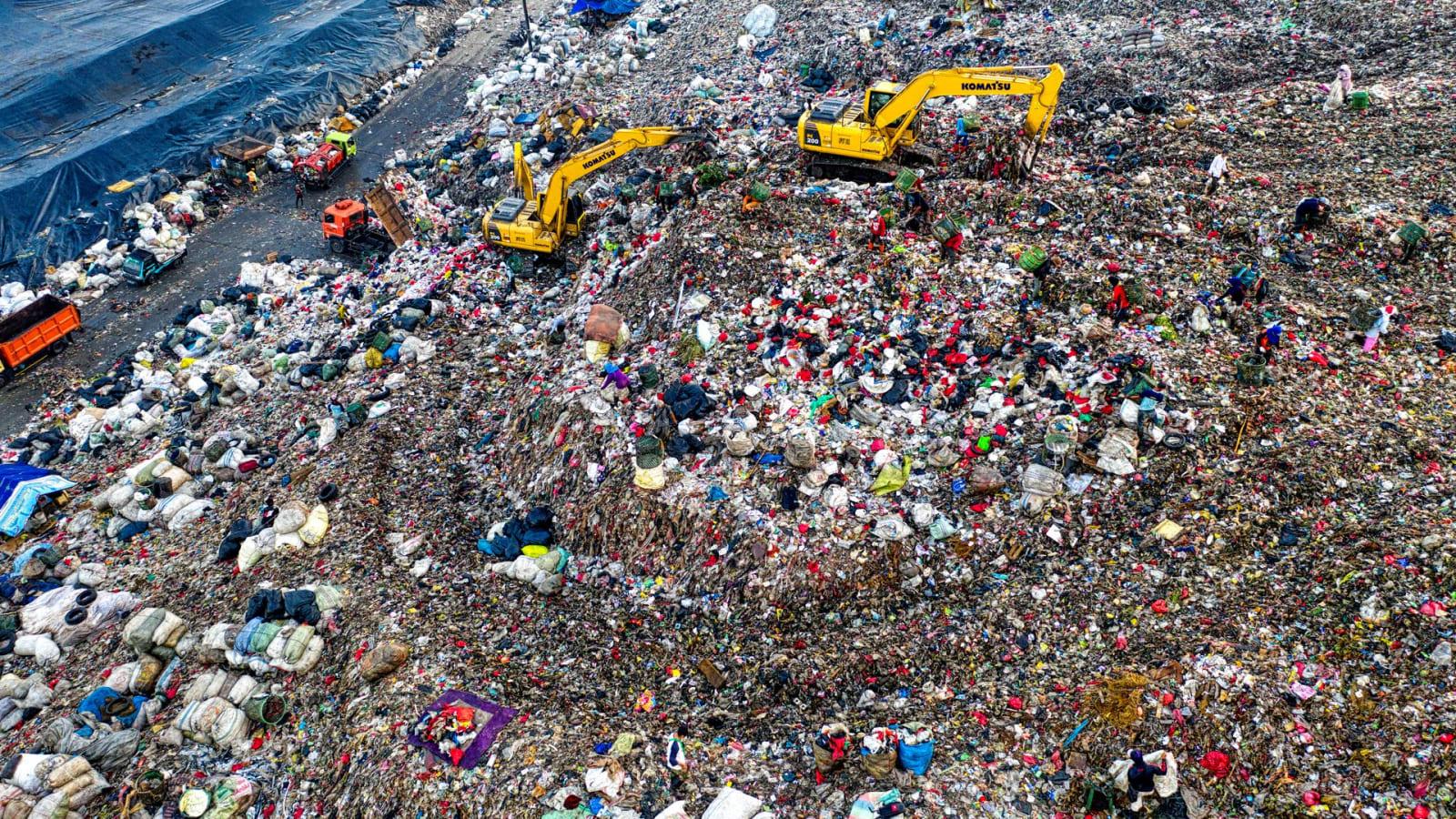
Starting 1 August 2026, Jakarta's environmental agency begins a phased shift from open dumping to a controlled landfill system at TPST Bantargebang, with open dumping's share of waste management targeted to fall from 72.56 percent today to zero by 2028.
A phased end date for Jakarta's oldest waste practice
The Jakarta Provincial Government will begin retiring open dumping at TPST Bantargebang, the city's primary waste site in Bekasi, starting 1 August 2026. Dudi Gardesi, Head of the DKI Jakarta Environmental Services Agency (Dinas Lingkungan Hidup), announced the transition on 17 to 18 July 2026, describing it as a staged move rather than an overnight switch, so that daily waste transport and disposal services for the capital are not disrupted while the new system comes online.
"Mulai 1 Agustus, kami memulai transisi secara bertahap dari praktik open dumping menuju pengelolaan controlled landfill," Gardesi said, confirming the start date and the gradual nature of the shift. In practice, this means Jakarta is replacing the decades-old habit of tipping waste onto open ground with a controlled landfill method: waste is placed in defined cells, compacted in layers, and periodically covered with cover material to suppress odor, cut fire risk, and reduce the chance of the kind of slope failure that has struck the site before.
Bantargebang has operated since 1989 and today receives roughly 7,200 to 7,800 tonnes of municipal waste from Jakarta each day, with some estimates putting the true figure closer to 9,000 tonnes once informal collection activity around the site is counted. Sources vary on the precise daily tonnage, a reminder of how difficult granular measurement remains at a facility of this scale, but the direction of travel is not in dispute: the site is Jakarta's single largest point of waste disposal, and how it is managed shapes the trajectory of the whole city's waste performance.
The numbers behind the transition
DKI Jakarta has published a quarter-by-quarter roadmap for the shift, developed jointly with the Ministry of Environment as part of what officials describe as a broader push toward a fully managed municipal waste system.
In the second quarter of 2026, open dumping still accounted for 72.56 percent of how waste was handled at Bantargebang, while processing through newer facilities reached only 7.59 percent. For the third and fourth quarters of 2026, the government has set a target of reducing open dumping to 50.34 percent, with controlled landfill methods covering 8.39 percent and facility-based processing rising to 20.28 percent. By 2027, the share of waste routed through processing facilities is targeted to reach 45.65 percent. The roadmap's endpoint is 2028, when open dumping is meant to be eliminated entirely and replaced by a combination of controlled landfill management and expanded processing capacity.
Alongside the operational shift, the city has already carried out infrastructure work at the site: partial closure of landfill sections with geomembrane covering, repairs to sanitation systems, development of a wastewater treatment installation (Instalasi Pengolahan Air Sampah, IPAS), slope stabilization work, and strengthened mitigation measures at points identified as landslide-prone.
Why the timeline matters now
The urgency behind this roadmap traces back to a specific and painful event. On 8 March 2026, a section of the waste pile in Zone IV of Bantargebang collapsed following extreme rainfall of 264 millimeters in a single day, which saturated the waste mass and triggered a slide. Initial reports counted four fatalities; that toll was later revised upward as search and rescue operations continued, with the Jakarta SAR office confirming seven deaths and six survivors before formally closing the search on 10 March 2026.
Then-Minister of Environment Hanif Faisol Nurofiq called the incident a warning that should not have been necessary had management followed existing rules, and described Bantargebang as the visible tip of a much larger problem in how Jakarta handles its waste. His ministry opened an investigation into high-risk waste sites nationally and pursued legal proceedings under Indonesia's environmental protection law, which carries penalties of five to ten years in prison and fines of five to ten billion rupiah for serious violations.
"Kejadian ini seharusnya tidak perlu terjadi jika pengelolaan dilakukan sesuai aturan," the minister said in the aftermath of the landslide, framing the tragedy as a management failure that stricter, more systematic practice could have prevented.
Four months on, the controlled landfill rollout at Bantargebang is one concrete answer to that call. Regular compaction and cover material directly address the two conditions that made the March slide possible: an unstable, saturated mass of loose waste with no structural containment. The current pile height at the site, estimated at around 60 meters, underscores why the physical engineering of the landfill, not only its throughput, is now part of the policy conversation.
What controlled landfill actually changes on the ground
Controlled landfill is a recognized intermediate step between open dumping and full sanitary landfill or waste processing, widely used where processing capacity has not yet caught up with daily waste volumes. Waste is deposited in engineered layers rather than left as an unstructured heap, compacted to reduce voids and settlement risk, and covered on a regular cycle rather than left exposed. Each of these steps reduces the three hazards that recur at ageing dumpsites: methane buildup and fire, leachate contamination of surrounding water, and structural collapse of the pile itself.
Fahmi Hermawan, Head of the Waste Management Division at DKI Jakarta's environmental agency, framed the shift as one that extends beyond government machinery alone. "Sampah bukan hanya persoalan pemerintah tetapi semua stakeholder untuk mulai mengelola, mengurangi sampah di tingkat sumbernya," he said, tying the Bantargebang upgrade to the parallel, longer-term task of reducing waste generation and improving sorting at the household and business level across the city, so that less waste reaches the landfill gate in the first place.
What comes next for Jakarta and for national policy
The Bantargebang roadmap sits alongside a broader national effort. The Ministry of Environment has separately signaled plans to convert parts of Bantargebang toward inorganic-only waste handling over the longer term and to expand refuse-derived-fuel processing at Jakarta's Rorotan facility, with a stated ambition of reaching 8,000 tonnes per day of safely processed capacity across the city's facilities. These strands, the Bantargebang landfill upgrade, RDF capacity expansion, and continued household-level sorting, are meant to work together rather than as substitutes for one another.
For government and public institutions watching this transition, three things are worth tracking over the next two quarters. First, whether the Q3-Q4 2026 targets, open dumping down to 50.34 percent and controlled landfill up to 8.39 percent, are actually met, since a published roadmap only builds credibility once its first milestone is verified. Second, how the financing and contracting for expanded processing capacity is structured, given that the 2027 and 2028 targets depend on facilities that do not yet exist at the necessary scale. Third, whether the safety improvements at Bantargebang, geomembrane covering, slope stabilization, and the wastewater installation, measurably reduce landslide risk during the next rainy season, which will be the clearest real-world test of whether this transition is delivering on its central promise.
Sirkularium's assessment is that Jakarta's decision to publish specific, dated, quarterly targets rather than a general commitment is itself a meaningful signal, and one other regional governments managing legacy open dumpsites could usefully study. Institutions with a stake in solid waste governance should treat the coming two quarters as a test case: if Jakarta hits its own numbers, the model becomes a strong candidate for replication in the dozens of other Indonesian cities and regencies still working toward the national deadline to end open dumping.
Open dumping's share of Bantargebang waste management
Values in %
Sources
- Antara News, Pemprov DKI terapkan controlled landfill di TPST Bantargebang mulai 1 Agustus
- Detik News, Pemprov DKI Mulai Hentikan Open Dumping di Bantargebang pada 1 Agustus
- GEBRAK.ID, Jakarta Hentikan Open Dumping di Bantargebang Mulai 1 Agustus, Gunungan Sampah Capai 60 Meter
- Republika ESGNow, Pemprov Jakarta Ubah Pengelolaan Sampah Bantargebang, Terapkan Controlled Landfill Mulai 1 Agustus
- CNBC Indonesia, 7 Tewas Akibat Tragedi Bantar Gebang, Begini Kronologi-Pemicu Longsor
- Kementerian Lingkungan Hidup, Bantar Gebang Longsor Lagi: Menteri LH Kita Harus Selesaikan Akar Masalah Sampah Jakarta Agar Tak Ada Lagi Korban