Banyumas offers its waste model to Ipoh, and turns a district system into an ASEAN export
By Sirkularium Editorial Team, 8 min read
On 4 August 2026 a delegation from Malaysian waste operator Selekta Spektra met Banyumas Regent Sadewo Tri Lastiono in Purwokerto to explore waste management cooperation under a planned sister city arrangement. Banyumas, which now manages 574.52 tonnes of waste a day through about 45 community run facilities, offered itself as a testing ground for technology before it is deployed in Ipoh.
A Malaysian delegation spent Tuesday, 4 August 2026, in a meeting room in Purwokerto asking how an Indonesian district turned its waste service from a budget line into a source of income. The visitors came from Selekta Spektra Sdn Bhd, a company based in Ipoh that Indonesian reports describe as appointed by the Malaysian government to handle waste management work. Their host was Sadewo Tri Lastiono, Regent of Banyumas, who received the group at the Joko Kahiman hall inside the Si Panji complex, the seat of the district administration.
The meeting was reported by ANTARA News Jateng and by ANTARA's Kuala Lumpur desk, which framed it as a step in a sister city arrangement between Banyumas and Ipoh that has been under discussion for some time. Harian Jogja and Tribun Jateng covered the same session. The delegation was led by Selekta Spektra chief executive Eliza Lee.
What makes the meeting notable is the direction of the exchange. Banyumas was not asking for Malaysian technology. It was offering its own, and offering to host the trials.
What the delegation came to see
Banyumas has no conventional final disposal site in the sense most Indonesian districts would recognise. Instead the district built a distributed network of processing points close to where waste is generated. According to ANTARA News Jateng, roughly 45 integrated waste processing sites, TPS3R units and recycling centres are in operation across the district, employing more than 1,500 people, with women making up a large share of the sorting workforce.
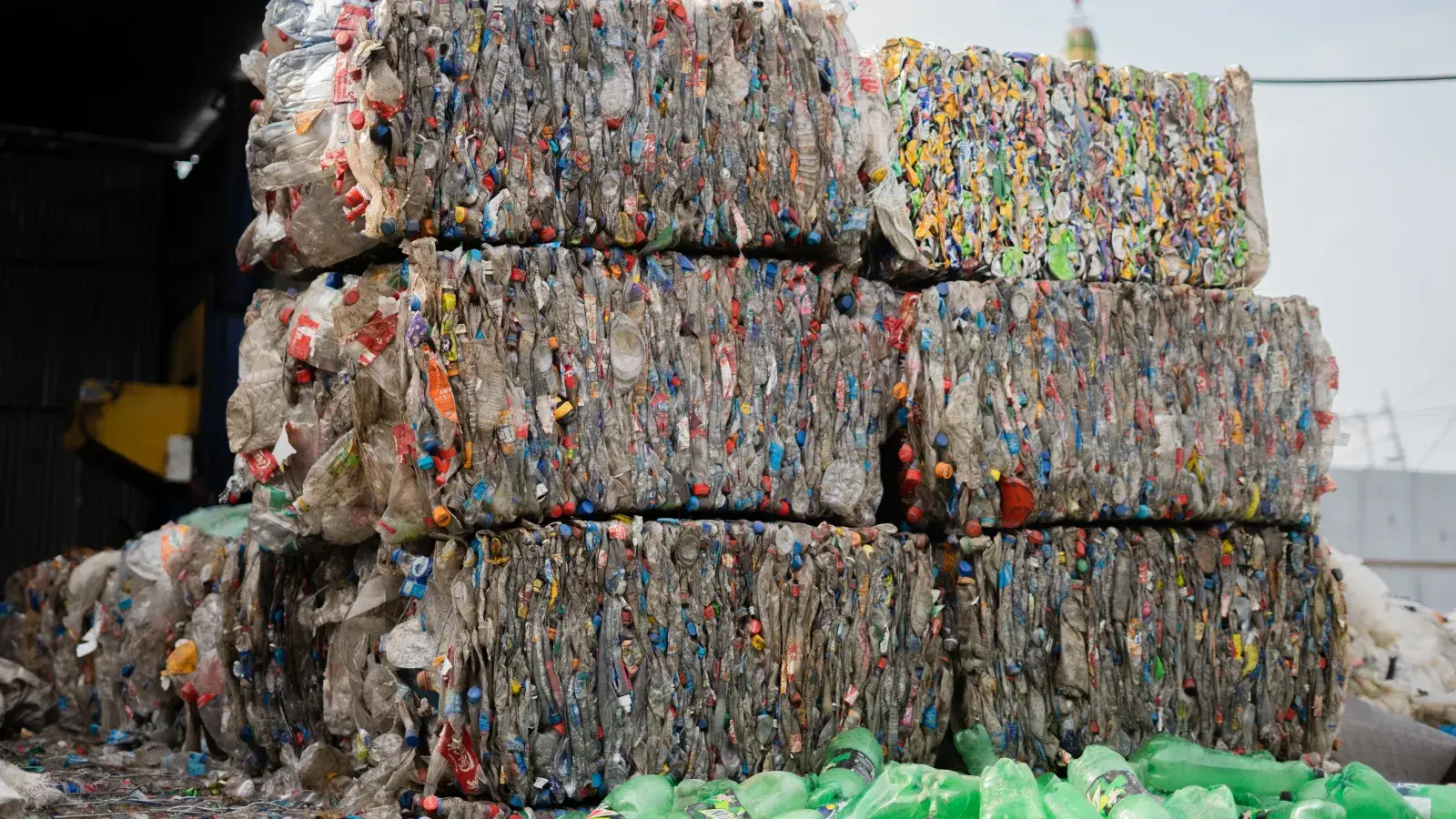
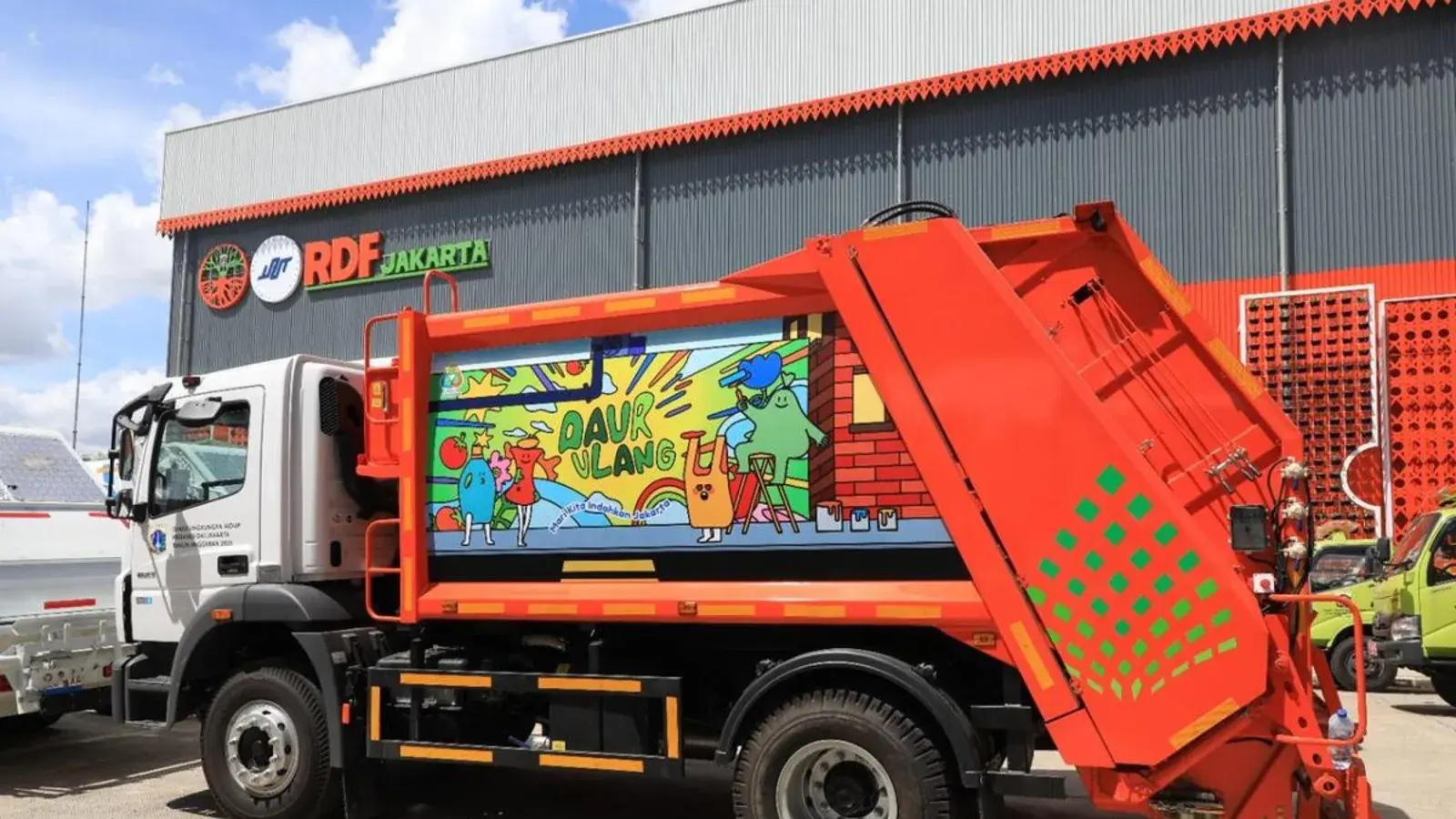
The output side is where the district departs from the standard model. Organic material feeds black soldier fly cultivation, producing fresh maggot for animal feed and kasgot as a soil amendment. Plastics that cannot be recycled conventionally are pressed into roof tiles and paving. The remaining combustible fraction becomes refuse derived fuel. Regent Sadewo has identified the buyers: PT Solusi Bangun Indonesia at its Cilacap plant and PT Sinar Tambang Arthalestari at Ajibarang, both cement producers that take RDF as a coal substitute.
The district describes the philosophy in a phrase its officials use consistently: zero waste to money. The point is not that waste disappears. The point is that each stage of processing produces something with a buyer attached, so the system generates the revenue that keeps it running.
The numbers behind the offer
The scale is now meaningful. Banyumas generates about 738.80 tonnes of waste a day, of which 574.52 tonnes, or 77.76 percent, is managed through the network. Roughly 164 tonnes a day has not yet entered a processing facility, which is the gap the district is working to close. Regent Sadewo has indicated that about ten more facilities are needed to reach the zero waste target ahead of 2029.
Individual sites run at modest scale by design. The TPST at Sokaraja Kulon processes around 10 tonnes a day on an eight hour shift and could reach 15 tonnes with optimisation, according to the regent. The system works because there are many such points, not because any one of them is large.
The fiscal record is the part that draws visitors. Speaking in February 2026, Regent Sadewo said the district spent below Rp10 billion from its 2025 regional budget on waste management, an efficiency gain of more than 75 percent against the roughly Rp40 billion it was spending in 2018. Other accounts of the same transition, including the regent's remarks to a Selangor delegation in April 2026 reported by RRI Purwokerto, describe the shift as a fall from about Rp30 billion a year to about Rp5 billion. The two framings use different baseline years and different budget lines, and Sirkularium notes the difference rather than reconciling it. The direction is consistent across every account: the cost of the service fell substantially while coverage rose.
Why the Malaysian side is interested
Eliza Lee's stated interest was specific. Malaysian operators already have processing capability, and in several respects more advanced equipment than Banyumas uses. What they were looking at in Purwokerto was the economics wrapped around the processing.
What we have is only processing, but here there is a circular economy.
That distinction matters for any government weighing capital intensive treatment against distributed, revenue generating systems. A plant that treats waste is a permanent expenditure. A network that sells maggot, kasgot, paving and RDF recovers part of its own operating cost and creates local employment while doing it.
Regent Sadewo's proposal was practical. Banyumas would serve as the trial site: test the technology and the operating model there first, and if it performs, apply it in Ipoh. For a Malaysian operator, that removes the cost and risk of piloting at home. For Banyumas, it brings partners and potential investment into a system it is still extending.
This is not the first approach from Malaysia. In April 2026, a delegation from KDEB Waste Management Selangor led by chief executive Dato Ramli visited Banyumas and met the regent alongside Widodo Sugiri, head of the district environmental service. RRI Purwokerto reported that the discussion covered processing technology transfer, business to business investment, pilot work on plastic pellet production, and a possible memorandum of understanding. Two Malaysian delegations in four months suggests sustained interest rather than a single courtesy call.
The national endorsement behind it
The international attention follows domestic recognition. On Tuesday, 28 April 2026, President Prabowo Subianto inspected TPST BLE in Banyumas, walking the process from pre shredder and tromol screen through organic shredding and conveyor sorting to the finished products. The Kantor Staf Presiden account records his assessment directly.
So I think this is very effective. It becomes an example for many provinces, many districts, and there are even people from other countries who come here.
The President's observation about foreign visitors was made in April. The Ipoh delegation in August is that observation continuing.
Sirkularium's view
For government and public institutions, the Banyumas case carries three practical readings.
The first concerns sequencing. Banyumas did not begin with a large treatment plant. It began with a distributed network, secured offtake agreements for its outputs, and let the revenue from those outputs carry part of the operating burden. Districts facing the national move away from open dumping, which took effect on 1 August 2026, have a working domestic precedent for a lower capital pathway, one that does not require the tariff structures a large thermal facility needs.
The second concerns offtake. The Banyumas system holds together because cement producers buy the RDF and farmers buy the maggot and kasgot. Any district replicating the model should treat the offtake agreement as the first step rather than the last. Processing capacity without a buyer becomes a stockpile.
The third concerns positioning. Indonesia has spent years receiving technical assistance on waste management. Banyumas is now on the other side of that exchange, with a Malaysian operator asking to pilot in Central Java. That is a form of soft power worth institutionalising. A sister city arrangement is a useful vehicle, but the value compounds if the district and the province document the operating model, the tariff and offtake structures, and the community group governance in a form that other administrations can adopt without a site visit.
What to watch next: whether the Banyumas and Ipoh discussions produce a signed instrument and a defined trial scope, whether the roughly ten additional facilities Banyumas needs are financed within the 2027 budget cycle, and whether the Ministry of Environment folds the district network approach formally into the technology mix it is directing at the roughly 480 regencies and cities that will not be served by large scale thermal treatment.
Sources
- ANTARA News Jateng, Banyumas and Ipoh explore waste management cooperation
- ANTARA News Kuala Lumpur, sister city plan behind the Banyumas and Ipoh talks
- Harian Jogja Jateng, Banyumas and Ipoh explore waste cooperation with economic value
- Tribun Jateng, Banyumas Regent offers the district waste model to Malaysia
- ANTARA News Jateng, Banyumas waste management now built on the circular economy
- Kantor Staf Presiden, President Prabowo inspects TPST BLE Banyumas
- NU Online Jateng, Banyumas facilities manage 574.52 tonnes of waste per day
- RRI Purwokerto, Selangor studies the Banyumas waste management system