Bio Farma switches vaccine plant boilers to natural gas, cutting emissions and costs
By Sirkularium Editorial Team, 8 min read
Indonesia's largest vaccine producer has commissioned its first compressed natural gas facility in Bandung, projecting a 24 percent cut in boiler emissions and energy efficiency gains reported between 37 and 40 percent, a small but instructive template for industrial decarbonization in essential manufacturing.
A first for Indonesia's biggest vaccine maker
On July 15, 2026, PT Bio Farma (Persero) commissioned its first compressed natural gas facility at its production complex in Bandung, West Java. The company, the largest vaccine producer in Southeast Asia with products distributed to more than 150 countries, will now run the boilers that generate steam for its production lines on CNG rather than diesel as the primary fuel, with diesel kept only as backup in case of a gas supply interruption.
The project was realized with PT Gagas Energi Indonesia, known as PGN Gagas, a subsidiary of PT Perusahaan Gas Negara. It brings together two state-owned enterprises across different holding structures, Bio Farma under the state pharmaceutical holding and PGN Gagas under Pertamina's gas subholding, in what officials on both sides describe as cross-holding BUMN synergy. For a company whose core business is public health rather than energy, the move is a useful illustration of how industrial decarbonization is starting to reach sectors well outside the usual list of cement, steel, and nickel.
What PGN Gagas is supplying and why it fits
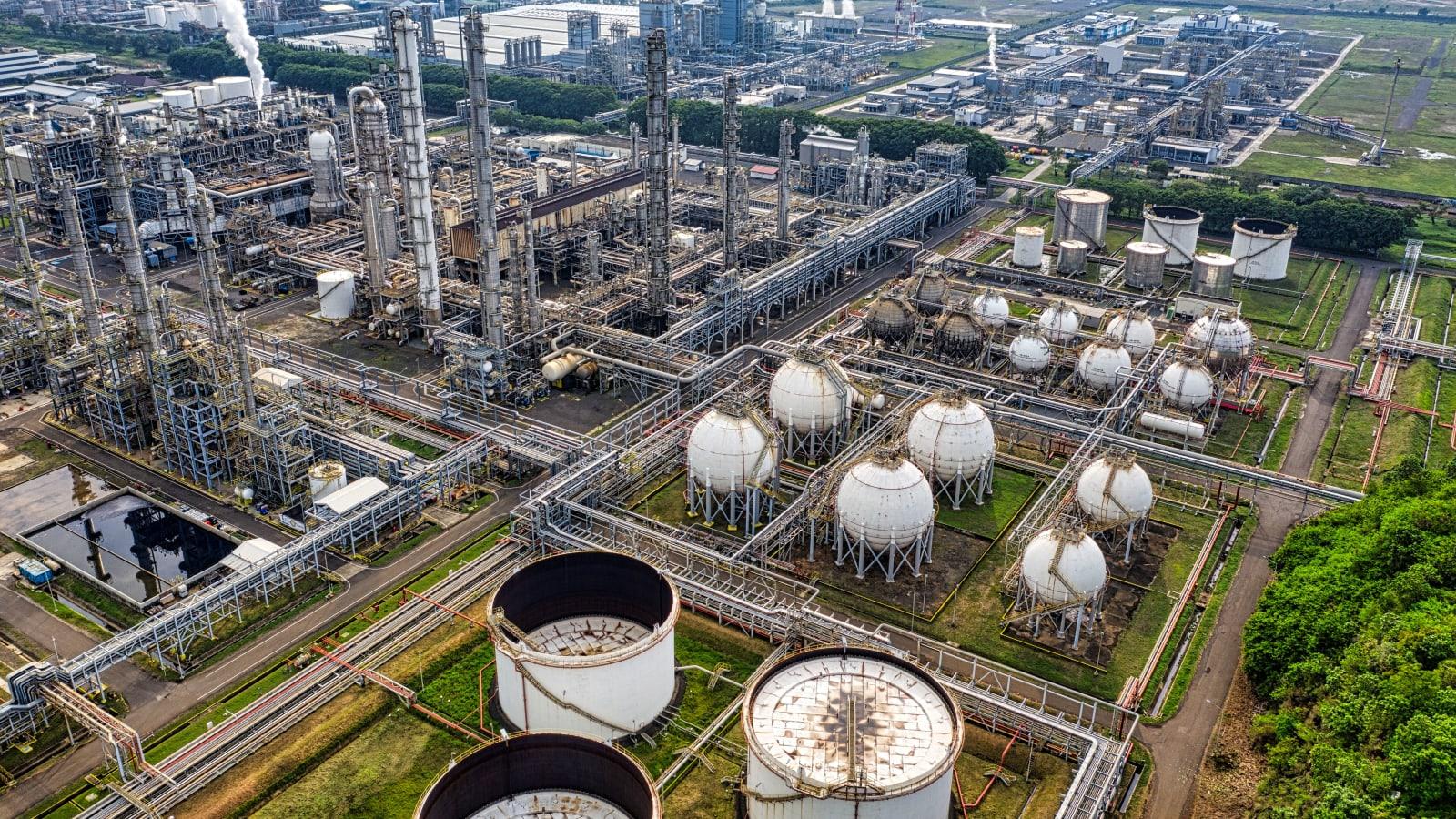
PGN Gagas will deliver approximately 300,000 cubic meters of CNG per month to the Bandung facility. The gas arrives through a dedicated setup built for this project: a CNG receiving shelter, a pressure regulating station, metering equipment, and a distribution pipeline network feeding directly into the plant's boiler burners and control panels.
CNG suits Bio Farma's situation because the Bandung complex sits off the main gas pipeline network. PGN Gagas exists specifically to serve industrial and commercial customers in that position, delivering gas by truck as CNG or LNG rather than through fixed pipes. According to the company, its Gaslink service already reaches more than 600 customers nationally and moves close to 11 billion British thermal units per day of gas, giving a sense of scale for the off-grid gas business Bio Farma has now joined.
Santiaji Gunawan, President Director of PT Gagas Energi Indonesia, framed the deal as part of a wider push to extend CNG into sectors the company considers essential. He noted that a stable energy supply to a facility like Bio Farma's is not a routine industrial concern but one connected to public health service continuity, since disruptions to vaccine production ripple outward to the health system that depends on it.
The efficiency and emissions numbers, and where they diverge
Bio Farma's own figures put the expected reduction in carbon dioxide emissions at around 24 percent compared with the diesel-fueled boiler operation it replaces, a number repeated consistently across reporting on the announcement. The efficiency side of the story is less uniform. Some outlets reported an annual energy cost saving of approximately 37 percent, describing it as dependent on facility utilization rates, production needs, energy prices, and operational conditions. Others reported the figure as a 40 percent gain in operational efficiency compared with the previous energy source. Sirkularium was not able to confirm from public reporting whether these are two descriptions of the same underlying calculation or two distinct metrics, one for cost and one for efficiency, and neither Bio Farma nor PGN Gagas has yet published a detailed methodology. Readers should treat the range, 37 to 40 percent, as the current public estimate rather than a single confirmed figure.
"Bio Farma is committed to implementing ESG principles, including through the use of low-emission fuel," said Iin Susanti, Director of Operations at PT Bio Farma, at the commissioning.
Whichever figure proves accurate on audit, the direction is the same: a lower-emission fuel that also costs less to run, which is the combination that tends to make industrial decarbonization commercially durable rather than dependent on subsidy.
Part of a broader industrial energy pattern
This announcement lands in the same week as Indonesia Energy Week Surabaya 2026, running from July 15 to 18 at Grand City Convex and drawing more than 200 exhibitors from 17 countries under the theme of building a new industrial hub in eastern Indonesia, with energy efficiency and decarbonization technology as one of its core exhibition tracks. It also follows the July 16 opening, under the Green and Smart Port Initiatives programme, of certifications recognizing fertilizer, steel, and mining terminals for solar retrofits, LED conversion, and electrified equipment, a separate but related sign that Indonesian heavy industry is treating energy efficiency as a competitiveness question rather than only a compliance one.
Set against that backdrop, the Bio Farma project is small in absolute terms, a single production complex switching one fuel input, but it extends the same logic to a sector, pharmaceutical manufacturing, that rarely appears in Indonesia's industrial decarbonization conversation. Iin Susanti described the facility as a concrete step toward operations that are more efficient, sustainable, and environmentally responsible, language that mirrors the framing used by heavier industries pursuing similar fuel switches.
What comes next
Neither company has announced a timeline for replicating the CNG setup at Bio Farma's other facilities, and the efficiency figures reported so far remain company projections rather than independently audited results. A natural next step, and one worth watching for government and public institutions tracking industrial energy policy, would be a published measurement of realized emissions and cost outcomes after a full year of operation, which would settle the discrepancy between the 37 and 40 percent figures and give other essential-sector manufacturers, food processing, medical devices, and similar off-grid industrial sites, a verified reference point rather than an early estimate.
PGN Gagas' own growth, more than 600 Gaslink customers and close to 11 billion British thermal units distributed daily, suggests appetite on the supply side to keep extending CNG service to industrial users beyond the pipeline network. Whether that translates into faster industrial decarbonization elsewhere will depend on how visibly this first health-sector project performs.
Sirkularium's view
For policymakers, the value of this case is less about the specific percentages, which still need to be reconciled, and more about the sector it reaches. Indonesia's industrial decarbonization conversation has understandably concentrated on the largest emitters, cement, steel, and nickel, where the tonnage at stake is greatest. The Bio Farma project is a reminder that the same basic substitution, replacing diesel-fired boiler heat with lower-emission gas, is available to a much wider range of manufacturers, including ones whose primary mandate is public health rather than emissions.
Government and public institutions shaping the next phase of energy efficiency policy would do well to treat off-grid CNG and LNG service, of the kind PGN Gagas already provides to hundreds of customers, as a near-term lever for facilities that sit beyond the gas pipeline network but still run on diesel-fired process heat. Encouraging Bio Farma and PGN Gagas to publish an audited first-year result, resolving whether the efficiency gain is 37 percent, 40 percent, or something else entirely, would also strengthen the case for other BUMN and private manufacturers to follow the same path with confidence in the numbers rather than a projection.
Sources
- Antara News, Bio Farma Resmikan Fasilitas CNG, Perkuat Efisiensi Operasional dan Transisi Energi Rendah Emisi
- CNBC Indonesia, Dukung Transisi Energi, Bio Farma Pakai CNG Milik PGN
- Bisnis.com, Bio Farma Gandeng PGN Group Manfaatkan CNG di Fasilitas Produksi
- Republika, PGN Dukung Transisi Energi di Industri Kesehatan Lewat Pasokan CNG ke Bio Farma
- Liputan6, Bio Farma Beralih ke CNG, Efisiensi Operasional Meningkat 40 Persen
- BandungOKE, Bio Farma Tinggalkan Solar, Klaim Hemat Energi hingga 37 Persen
- Berita KBB (Pikiran Rakyat), Bio Farma Resmikan Fasilitas CNG, Efisiensi Energi Naik dan Emisi Karbon Turun 24 Persen