
Indonesia is building a market for measured conservation outcomes, and mining concessions are among the sites in view
By Sirkularium Editorial Team, 8 min read
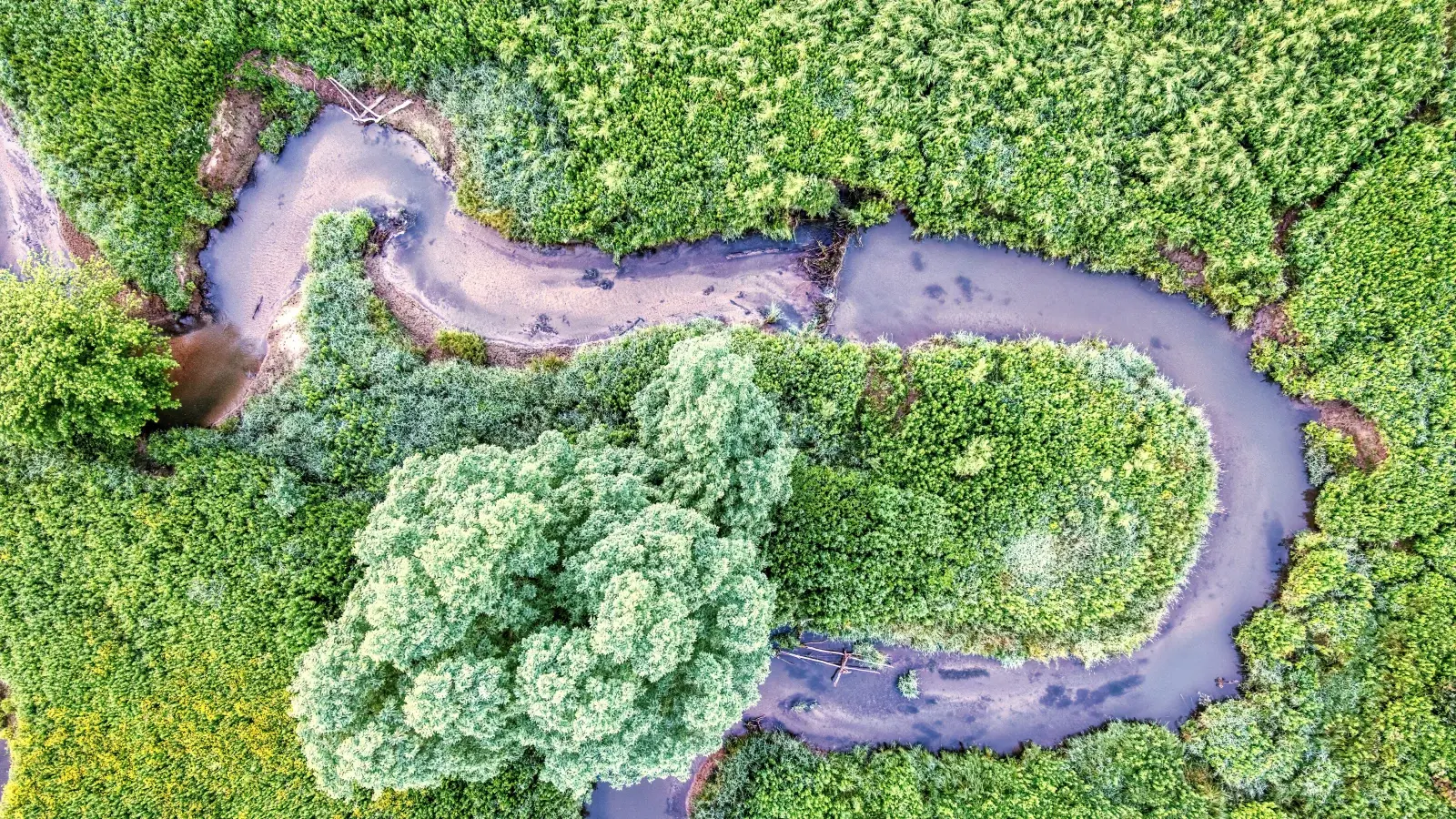
At an international policy forum in Jakarta on 15 September 2026, the Ministry of Environment set out the principles that will govern Indonesian biodiversity credits, while the Ministry of Forestry named 13 national parks and two species landscapes as pilot locations. The instrument only works if ecosystem condition can be measured and verified, which makes this a valuation question before it is a financing one.
A financing instrument takes shape in Jakarta
On 15 September 2026 the Ministry of Environment and Environmental Control Agency hosted the International Workshop on Biodiversity Credit Implementation in Jakarta. The forum brought Indonesian policy makers together with the International Advisory Panel on Biodiversity Credit, whose co-chair Dame Amelia Fawcett attended, to work through how a biodiversity credit market might actually be built and governed.
Minister of Environment Moh. Jumhur Hidayat used the occasion to state Indonesia's position in terms that are unusually specific for an instrument at this stage of development. Indonesian biodiversity credits, he said, will rest on three principles: scientific integrity, social inclusion, and transparent governance.
Indonesia holds an important role in shaping a high integrity biodiversity credit market.
That sentence is worth reading closely. The qualifier is high integrity, not simply large or liquid. Indonesia is not positioning itself as a volume supplier to a voluntary market. It is positioning itself as a jurisdiction that intends to set the standard the market is measured against, which is a different and more demanding ambition.
The instrument itself is straightforward in concept. Conservation and restoration produce outcomes. Those outcomes are measured. Measured outcomes become credits. Credits attract private capital that would not otherwise flow to conservation. The Ministry has been consistent that benefits must reach local and indigenous communities rather than accruing only to project developers, and it is developing an Access and Benefit Sharing mechanism for genetic resources alongside the credit work, consistent with the Convention on Biological Diversity, the Nagoya Protocol, and the Kunming-Montreal Global Biodiversity Framework.
What the pilots look like
The Ministry of Forestry is running the operational side. At a task force meeting on innovative financing and national park management, also held in Jakarta on 15 September, Deputy Minister of Forestry Rohmat Marzuki confirmed that 13 national parks have been designated as pilot locations, alongside two conservation landscapes built around iconic species.
His framing of the mechanism was direct: through biodiversity credits, conservation results can be measured, and those measured results become the basis for opening financing sources.
The ministry is also drafting the regulatory scaffolding: rules on biodiversity utilisation, licensing procedures, site selection criteria, and how state revenue from the instrument will be collected. Officials describe biodiversity credits as one component of a wider financing portfolio that also includes public budget, carbon finance, philanthropy, sustainable investment, ecotourism, and nature-based enterprise.
This has been building through 2026. In February the Ministry of Environment convened a workshop in Jakarta with the United Kingdom Department for Environment, Food and Rural Affairs on biodiversity financing through valuation and multilateral benefit sharing. Then Minister Hanif Faisol Nurofiq described biodiversity protection as a national urgency that cannot be deferred, and noted that Indonesia, as the world's second largest megadiverse nation, carries a global responsibility for the sustainability of its natural resources. The workstream since then has included a nature positive policy draft, the formation of an Indonesian technical team on biodiversity credits, and an Indonesia chapter of the international advisory panel established in June 2026.
The diplomatic track runs in parallel. Indonesia is preparing for COP17 of the Convention on Biological Diversity in Armenia and is considering a candidacy to host COP18 in 2028.
The market this connects to
The financing logic is set by the Kunming-Montreal Global Biodiversity Framework, adopted by 196 parties in December 2022. Goal D of that framework describes an annual biodiversity finance gap of US$700 billion. Target 19 commits parties to mobilising at least US$200 billion a year in public and private resources by 2030, and it names biodiversity credits explicitly among the innovative instruments intended to help close the gap, alongside green bonds and payments for ecosystem services.
What that mobilisation actually produces is still uncertain, and the published projections say so plainly. Work by the World Economic Forum with McKinsey models three pathways for global demand. On a limited development pathway, annual demand reaches only about US$6 billion by 2050. Where governance develops effectively, it reaches about US$69 billion. Under a transformational scenario with strong policy support and broad corporate adoption of nature targets, it reaches about US$180 billion. The 2030 figures are correspondingly modest, ranging from roughly US$760 million to US$7 billion.
The spread between those pathways is a thirtyfold difference in market size, and the variable separating them is governance quality rather than ecological potential. That is precisely the gap Indonesia's high integrity framing is aimed at.
Why measurement is the binding constraint
Every element of this depends on one capability. A credit is a claim that a measured ecological outcome occurred. If the measurement is weak, the credit is weak, and the market discounts it or declines to form at all.
That requirement is more demanding than it sounds. A biodiversity credit needs a baseline of ecosystem condition established before intervention, a defensible method for measuring change against that baseline, attribution of the change to the intervention rather than to background variation, and independent verification of the whole chain. It needs species and habitat indicators, water quality, soil condition, canopy cover and land use change, tracked over years rather than sampled once.
Indonesia already holds much of the apparatus. Permen LH No. 7 Tahun 2014 sets out how ecological damage, environmental economic loss, and recovery cost are calculated, which is the same measurement discipline applied in the opposite direction. AMDAL processes generate baseline environmental data across permitted operations. Satellite and drone remote sensing now makes land cover change measurable at parcel scale and at reasonable cost, and field ecology supplies the ground truth that remote sensing cannot.
What has been missing is the routine: regular measurement, published results, comparison against observed conditions, and adjustment. The credit instrument creates a financial reason to build that routine, which is the more durable contribution.
Where mining concessions fit
Reporting on the September forum notes that mining companies are potential participants, through environmental management and restoration activity at operational sites, with benefits shared with surrounding communities. The operational mechanism awaits the policy framework, so this remains a direction rather than a rule.
The logic is nonetheless sound. Mining concessions cover large, precisely bounded areas under existing legal obligation to reclaim. Reclamation guarantee funds already place money against land restoration. Companies already report hectares returned. What they generally do not report is the ecological condition of those hectares, because hectares reclaimed is an area measure and biodiversity credits require a condition measure.
An operator that can demonstrate measured ecological improvement holds something a hectare count cannot express: evidence of environmental performance in a form that regulators, financiers and markets can all read.
That distinction matters beyond credit revenue. The same measured condition data supports compliance reporting to the Ministry of Environment and Forestry, supports a defence of an operator's environmental record, and supports the reclamation guarantee release process. Credit revenue, if it arrives, is an additional return on measurement work that already has several justifications.
Sirkularium's view
For government, the sequencing on display here is the right one. Indonesia is establishing principles, pilot sites and regulatory scaffolding before issuing credits, rather than issuing first and building integrity later. The projections make the case for that patience: the difference between a US$6 billion market and a US$180 billion one is governance, and governance cannot be retrofitted onto a market that has already lost credibility. Two things are worth watching. The first is whether the measurement standards published for the 13 pilot parks are specific enough to be audited. The second is whether the state revenue rules the Ministry of Forestry is drafting allow benefit sharing with communities to function as designed.
For operators, the practical implication is about readiness rather than participation. When the framework opens, the companies able to enter will be those already holding a verified baseline of land cover, water quality, soil condition and biodiversity across their concessions, together with a consistent time series measured against it. Baselines cannot be established retrospectively. A company that begins measuring when the rules are published has forfeited the years of comparison that give a credit its value.
Sirkularium's recommendation to mining clients is unchanged and made more concrete by this development. Commission rigorous, independently verified economic valuation of concession condition as ongoing practice, combining remote sensing with ground truth data and applying the methodology Indonesia has already codified. Run it on a regular cycle rather than in response to a finding. That work was already justified by compliance obligations and by the need to defend an environmental record on evidence. Biodiversity credits add a potential revenue line to a measurement programme that was worth building regardless.
What to watch next: the publication of Indonesia's biodiversity credit regulatory framework and its measurement standards, the first results from the 13 pilot national parks, whether the framework extends formally to concession land, and the outcome of Indonesia's candidacy to host COP18 in 2028.
Projected global annual demand for biodiversity credits in 2050, by scenario
Values in US$ billion per year
Sources
- ANTARA News, Ministry of Environment refines a globally standardised biodiversity credit instrument, 17 September 2026
- Media Nikel Indonesia, the Ministry of Environment advances biodiversity credits and the mining sector is a potential participant, 16 September 2026
- Republika ESG Now, the Ministry of Environment prepares biodiversity credits to attract private financing, 17 September 2026
- ANTARA News, Ministry of Forestry drives biodiversity credits as a conservation financing innovation, 15 September 2026
- Ministry of Environment, Indonesia prepares policy and implementation of high integrity biodiversity credit instruments, 11 February 2026
- Bisnis Hijau, Ministry of Environment prepares a biodiversity credit instrument for biodiversity financing, 19 February 2026
- UN Environment Programme Finance Initiative, the Global Biodiversity Framework and the finance sector
- Green.earth, reporting on World Economic Forum and McKinsey projections for biodiversity credit demand