Indonesia courts Chinese capital for its 100 GW solar program
By Sirkularium Editorial Team, 8 min read
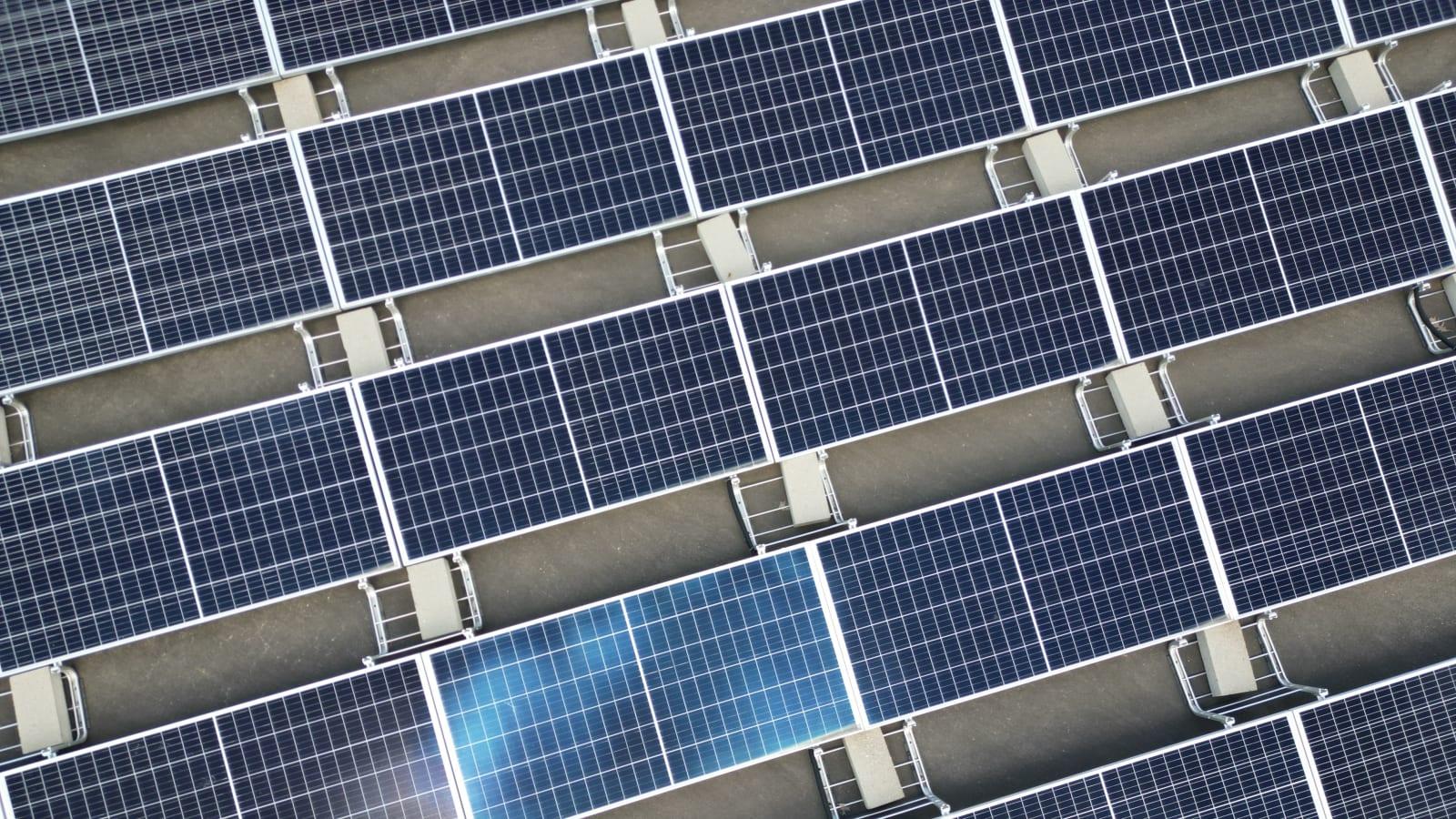
Coordinating Minister Airlangga Hartarto invited Chinese companies to invest in Indonesia's 100 gigawatt solar target during a Shanghai meeting, pointing to the Cirata floating solar plant as proof the partnership already works.
A Shanghai meeting advances Indonesia's solar ambition
On the evening of Friday, July 17, 2026, Coordinating Minister for Economic Affairs Airlangga Hartarto sat down with China's Minister of Commerce Wang Wentao in Shanghai and asked for something specific: Chinese corporate capital to help build out Indonesia's 100 gigawatt solar power program. The request was reported the following day across Indonesia's business press, from Kompas and Liputan6 to Suara, Republika, and the national wire service Antara, a spread of coverage that signals how central the solar buildout has become to the government's economic diplomacy.
The 100 GW target, part of President Prabowo Subianto's push to accelerate Indonesia's energy transition and support industrial downstreaming, is scheduled for completion by 2029. Airlangga's pitch in Shanghai was not abstract. He asked Wang Wentao to help translate goodwill into projects, and he urged the formation of joint ventures between Indonesian and Chinese firms to speed up implementation, according to Antara's report of the meeting.
Indonesia and China's Ministry of Energy and Mineral Resources have already worked together on the country's best-known renewable energy showcase: the Cirata Floating Solar Power Plant, a joint effort frequently cited by Indonesian officials as evidence that large-scale cooperation with Chinese developers can deliver working infrastructure rather than paper agreements. Referencing that project, Hartarto said Indonesia appreciated the investment China had already made there and pointed to it as a template for what a scaled-up 100 GW pipeline could look like.
The numbers behind the invitation
The scale of the ask sits inside a broader economic relationship. Bilateral trade between Indonesia and China reached US$154.6 billion in 2025, growing at an average of 7.24 percent annually between 2021 and 2025. China's realized investment in Indonesia in 2025 came to nearly US$8.1 billion, about 13 percent of all foreign direct investment the country recorded that year, spread across manufacturing, trade, energy, property, and transportation and warehousing.
On the ground in Java, Indonesian authorities have prepared roughly 24,000 hectares of land for solar development, according to Antara's English-language report on the meeting, a figure meant to reassure prospective investors that siting is not the bottleneck it might otherwise be for a program of this scale.
A separate but related track of cooperation, the Two Countries Twin Parks framework, has produced 30 memoranda of understanding between Indonesian and Chinese industrial partners, with an estimated combined investment value of Rp37.1 trillion. Airlangga's message in Shanghai was that these commitments now need to move from documents to construction sites. He asked that agreements already signed be converted into active investment as quickly as possible.
"Indonesia appreciates China's investment in the development of the Cirata Floating Solar Power Plant. The project demonstrates the massive potential for Indonesia-China cooperation in supporting the energy transition," Hartarto told Wang Wentao, according to Antara's English service.
Why Chinese capital matters for the 100 GW push
Indonesia's solar target has moved quickly since it was first set. President Prabowo compressed the original build-out timeline from five years to three earlier this year, a response in part to coal-linked blackouts that hit parts of Sumatra and Java and exposed the fragility of a grid still heavily dependent on a single fuel source. Independent analysts have separately estimated Indonesia needs on the order of tens of billions of dollars in cumulative investment to reach 100 GW by the government's own deadline, a financing gap that domestic capital alone is unlikely to close.
China is a natural partner to help close that gap. It is already the source of a meaningful share of Indonesia's foreign direct investment, its manufacturers dominate global solar panel and battery supply chains, and its firms have direct operating experience in Indonesia through Cirata and other energy projects. For a government trying to move from announcement to construction, working with an investor base that already understands local permitting, land, and grid-connection realities carries obvious appeal.
The framing Airlangga used in Shanghai, emphasizing joint ventures rather than pure capital transfers, also matters for how the benefits of this investment reach Indonesian institutions and workers. Joint ventures typically bring technology transfer, local employment, and shared project governance in ways that straight financing arrangements do not, and they align with the government's broader hilirisasi, or downstreaming, agenda, which aims to keep more of the value from Indonesia's resource and energy sectors inside the domestic economy rather than exporting raw inputs and importing finished technology.
Cirata as proof of concept
The repeated reference to Cirata across multiple news reports of the Shanghai meeting is worth dwelling on. The floating solar installation, built on the Cirata reservoir in West Java with Chinese investment participation, has functioned for Indonesian officials as a working example rather than a hypothetical case study. It demonstrates that floating solar is technically viable on Indonesia's reservoirs, that Chinese developers can deliver a large-scale renewable project on Indonesian soil, and that the resulting power can be integrated into the existing grid.
For a 100 GW target that will require dozens or hundreds of individual project sites across a geographically dispersed archipelago, having even one credible reference project changes the conversation with prospective investors and lenders. It gives ministries a concrete answer when asked whether this kind of partnership actually delivers operating infrastructure, and it gives Chinese firms a domestic track record to point to when seeking board or shareholder approval for further Indonesian commitments.
What comes next
The Shanghai meeting produced an invitation and a set of figures, not yet a signed project pipeline specific to the 100 GW target. The next markers to watch will be whether the 30 Two Countries Twin Parks memoranda convert into groundbreakings, whether new joint ventures are announced between named Indonesian and Chinese firms, and whether the Ministry of Energy and Mineral Resources publishes updated figures on installed and contracted solar capacity against the 2029 deadline. Indonesia's own reporting shows the country crossed roughly 1.5 GW of total installed solar capacity in 2025, with rooftop solar alone climbing from about 146 megawatts in 2024 to roughly 1.3 GW by 2026, a pace of growth that will need to accelerate substantially to reach 100 GW within the compressed three-year timeline.
Indonesia's participation in APEC 2026, hosted by China, offers a further venue in the coming months for both governments to formalize any commitments that emerge from this bilateral track, alongside existing frameworks such as the Regional Comprehensive Economic Partnership.
Sirkularium's view
For government and public institutions tracking Indonesia's energy transition, this meeting is best read as a financing signal rather than a finished deal. The 100 GW target has real momentum behind it, evidenced by the compressed timeline, the land already prepared in Java, and the willingness of senior ministers to court capital directly rather than wait for it to arrive. What will determine whether that momentum holds is execution discipline: converting memoranda into permitted projects, ensuring joint ventures deliver genuine technology transfer and local capacity building rather than turnkey imports, and keeping the grid infrastructure and storage investments moving in step with new generation capacity so that new solar assets can actually be dispatched.
For institutions responsible for permitting, land allocation, or grid planning, the practical takeaway is to treat the next several months as a period when Chinese project proposals tied to this invitation are likely to arrive for review. Building the institutional capacity now to evaluate these proposals quickly and consistently, with clear standards for local content, workforce development, and grid integration, will do more than any single ministerial meeting to determine whether Indonesia's 100 GW ambition becomes installed capacity on schedule.