
A community maggot house in Depok turns household food waste into income
By Sirkularium Editorial Team, 8 min read
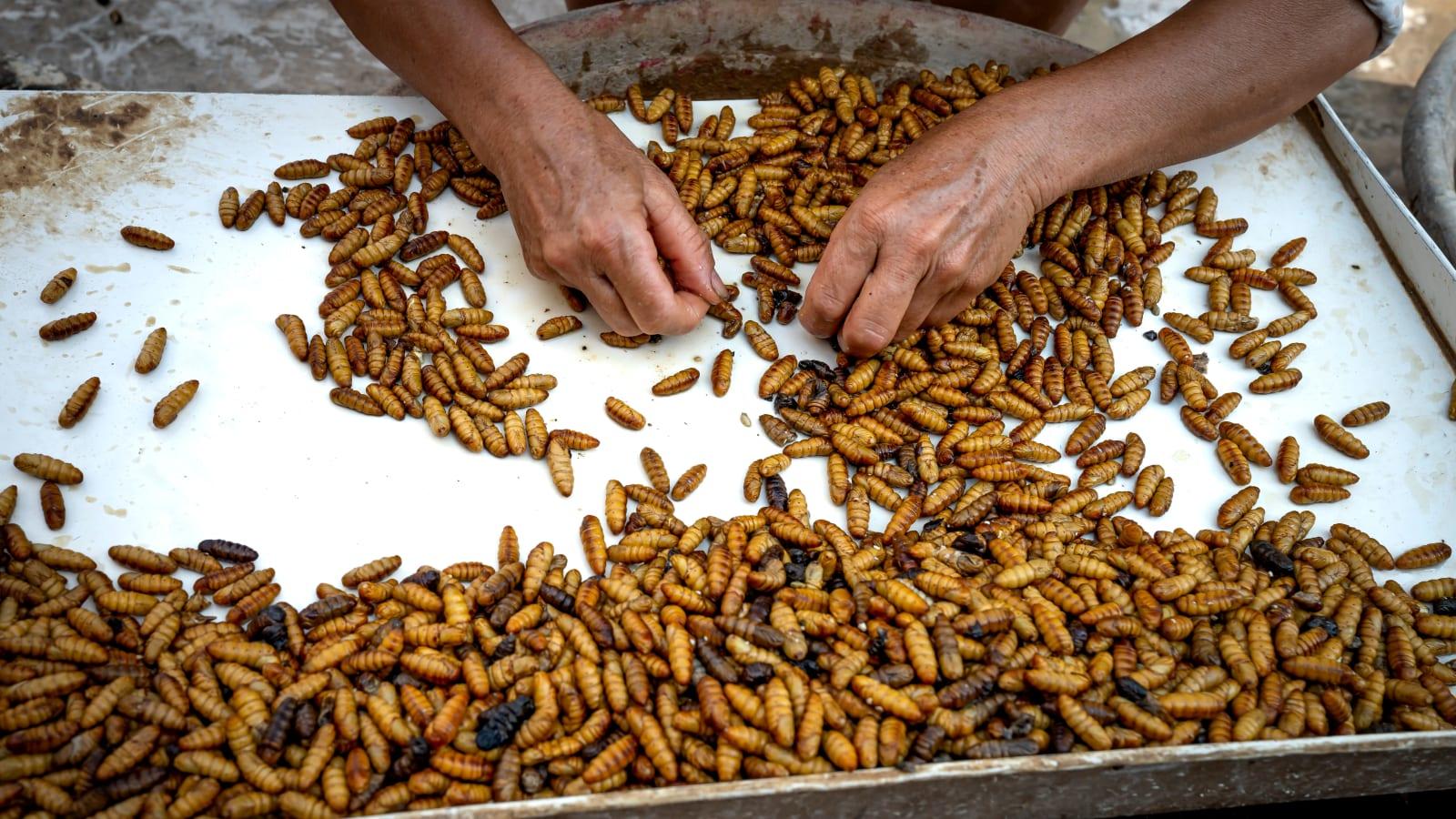
Garudafood and Biomagg opened a new black soldier fly larvae facility in Depok Jaya on 21 July 2026, extending a four year old program that is helping households divert organic waste, the largest single category in Indonesia's waste stream, away from landfills.
A new site joins Depok's maggot economy
On 21 July 2026, Garudafood and its cultivation partner Biomagg opened a new black soldier fly larvae facility, known locally as a rumah maggot, in Kelurahan Depok Jaya, Kecamatan Pancoran Mas, Depok City, West Java. The ribbon cutting was attended by Dian Astriana, Head of Corporate Communication and External Relations at PT Garudafood Putra Putri Jaya Tbk, Aminudi, chief executive of Biomagg, Mustakim, the Pancoran Mas district head, Herliana Maharani, the Depok Jaya village head, and Reni Siti Nuraeni, head of Depok City's Environmental Services and Cleanliness Agency, according to Sindonews and Disway.id.
The facility is designed to process up to 100 tonnes of household organic waste a year, converting food scraps that would otherwise travel to a landfill into a resource with direct economic value for residents. In its first cultivation cycle, the site produced 20 kilograms of black soldier fly larvae, a modest but concrete start that local organizers describe as proof the model works at neighborhood scale.
Hadijah, who chairs the Depok Jaya maggot cultivation group, said the most encouraging part of the launch was watching residents choose to participate on their own initiative, bringing organic waste to the facility rather than sending it to a collection point bound for landfill. Dian Astriana framed the new site as an extension of Garudafood's approach to community development, describing it as a Creating Shared Value initiative intended to generate benefit for residents, the environment, and the company at once.
"Rumah Maggot Garudafood merupakan wujud komitmen Garudafood dalam menjalankan program pemberdayaan masyarakat yang berkelanjutan," said Dian Astriana, describing the facility as a sustainable community empowerment commitment built on shared value for society, the environment, and the company.
How black soldier fly larvae convert kitchen scraps into value
The technology behind the rumah maggot model is biological rather than mechanical. Black soldier fly larvae, a species that thrives on decomposing organic matter, are cultivated in controlled bins where they consume household food waste at high volume. Within roughly two to three weeks, the larvae reach harvestable size and can be dried or sold live as a protein rich ingredient for poultry, fish, and livestock feed. Residual material from the process converts into compost, giving households and smallholder farmers two saleable outputs from what would otherwise be discarded organic matter.
Because the larvae substitute for a portion of commercial feed, the model has a direct effect on household or small farm input costs. Garudafood has previously cited feed cost savings of up to 50 percent for participants who substitute maggot protein for conventional feed, a figure that helps explain why the program has found sustained interest among residents rather than depending solely on subsidy or campaign momentum.
From one pilot to seven neighborhoods
The Depok Jaya facility is not a standalone project. It is the newest addition to Kampung Wirausaha Maggot, a program Garudafood and Biomagg launched in 2024 starting with a pilot in Kelurahan Jatijajar. According to Kompas Lestari, that pilot site processed approximately 35 tonnes of household organic waste in its first full cycle and produced roughly 3 tonnes of maggot, with around 30 residents from six villages taking part by the program's one year mark in February 2025. Mujahidin, the Jatijajar village head at the time, described the barrier to entry as low, saying the main requirement was a willingness among residents to learn the cultivation process.
Eighteen months later, the program has grown to cover seven neighborhoods across Depok, including Jatijajar, Sukmajaya, Depok Jaya, Limo, Meruyung, Tanah Baru, and Jatimulya, according to JPNN. Each site operates as a semi-independent cooperative, with Biomagg providing technical training in larvae cultivation and Garudafood funding facility construction and ongoing community outreach. The steady expansion, roughly doubling the geographic footprint of the program since its first anniversary, suggests a model that individual communities have been willing to adopt and sustain rather than one that fades once initial funding attention shifts elsewhere.
The scale of Indonesia's organic waste problem
The Depok program addresses a category of waste that dominates Indonesia's national waste stream. According to 2024 data from the environment ministry cited by Kompas Lestari, household sources account for 54.58 percent of the waste Indonesia generates, and organic material, principally food scraps, makes up 39.94 percent of total waste production nationally. Left unmanaged in an open dumping landfill, organic waste decomposes anaerobically and generates methane, a greenhouse gas that has been directly implicated in several landfill fires reported elsewhere in Indonesia this dry season, including at TPA Jatiwaringin in Tangerang and TPA Sarimukti in West Bandung.
Community scale organic waste diversion, of the kind demonstrated in Depok, therefore does more than generate income for participating households. It reduces the volume of decomposing material accumulating at landfills during the exact season when methane related fire risk is highest, and it does so without requiring large capital investment in processing infrastructure. The approach aligns with Indonesia's Proklim climate village program and with the broader push toward mandatory source sorting that Jakarta and other cities have been expanding this year ahead of the national deadline to end open dumping.
Sirkularium's view for local government and public institutions
For government and public institutions responsible for solid waste management, the Depok maggot house program offers a useful complement to the large infrastructure investments now underway in waste to energy and controlled landfill conversion nationally. Those larger projects address waste after it reaches a treatment facility. Community scale organic waste diversion, of the kind Garudafood and Biomagg have built out since 2024, works further upstream, reducing the volume of waste that needs collecting and transporting in the first place.
The program's growth path, from one pilot village to seven neighborhoods over eighteen months, offers a template that local governments can study and potentially replicate or co-fund at a district or citywide scale, particularly given that household organic waste represents such a large share of the material burdening Indonesia's landfills. As municipalities across the country work to comply with the national deadline to end open dumping, source level diversion programs of this kind reduce pressure on downstream infrastructure while creating a modest but tangible income stream for participating residents. What Depok has demonstrated over four years is that the model can grow steadily on its own momentum, an outcome worth watching as more cities look for practical, lower cost tools to complement their waste to energy and controlled landfill investments.
Sources
- Sindonews, Garudafood Resmikan Rumah Maggot di Depok, Kelola 100 Ton Sampah Organik Jadi Nilai Ekonomi
- JPNN, Rumah Maggot Depok, Ubah Sampah Dapur Menjadi Peluang Usaha Warga
- Disway.id, Di Depok Ada Rumah Maggot, Sampah Organik Diolah Jadi Sumber Cuan
- Republika ESGNow, Garudafood Gagas Program Pengelolaan Sampah Organik di Depok, Dorong Ekonomi Sirkular
- Kompas Lestari, Garudafood Luncurkan Program Biokonversi Maggot untuk Pengolahan Sampah