Petrokimia Gresik named Indonesia's best port as green and smart port scores climb
By Sirkularium Editorial Team, 9 min read
.jpg&w=3840&q=75)
Eight Indonesian ports, most of them serving fertilizer, steel, and nickel industries, earned Green and Smart Port certification this week, with Petrokimia Gresik's terminal posting a 94 percent score after energy efficiency and digitalization upgrades.
An award ceremony with an industrial energy story behind it
On July 15, 2026, at Dermaga C inside PT Petrokimia Gresik's port complex in East Java, six ministers and one deputy minister watched Coordinating Minister for Food Affairs Zulkifli Hasan hand out certificates under the Green and Smart Port Initiatives programme, known as GSPI ASRI 2026. Eight facilities cleared the bar this cycle: the fertilizer terminals of PT Petrokimia Gresik and PT Pupuk Kalimantan Timur, the steel-linked general port of PT Krakatau Bandar Samudera, the nickel producer PT Vale Indonesia, and four Pelindo-operated terminals, including TPK Banjarmasin and TPK Bitung.
The headline result belonged to the host. TUKS Petrokimia Gresik, the fertilizer maker's own-use terminal, posted a score of 94 percent, up from 82 percent when it was last measured in 2022, and was named Indonesia's best national port in the category. For a Sirkularium audience focused on the circular economy across energy, waste, and water, the story is less about the ceremony itself and more about what a fertilizer terminal had to do to earn that number: cut energy waste, electrify equipment, and digitalize operations, the same playbook national industrial decarbonization policy is asking heavier industry to adopt.
What the assessment actually measures
GSPI ASRI 2026 is run jointly by the Coordinating Ministry for Food Affairs and the Ministry of Transportation, with technical assessment carried out by IDSurvey, the state-owned survey and inspection holding company. It was launched on July 1, 2026, building on a Green and Smart Port programme that has run since 2019 and had assessed 41 ports nationwide by 2025.
The scoring formula gives 80 percent weight to what officials call the Green Port component, covering environmental management, energy efficiency, and occupational safety and health, and 20 percent to the Smart Port component, covering digitalization and technology integration. The framework follows Green and Smart Port Guidelines version 3.0, issued in 2023, and is explicitly tied to the government's wider Gerakan Indonesia ASRI agenda for safe, healthy, clean, and attractive public infrastructure.
"Port transformation toward green and smart ecosystems is now mandatory, not optional," Zulkifli Hasan told the ceremony, framing the certifications as infrastructure policy rather than a one-off award.
What Petrokimia Gresik changed to move from 82 to 94
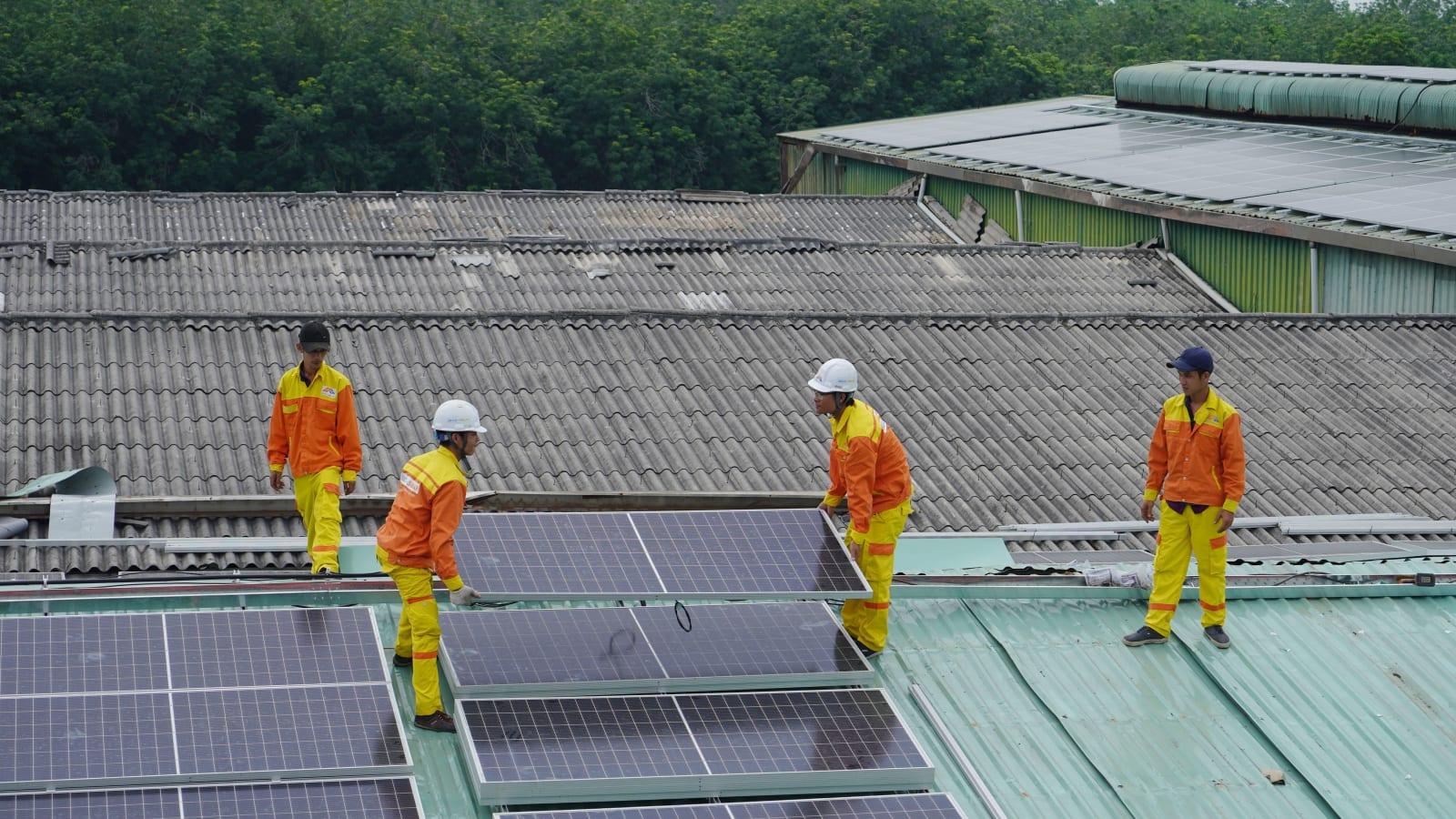
According to the company, the twelve-point gain came from a bundle of measures rather than a single project. On the energy side, the terminal added rooftop solar generation (PLTS) for its buildings and offices, replaced conventional lighting with LED fixtures, and introduced electric motorcycles for internal transport. On the operations side, it optimized port cranes and conveyor systems and rolled out a digital supervision platform, Petroport, integrating CCTV monitoring with terminal management. President Director Daconi Khotob described the certification as a competitiveness instrument, not a compliance exercise, arguing that a more efficient port lowers the cost of moving the raw materials and finished fertilizer that Indonesia's agricultural supply chain depends on.
Pelindo Terminal Petikemas took a similar route at two of its terminals. TPK Banjarmasin earned a three-star rating and TPK Bitung a two-star rating, assessed across six dimensions that included energy management and environmental practice alongside safety and digitalization. Corporate Secretary Widyaswendra said the company remains committed to building out green ports across its network, an indication that this cycle's results are a floor rather than a ceiling for the operator.
Why a port programme matters for industrial decarbonization
Ports are usually discussed as logistics infrastructure, but four of the eight companies certified this cycle, Petrokimia Gresik, Pupuk Kalimantan Timur, Krakatau Bandar Samudera, and Vale Indonesia, operate their terminals as captive, own-use facilities tied directly to fertilizer, steel, and nickel production. Their port energy use is effectively an extension of their factory energy use. A terminal that switches to solar power, LED lighting, and electrified vehicles is applying the same energy-efficiency and electrification levers that Indonesia's broader industrial decarbonization roadmap, still being finalized sector by sector, is expected to require of cement, steel, fertilizer, and textile plants nationally.
Seen this way, GSPI ASRI functions as a working pilot for industrial energy management inside some of the country's most energy-intensive supply chains, ahead of economy-wide rules taking full effect.
What comes next
The government is now studying whether to fold green ports into Indonesia's Carbon Economic Value scheme, known as NEK, under Presidential Regulation No. 110 of 2025. Nani Hendiarti, Deputy for Coordination of Food Affordability and Security, said the comparison being explored is with green building incentives, calling it "an opportunity" rather than a settled policy. Tatang Yuliono, Deputy for Trade Coordination and Food Distribution, added that operators would have a stronger reason to comply once the incentive is real, rather than reputational.
Before that can happen, officials still need to finalize a measurement, reporting, and verification methodology to quantify how much carbon a certified green port actually avoids. That MRV step is unglamorous but necessary. It is also the same technical groundwork that any credible industrial decarbonization incentive, in ports or elsewhere, will require.
Sirkularium's view
For government and public institutions, the GSPI ASRI results offer a template worth studying rather than a target worth celebrating in isolation. The 82 to 94 percent trajectory at Petrokimia Gresik shows that energy efficiency gains inside existing industrial infrastructure are achievable within a few years using proven measures, solar retrofits, LED conversion, equipment electrification, and better digital monitoring, without waiting for a new plant or a new subsidy.
The more consequential decision ahead is whether to connect this kind of operational certification to a financial incentive through the NEK carbon market. Doing so would give Indonesia's fertilizer, steel, and mining sectors a direct commercial reason to replicate what Petrokimia Gresik has already done at its own terminal. Completing the MRV methodology that officials say is still pending should be treated as a near-term priority, since without it, the incentive discussion cannot move from possibility to policy. Expanding the assessment beyond the 41 ports covered since 2019 would also widen the pool of facilities that can demonstrate, with a verifiable score, that industrial energy efficiency and decarbonization are already underway in Indonesia's supply chains.
Sources
- Antara News, Pemerintah luncurkan GSPI ASRI 2026 dorong inisiatif pelabuhan hijau
- Antara News, TUKS Petrokimia Gresik meraih pelabuhan terbaik dari GSPI ASRI
- Kompas, Pelindo Terminal Petikemas raih 2 penghargaan di ajang GSPI ASRI 2026
- Petrokimia Gresik, Melalui Konsep Green & Smart Port, Petrokimia Gresik Dorong Efisiensi Energi dan Dekarbonisasi Pelabuhan
- Viva, Topang Distribusi Logistik Pangan, Menko Zulhas Apresiasi TUKS milik Petrokimia Gresik
- Antara News (English), Indonesia eyes carbon incentives for green ports under NEK scheme
- Rava News, Kemenko Bidang Pangan dan IDSurvey Akselerasi Program Green and Smart Port