
Indonesia lays out a national roadmap to end its waste crisis by 2029
By Sirkularium Editorial Team, 9 min read
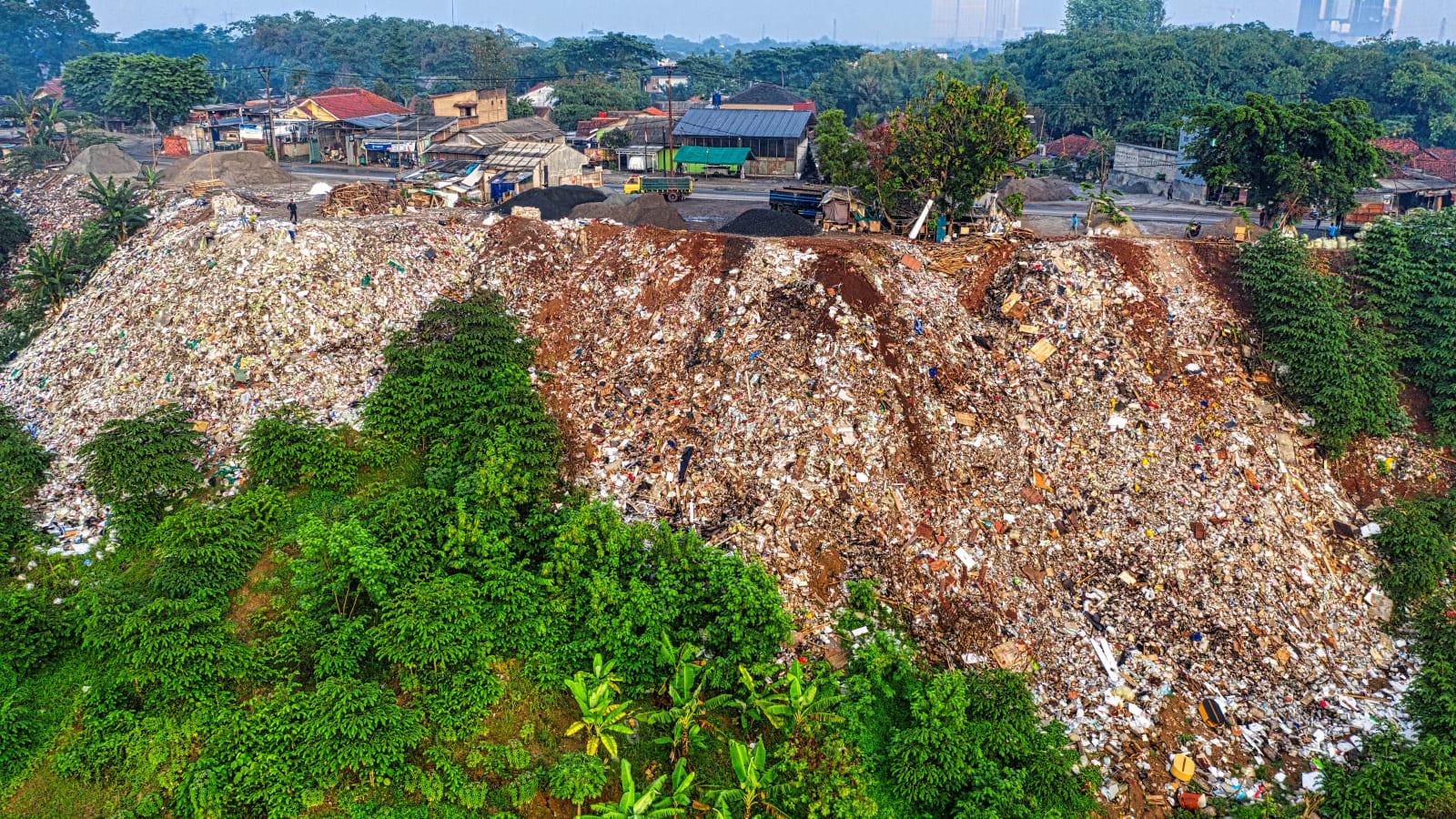
At a Jakarta forum on 16 July 2026, Indonesia's environment and food coordinating ministries unveiled a combined plan: a mandatory producer-funded waste rule, a four-technology processing mix, and regulation cut from hundreds of approvals to three.
A national roadmap takes shape in Jakarta
On Thursday, 16 July 2026, two of Indonesia's cabinet coordinated on waste policy in front of an audience that mattered: industry, investors and local officials gathered in Jakarta for "Waste to Energy Talks: Reducing Waste, Powering the Future." Minister of Environment Mohammad Jumhur Hidayat and Coordinating Minister for Food Affairs Zulkifli Hasan used the forum to set out, in one sitting, the pieces of a plan that had until now been visible only in fragments: a mandatory rule making producers pay for packaging waste, a target processing mix for the waste the country cannot avoid generating, and a promise that the regulatory path for new facilities has been cut down to almost nothing.
Individually, each of these threads had surfaced in policy discussions over recent months. Presented together, at a single event, they read as the clearest statement yet of how the government intends to move Indonesia's waste system from crisis management to a structured, dated programme running through 2029.
The numbers behind the ambition
Jumhur opened with the baseline the government is working from. Indonesia generates approximately 141,926 tonnes of waste daily. Of that volume, only around 26 percent is properly managed, leaving 74 percent handled inadequately or not at all. Roughly 72 percent of the country's final disposal sites still operate through open dumping rather than controlled or sanitary methods, and about 36.59 percent of national waste ends up loose in the environment rather than in any managed system.
These figures are not new in isolation, but hearing them stated together, by the minister responsible for closing the gap, framed the rest of the announcement. Jumhur was direct about the scale of what remains outside the flagship waste to energy programme: "PSEL satu hal, tetapi kita masih punya 480-an atau sekitar 470 kabupaten/kota tersisa," he said, meaning PSEL, the national waste-to-electricity push, is only one part of the answer, since some 470 regencies and cities fall outside the roughly 60 to 70 large urban clusters those plants are designed to serve.
Making producers pay: the EPR rule
The centerpiece of Jumhur's remarks was a near-final Ministry of Environment Regulation on Extended Producer Responsibility, or EPR, which will require companies that put plastic-packaged goods on the market to fund the management of that packaging once it becomes waste. "Kita sebentar lagi akan mengeluarkan Peraturan Menteri Lingkungan Hidup tentang Extended Producer Responsibility atau EPR," he told the forum, adding that producers would be obligated to manage their own waste rather than leaving the cost to government.
The regulation is expected to cover close to 10,000 factories manufacturing plastic-packaged products nationwide. Rather than requiring each company to build its own collection system, the government is pointing producers toward Packaging Recovery Organizations, or PROs: collective, industry-run entities that pool member companies' obligations into shared collection, tracking and recycling operations, with government retaining a regulatory rather than an operational role. The exact scale of each producer's financial contribution is still being calculated, according to the minister, but the mechanism itself, and the roughly 10,000-factory scope, are now settled enough to state publicly.
The rule builds on the Ministry of Environment and Forestry's 2019 regulation on waste reduction roadmaps, which asked producers to commit to voluntary targets. The shift now underway is from voluntary commitment to mandatory funding, a change Jumhur suggested industry has already anticipated. "I have met with major producers whose products use plastic packaging. They have all said they are ready," he said, according to a Jakarta Post account of his remarks, adding that he expects the resulting funds to support grassroots work such as public awareness campaigns, river cleanup efforts and green jobs at the community level.
Four technologies, one 2029 target
Where the EPR rule addresses one category of waste at its source, Jumhur also set out how the government expects the rest of the country's waste stream to be processed by 2029. He described a roadmap combining four categories of solution: refuse-derived fuel, expected to account for the largest single share at 25.3 percent of the target mix; waste to energy facilities under the PSEL programme at 22.5 percent; non-RDF processing and pyrolysis technologies at 20 percent; and TPS3R community sorting and reduction sites together with waste banks at 19.8 percent, with organic waste processing making up the remaining 12.4 percent.
"PSEL satu hal, tetapi kita masih punya 480-an atau sekitar 470 kabupaten/kota tersisa," Minister Jumhur Hidayat said, underscoring that the large waste to energy plants now under construction are only one component of a broader, more distributed system.
That distribution matters because PSEL facilities, which require a minimum daily intake of around 1,000 tonnes to be economically viable, are only realistic for the 24 identified urban clusters generating waste at that scale. The roughly 470 regencies and cities outside those clusters will instead depend on a mix of RDF processing, pyrolysis, source sorting through TPS3R and waste banks, and organic composting, calibrated to each area's waste volume and composition rather than a single uniform solution.
Cutting red tape: from hundreds of rules to three
The third and most structural element of the announcement came from Zulkifli Hasan, the Coordinating Minister for Food Affairs, who has been tasked by President Prabowo Subianto with clearing the regulatory path for PSEL projects. His message to the forum was blunt. "Tugas saya cuma satu, regulasi diperbaiki. Dari ratusan tinggal tiga aturan," he said: his only task has been fixing the regulations, and what had been hundreds of requirements is now down to three.
Previously, a PSEL developer needed sign-off from a district legislature, a regent, a provincial government, a provincial legislature, the Ministry of Finance, the Ministry of Energy and Mineral Resources, the Ministry of Environment and state utility PLN, a sequence that could stall a project for years before construction began. Presidential Regulation No. 109 of 2025, which replaced the 2018 regulation governing the sector, is the legal basis for the new, condensed process. Under the streamlined structure, Investment Management Board Danantara runs partner selection for each site and PLN commits in advance to purchasing the electricity produced, removing two of the largest sources of delay from the old approval chain.
Muhammad Qodari, head of the Government Communications Board, framed the urgency behind the deregulation push in stark terms at the same forum, warning that without integrated management, the country's waste sites risk reaching capacity by 2028. "Jika kita tetap membiarkan sampah menumpuk tanpa pengelolaan yang terpadu, pada 2028 tempat-tempat penampungan sampah kita akan lumpuh total," he said. He pointed to the PSEL plant now under construction in Denpasar Raya, a Rp3 trillion facility designed to process 1,500 tonnes of waste daily and cut disposal volume in the area by up to 90 percent, as an early proof point for the wider 34-agglomeration rollout the government has planned nationally.
Why this matters
Taken separately, an EPR rule, a technology-mix target and a deregulation drive are each incremental policy moves. Presented together at one forum, they describe something closer to a complete system: a financing mechanism that shifts cost toward the private sector, a processing plan calibrated to the roughly 470 localities that large PSEL plants cannot reach, and a legal pathway intended to let projects move from approval to construction in a fraction of the time the old process required. The specificity of the 2029 technology mix, down to a tenth of a percentage point across five categories, suggests the roadmap has moved beyond aspiration and into a document ministries are now expected to be held against.
Sirkularium's view
For government and public institutions, the value of this announcement lies less in any single number than in how the pieces fit together. Regencies and cities outside the 24 PSEL clusters now have a clearer signal of which processing technologies they should be planning around, RDF, pyrolysis, TPS3R and organic composting, rather than waiting on a large-scale plant that their waste volumes may never justify. Producers facing the incoming EPR rule would be well served by engaging early with the Packaging Recovery Organization model while contribution formulas are still being finalized, since early participation is likely to shape how flexible the eventual compliance pathway is. And for institutions evaluating financing or partnership opportunities in the sector, Presidential Regulation No. 109 of 2025's condensed approval chain, paired with PLN's advance offtake commitment, materially changes the risk profile of a PSEL investment compared with the pre-2025 process. The period worth watching now is how quickly the EPR regulation is formally issued and how the first Packaging Recovery Organizations are structured, since that will determine whether the financing shift Jumhur described translates into functioning collection systems on the ground.
Indonesia's planned 2029 waste processing mix
Values in percent of national waste volume
Sources
- Antara News, Jumhur: Pemerintah siapkan aturan wajib produsen kelola sampah produk
- Antara News, Jumhur: PSEL bagian dari strategi 100 persen pengelolaan sampah RI
- Antara News, Menko Pangan: Penyederhanaan regulasi percepat proyek PSEL
- Antara News (English), Indonesia to make corporate packaging waste management mandatory
- Harian Energi, Jumhur sebut aturan baru wajibkan produsen kelola sampah produk
- Liputan6, Siap-siap, 10.000 pabrik kemasan bakal wajib urus sampah produknya
- The Jakarta Post, RI to require plastic-packaged goods makers fund waste management
- RRI, Kabakom tegaskan PSEL jadi solusi berkelanjutan atasi persoalan sampah nasional