Indonesia lays out 93 hydrogen projects worth Rp32 trillion at Jakarta summit
By Sirkularium Editorial Team, 8 min read
The Ministry of Energy and Mineral Resources used the Global Hydrogen Ecosystem Summit to detail 93 hydrogen initiatives worth Rp32 trillion in investment, alongside a working dual-fuel bus and a planned 194 kilometer green hydrogen corridor from Jakarta to Patimban.
A national tally, presented at a global gathering
On Tuesday, July 21, 2026, at the Jakarta International Convention Center, Indonesia's Ministry of Energy and Mineral Resources used the opening of the Global Hydrogen Ecosystem Summit and Exhibition (GHES) 2026 to put a number on an effort that has so far been scattered across pilot projects and memoranda of understanding. Eniya Listiani Dewi, the ministry's Director General of New, Renewable Energy and Energy Conservation, told the summit that Indonesia now counts 93 hydrogen ecosystem development initiatives spread across the country, together worth Rp32 trillion in investment.
"We currently have 93 hydrogen ecosystem development initiatives with projects spread across Indonesia. These projects generate Rp32 trillion in investment that we will oversee," Dewi said, according to reporting carried by Antara, Kompas, Detik Finance, CNBC Indonesia and Koran Jakarta. The figure was framed as evidence that hydrogen has moved from a talking point in Indonesia's energy transition planning to a pipeline of projects with committed capital behind them.
Minister of Energy and Mineral Resources Bahlil Lahadalia, who also addressed the summit, tied the push directly to energy security. Hydrogen, he said, is an alternative energy source that matters more precisely because global geopolitical conditions remain uncertain, a reference to the volatility that has repeatedly moved through oil markets over the past year. Dewi echoed the same logic in blunter terms: the aim is to draw energy from Indonesia's own resources rather than depend on others.
Three sectors, one supporting technology
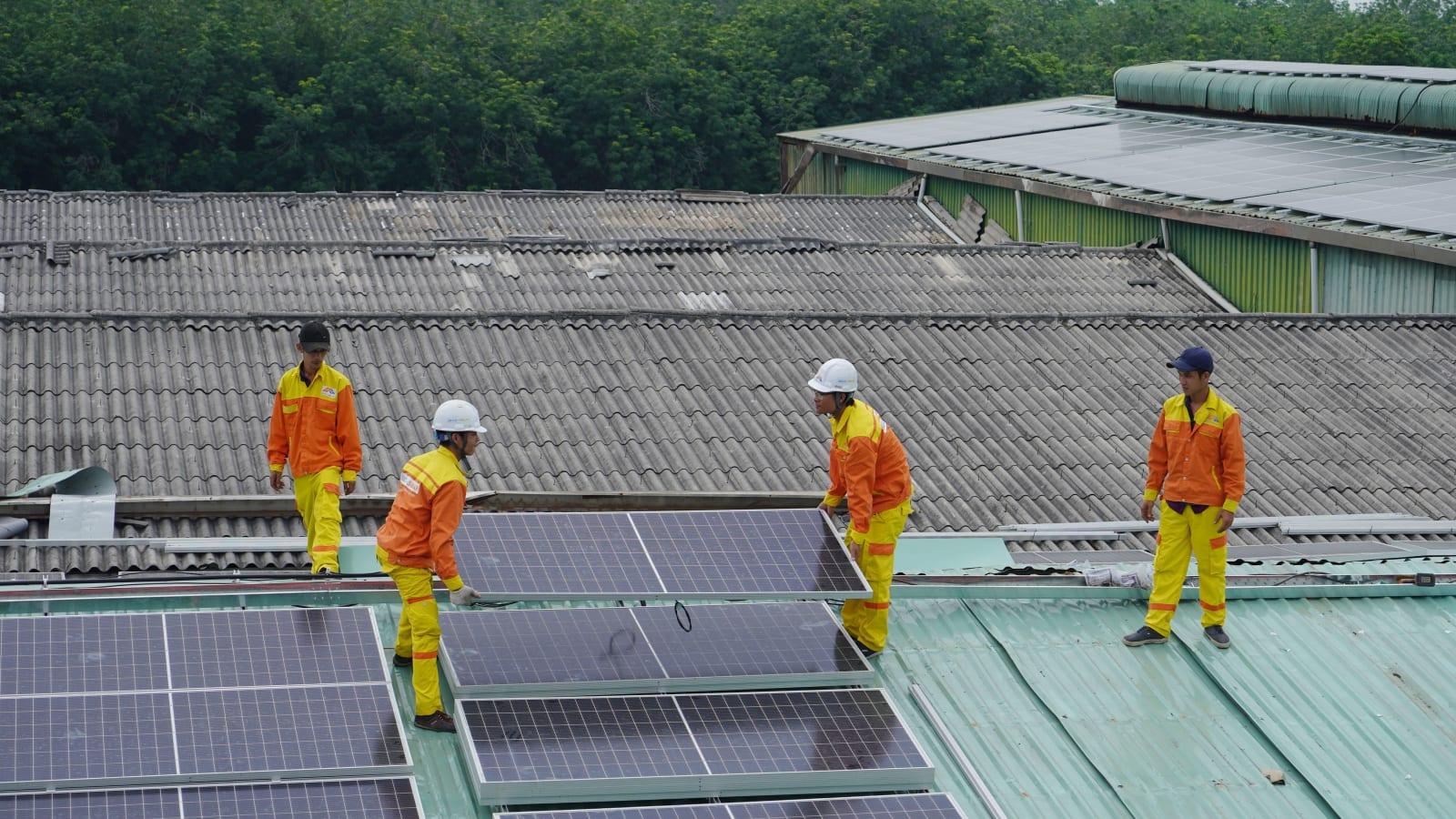
The 93 projects are not a single technology deployed one way. According to the ministry's own breakdown, they span three distinct uses. The first is remote island electrification, pairing solar power generation with hydrogen as an energy storage medium so that islands without stable grid access can run on renewables around the clock rather than only when the sun is out. The second is dedieselization, replacing diesel generators that currently supply many of Indonesia's outer islands with cleaner alternatives. The third is transport and industrial application, covering everything from buses to forklifts to passenger vehicles.
Two flagship dedieselization sites illustrate the approach. On Sumba island in East Nusa Tenggara, a solar-hydrogen storage project at a diesel power plant is targeting commercial operation by 2028, with the ministry indicating an ambition to accelerate that timeline toward 2027. On Rengit Island in the Bangka Belitung Islands, the ministry is working with state utility PLN on a similar solar-plus-hydrogen-storage configuration. A third initiative in Ulubelu, Lampung, involves Pertamina exploring geothermal-based hydrogen production, pairing Indonesia's existing geothermal strength with a new use for that heat.
The economic case for these dedieselization projects is direct. Diesel-based electricity in Indonesia's remote areas currently costs roughly Rp20,000 per kilowatt hour, or about one US dollar. The ministry's projection is that a solar-hydrogen configuration can bring that down to roughly 0.25 US dollars per kilowatt hour, a reduction of about three quarters. For communities and local governments currently absorbing or subsidizing diesel costs at that scale, the difference is material rather than marginal.
"We currently have 93 hydrogen ecosystem development initiatives with projects spread across Indonesia. These projects generate Rp32 trillion in investment that we will oversee."
A bus that already has the numbers to show for it
Unlike much of the hydrogen ecosystem, which remains in planning or construction, one piece of it is already running and already measured. At GHES 2026, the ministry, PLN, state bus operator Perum DAMRI, verification firm PT Sucofindo and PT Tritunggal Prakarsa Global jointly launched a pilot Hydrogen Diesel Dual Fuel bus, a modified Hino diesel bus with a six cylinder, 7,684 cubic centimeter engine retrofitted with 16 hydrogen storage tanks, each holding 50 liters at a nominal pressure of 200 bar and an operational pressure of 150 bar. The bus runs on a blend of biosolar diesel and hydrogen gas rather than diesel alone.
PT Sucofindo, acting as an independent verifier, measured the bus's emissions against a standard diesel baseline and recorded reductions of 57.66 percent in smoke opacity, 45.45 percent in carbon monoxide, 39.37 percent in carbon dioxide and 21.16 percent in nitrogen oxide. Sandry Pasambuna, chief executive of PT Sucofindo, was named alongside the ministry and PLN leadership as a partner in the verification. Because the figures come from an independent testing body rather than the bus's own manufacturer, they carry more weight as a proof point for what a diesel-to-hydrogen retrofit can achieve on Indonesian roads, using Indonesian fuel supply chains, rather than as a laboratory result from elsewhere.
Alongside the bus, the ministry announced plans for a Green Hydrogen Corridor running 194 kilometers from Jakarta through Karawang to Patimban, intended to support both the energy transition and industrial development along one of Java's busiest logistics and manufacturing corridors. Karawang and Patimban already anchor a dense concentration of automotive and export-oriented manufacturing, which gives the corridor concept an existing industrial base to serve rather than a greenfield assumption.
Reading the numbers against Indonesia's wider hydrogen ambitions
Two additional figures put the 93 projects in context. Dewi told the summit that Indonesia is targeting production of 200 tons of green hydrogen in 2026, an early-stage figure but one that marks a shift from research pilots to actual output. She also described an energy resilience index that the ministry wants to move from 7 out of 10 today to 8 out of 10, an internal metric the ministry uses to track how exposed Indonesia's energy supply is to imported fuel and price shocks. Neither figure is large in absolute terms next to Indonesia's overall energy consumption, and the ministry did not claim otherwise. The value of the 93 project tally is less about scale today and more about demonstrating that hydrogen has moved past demonstration projects into a portfolio with tracked investment, named partners and dates.
Bahlil went further on the technology's competitive standing, telling the summit he believes hydrogen can rival electric vehicles within five to ten years, a claim that positions hydrogen not as a supplement to Indonesia's electrification push but as a parallel pathway, particularly for use cases such as heavy vehicles and industrial equipment where battery weight and charging time are bigger constraints than for passenger cars.
What this means for government and public institutions
For policymakers, the most useful feature of this update is specificity. Ninety-three named or categorized initiatives, a Rp32 trillion figure, a 194 kilometer corridor and a bus with independently verified emissions numbers give provincial and national planners something more concrete to budget and coordinate around than a general hydrogen ambition. The dedieselization economics in particular, a projected drop from roughly one US dollar to 0.25 US dollars per kilowatt hour, deserve attention from regional governments still carrying diesel subsidy burdens on outer islands, since it suggests a financeable alternative rather than only an environmental one.
The near-term watch items are execution rather than ambition: whether Sumba's solar-hydrogen storage project holds to its 2027 to 2028 commercial operation window, whether the Jakarta-Karawang-Patimban corridor attracts the industrial offtake it is designed for, and whether the 200 ton 2026 green hydrogen production target is met and then scaled. Sirkularium will track each of these as they come due, since a hydrogen ecosystem built on verified pilots and dated milestones is precisely the kind of transition that gives government partners a basis for financing and procurement decisions, rather than one built on investment totals alone.
Emission reductions measured on the pilot hydrogen-diesel dual fuel bus
Values in % reduction