
Indonesia confirms 2027 start for mandatory sustainable aviation fuel
By Sirkularium Editorial Team, 8 min read
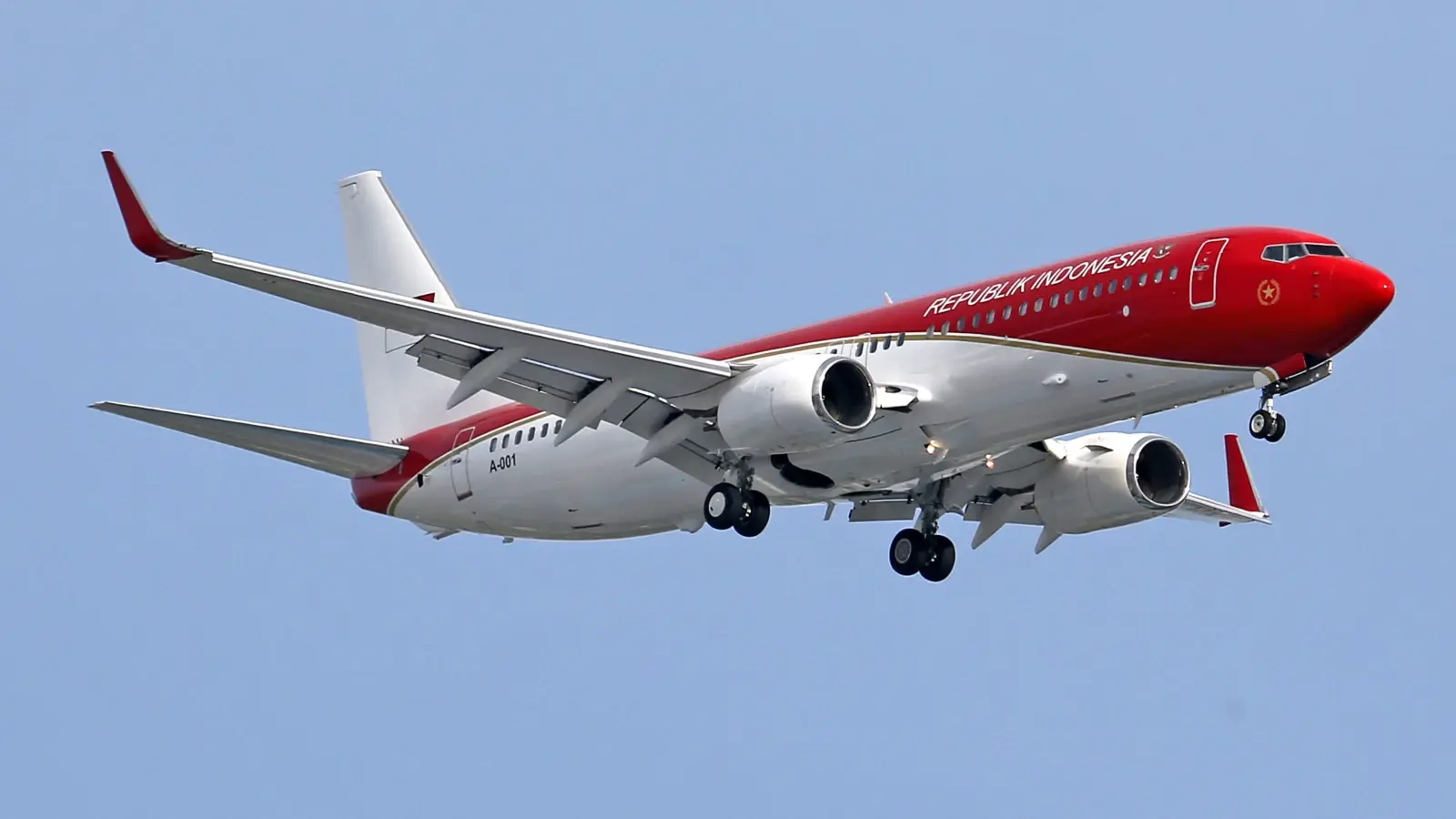
Coordinating Minister Agus Harimurti Yudhoyono confirmed Indonesia will require a 1 percent sustainable aviation fuel blend on international flights from 2027, backed by Pertamina refinery trials and a roadmap reaching 50 percent blending by 2060.
A minister confirms the mandate
On July 23, 2026, at the Indonesia Zero Emission Heavy-Duty Vehicle Summit in Jakarta, Coordinating Minister for Infrastructure and Regional Development Agus Harimurti Yudhoyono confirmed that Indonesian aviation will begin using sustainable aviation fuel, known locally as bioavtur, starting in 2027. He described the shift in terms that placed Indonesia within a global trend rather than presenting it as an isolated national measure.
"This is the future of global aviation. If we start moving in that direction, this can contribute significantly to overall emission reductions."
The confirmation was not an isolated announcement. It followed a day after Pertamina Patra Niaga used the third annual Indonesia Aero Summit 2026, organized by the Indonesian National Air Carriers Association, to lay out how the state energy company plans to meet that mandate once it takes effect. The two events, a day apart, gave Indonesia's aviation and energy press a coordinated policy and industry story to report, and coverage followed across national wires and business desks, including Antara, CNN Indonesia, Media Indonesia, Liputan6, Sindonews, and CNBC Indonesia.
What the mandate actually requires
The initial obligation is narrower than the word "mandate" might suggest, and that is by design. From 2027, a 1 percent SAF blend will be required on international flights departing from two airports: Soekarno-Hatta International Airport in Tangerang and I Gusti Ngurah Rai International Airport in Bali. Domestic routes are not covered in this first phase.
The government has also published, and Indonesian sustainability press has tracked, a longer blending roadmap that extends the obligation well beyond a symbolic first step: 1 percent in 2027, rising to 2.5 percent by 2030, 5 percent by 2035, 12.5 percent by 2040, 20 percent by 2045, 30 percent by 2050, 40 percent by 2055, and 50 percent by 2060. Read as a whole, the roadmap describes a fuel transition measured in decades, not years, which is realistic given how capital-intensive refinery conversion and feedstock scale-up both are.
Why engines are not the bottleneck
A common question raised whenever a new fuel blend is proposed for aircraft is whether existing aircraft and engines can handle it without modification. The Ministry of Transportation addressed this directly through its Directorate General of Civil Aviation. Sokhib Al Rokhman, the Director of Airworthiness and Aircraft Operations, confirmed that commercial testing was carried out between August and December 2025 on a Pelita Air Airbus A320, alongside engine test cell work at the Garuda Maintenance Facility.
His summary of the finding was direct: engines did not need to be replaced. The answer to whether replacement was required was simply no. That result matters because it removes what would otherwise be the single largest cost barrier to scaling SAF use, aircraft retrofits or fleet replacement, and confirms that the constraint sits instead on the supply side: production capacity, feedstock volume, and price.
Pertamina's five-year head start
If the ministry's testing addressed the demand side of the equation, Pertamina Patra Niaga used the Aero Summit to address supply. Joko Pranoto, the company's Director of Planning and Business Growth, told the summit that Pertamina Patra Niaga began developing SAF five years ago, well ahead of any regulatory requirement, and has continued the work through periods when commercial demand alone would not have justified it.
Production readiness now spans three refineries. The Cilacap Green Refinery is already operating, while co-processing trials, blending renewable feedstock alongside conventional crude in an existing refinery, are under way in 2026 at Dumai and Balongan. Test flights have been completed with Garuda Indonesia and with Pelita Air, and Pertamina Patra Niaga has signed a SAF sales contract with an international airline to supply flights from Soekarno-Hatta and Bali, meaning the fuel will reach paying passengers before the mandate formally begins. The company also signed a memorandum of understanding with Boeing Indonesia covering SAF education, feedstock mapping, capacity building, market studies, and policy advocacy, an effort to line up the full ecosystem rather than production capacity alone.
The feedstock question, and a circular economy opening
Supply-side readiness ultimately depends on feedstock, and this is where Indonesia's SAF push intersects directly with the circular economy. Industry sources point to used cooking oil, known locally as minyak jelantah, as a leading domestic feedstock candidate, with an estimated national production potential of 3.9 million tons per year based on 2023 figures. Because it is a waste stream rather than a dedicated crop, using it as SAF feedstock avoids competing with food production, a concern that has shadowed biofuel programs elsewhere.
Converting a diffuse household and food-service waste stream into an aviation-grade feedstock at scale is a collection and logistics problem as much as a chemistry one, and it is one that overlaps closely with the informal and formal waste collection networks Indonesia is already working to formalize for other purposes. A credible minyak jelantah supply chain for SAF would need consistent collection, quality assurance, and traceability from source to refinery, capabilities that also strengthen circular waste management more broadly.
Sirkularium's view
For government and public institutions, the SAF mandate offers a rare example of a decarbonization commitment that has already cleared its most obvious technical objection. With engine compatibility confirmed by the Ministry of Transportation's own testing, the remaining work is institutional and logistical rather than experimental: building a reliable, traceable used cooking oil collection system, sequencing refinery investment against the published blending roadmap, and setting a price and offtake framework that keeps ticket costs predictable as the mandate tightens from 1 percent toward the 2060 target.
The two-airport, international-flights-only starting scope is a sensible way to test the full chain, from feedstock collection through refining to delivery, before extending obligations nationwide. Public institutions with a stake in waste management policy should treat the SAF feedstock question as an opportunity to align aviation decarbonization with existing efforts to formalize used cooking oil collection, turning a compliance requirement for one sector into an investment case for circular economy infrastructure that serves several. The multi-decade roadmap also gives policymakers room to sequence supporting measures, feedstock aggregation standards, refinery incentives, and airport-level monitoring, well ahead of each blending threshold, rather than reacting to it.
Indonesia's sustainable aviation fuel blending roadmap
Values in % SAF blend
Sources
- Antara News, national wire, English service
- CNN Indonesia, economics desk
- Liputan6, business desk (Pertamina production and supply chain)
- Liputan6, business desk (AHY statement)
- Sindonews, economics and business desk
- CNBC Indonesia, business desk
- Media Indonesia, economics desk
- GAPKI (Indonesian Palm Oil Association), industry news
- Kompas Lestari, sustainability desk (2060 roadmap background)