
Jakarta moves to revoke permits over 700 metres of illegally dumped waste in Penjaringan
By Sirkularium Editorial Team, 8 min read
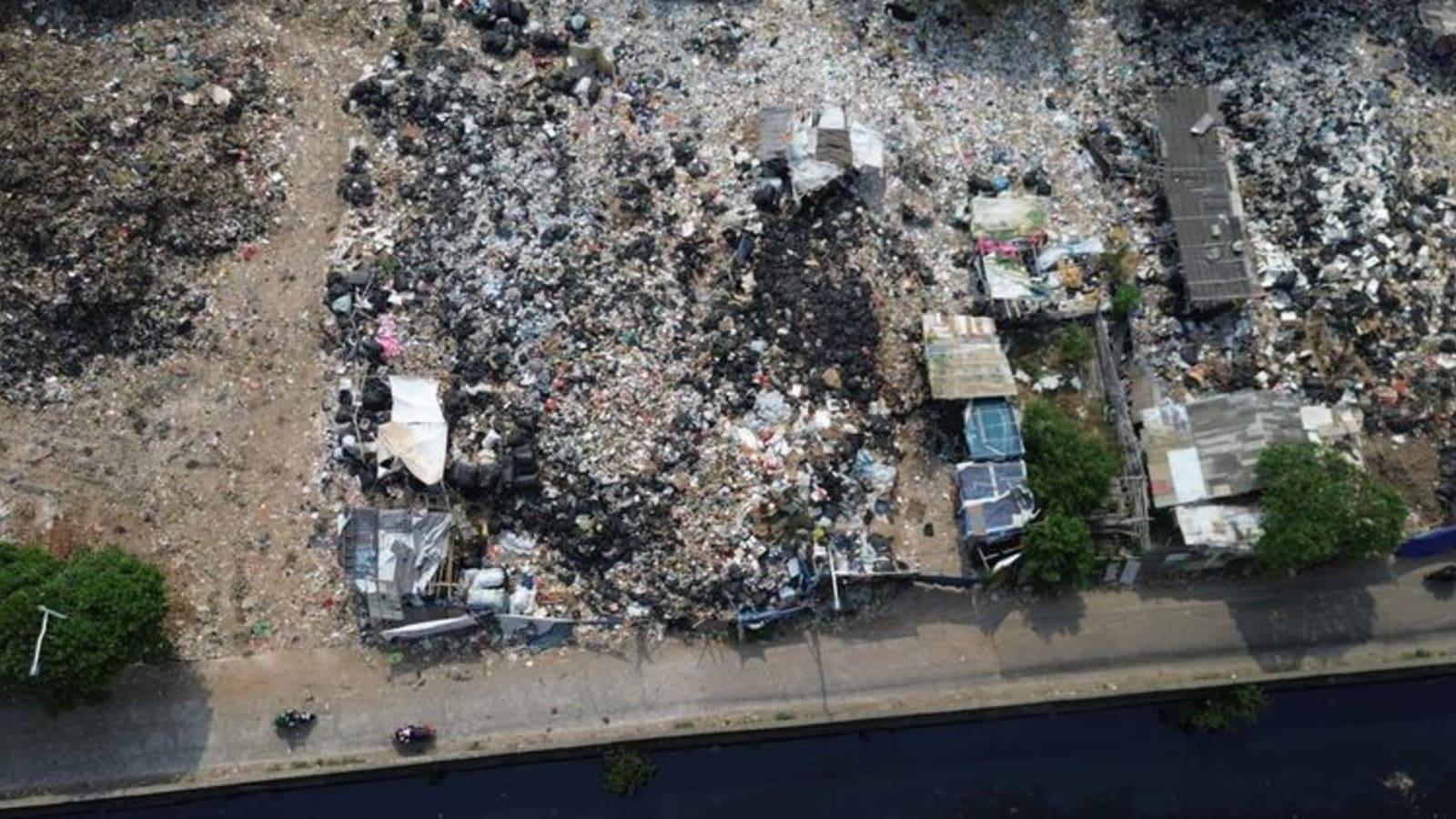
Governor Pramono Anung has ordered a two week cleanup of roughly 700 metres of illegally stockpiled waste in North Jakarta's Penjaringan green space and warned that private permit holders responsible face suspension or revocation under a 2021 gubernatorial regulation.
A Sunday inspection turns into a public ultimatum
Jakarta Governor Pramono Anung used a Car Free Day appearance on Jalan H.R. Rasuna Said in Setiabudi, South Jakarta, on Sunday, 26 July 2026, to deliver a pointed message to the city's private waste management permit holders. Standing alongside Health Minister Budi Gunadi Sadikin, the governor confirmed he had already instructed Jakarta's Environmental Service, known as Dinas Lingkungan Hidup, to work with the city's communications and informatics agency, Kominfotik, to clear waste that had accumulated on public land in North Jakarta.
"Untuk sampah di Jakarta, saya sudah memerintahkan Dinas Lingkungan Hidup bekerja sama dengan Kominfotik agar sampah yang menumpuk segera diangkut," Pramono said, describing the instruction to move quickly on the accumulated waste. He was more direct about the source of the problem moments later. "Pihak swasta yang menimbun sampah sudah kami berikan teguran keras. Perbuatan ini tidak boleh terulang," he said, confirming that stern warnings had already gone out to the private companies responsible and that the behaviour must not happen again.
Inside the Penjaringan site
The waste in question sits in the Ruang Terbuka Hijau, or green open space, in Penjaringan, North Jakarta, where illegal stockpiling has covered roughly 700 metres of public land, according to reporting from ANTARA News, Suara.com, Jawa Pos, Koran Jakarta, JPNN, and MetroTV News. A second, smaller complaint area has also been flagged near Pasar Minggu station in South Jakarta.
The core of the violation is a mismatch between what permit holders are licensed to do and what they actually did. Companies holding private waste management permits in Jakarta are authorised only to transport processing residue on to the city's final disposal site, known as TPA. Instead, according to the governor's account, waste was left stockpiled on public land rather than carried through to proper disposal, a practice that let volumes build up over an extended stretch of the Penjaringan green space rather than being cleared as required.
To address the immediate accumulation, the Environmental Service has mobilised ten trucks, with additional heavy equipment drawn from the city's Water Resources Department, known as Dinas Sumber Daya Air, joining the cleanup. Officials estimate that clearing the site fully will require 15 to 20 truckloads a day, and Pramono has set a two week target for the operation to be completed.
Not the first warning for these operators
This is not the city's first move against the companies involved. Jakarta's provincial government had already imposed penalties, including fines and the impoundment of trucks, against permit holders on two separate occasions this year, on 12 May and again on 1 July 2026, according to multiple outlets covering Sunday's remarks. That history is central to why Pramono's language this time carried an explicit threat of permit action rather than a renewed warning alone.
"Jika masih membandel, akan kami tindak sesuai ketentuan hukum," the governor said, warning that continued defiance would be met with action under the applicable legal provisions. The legal basis for that threat is Jakarta Governor Regulation Number 102 of 2021, which sets out waste management obligations for zones and companies operating in the capital. Under that regulation, the city can escalate through a graduated sequence of sanctions: up to three written warnings, public disclosure of the offending company's name, temporary suspension of its operating permit, and, at the top of the scale, outright revocation of the licence to operate.
"Pihak swasta yang menimbun sampah sudah kami berikan teguran keras. Perbuatan ini tidak boleh terulang," said Jakarta Governor Pramono Anung, confirming that private companies responsible for the Penjaringan stockpiling had already received formal warnings before Sunday's cleanup order.
A parallel push on where waste starts
Health Minister Budi Gunadi Sadikin used the same appearance to make a complementary point about the earlier end of the waste chain, arguing that public education on sorting matters as much as enforcement at the disposal end. "Yang paling penting adalah ilmunya disebarluaskan kepada masyarakat," he said, stressing that the most important task is spreading practical knowledge to the public, so that sorting happens "dari sumbernya, yaitu oleh warga sendiri", from the source, by residents themselves.
Jakarta's government also pointed residents toward an existing channel for flagging problems before they grow to the scale seen in Penjaringan. The city's JAKI mobile application, already used for a range of municipal services, allows residents to report accumulated waste directly, giving the Environmental Service an earlier trigger for enforcement than waiting for a site to reach several hundred metres of buildup.
Why this case matters beyond one green space
The Penjaringan enforcement action lands amid a broader national push to close out open dumping practices, with the central government's Ministry of Environment having set 31 July 2026 as the deadline for regional governments to end open dumping at final disposal sites nationwide. One account of Sunday's remarks also connected the Jakarta enforcement push to an internal city target of ending open dumping practices by 1 August 2026, though provincial agencies have not otherwise detailed that date publicly, and Sirkularium notes the figure as reported rather than independently confirmed.
Regardless of the precise date, the throughline is consistent. Jakarta is treating illegal private stockpiling as a live enforcement priority rather than a matter left to routine inspection, and doing so through an existing regulatory instrument, Pergub 102/2021, rather than through emergency or ad hoc measures. That distinction matters for how predictable the process is for the companies involved and for residents watching how quickly problem sites get resolved.
Sirkularium's view
For provincial and municipal environmental agencies elsewhere in Indonesia, Jakarta's approach in Penjaringan offers a workable model for a common problem: a mismatch between what a waste permit authorises and what a company actually does with the material it collects. The two prior sanctions this year against the same category of operator, followed by a public, on the record threat of permit revocation when the pattern repeats, show a graduated enforcement ladder being used as designed rather than skipped in favour of a single dramatic penalty.
The pairing of enforcement with the Health Minister's emphasis on source level sorting is also instructive. Cleanup capacity, ten trucks scaling to fifteen or twenty a day, addresses a symptom that already exists on the ground. Public education on sorting, paired with an accessible reporting channel such as JAKI, is aimed at reducing how often that symptom recurs in the first place. Regional governments building or refining their own waste enforcement frameworks would be well served by adopting both halves of this approach together: a regulation with real graduated teeth, applied consistently and publicly, alongside a low friction channel for residents to flag problems while they are still small enough to clear in days rather than weeks. What happens in Penjaringan over the coming fortnight, and whether any permit is in fact suspended or revoked rather than merely threatened, will be a useful signal of how firmly Jakarta intends to follow through.
Sources
- ANTARA News, Gubernur DKI tindak tegas pihak swasta buang sampah secara ilegal
- Suara.com, Pramono Ancam Cabut Izin Swasta yang Timbun Sampah Ilegal di Jakarta
- Jawa Pos, Pramono Anung Ultimatum Cabut Izin Swasta Penimbun Sampah Ilegal di Penjaringan-Pasar Minggu
- Koran Jakarta, Gubernur Pramono Ancam Cabut Izin Pengelola Sampah Nakal di Jakarta
- JPNN, Gubernur Pramono Ancam Tindak Tegas Swasta Pembuang Sampah Secara Ilegal
- MetroTV News, Pramono Bakal Sanksi Tegas Swasta Buang Sampah Ilegal di Jakarta