Jakarta turns one neighbourhood in Jagakarsa into a working model for sorting, collecting and processing waste by type
By Sirkularium Editorial Team, 8 min read
On 28 September 2026 the Jakarta Environment Agency launched a collaborative pilot in RW 06 Srengseng Sawah, South Jakarta, where more than 400 households across four neighbourhood units receive door-to-door guidance and waste is kept separate from the kitchen to the processing site. Around 21,000 homes across Jagakarsa already sort at source.
A pilot built at the scale of a neighbourhood
On Monday 28 September 2026 the Jakarta Environment Agency, Dinas Lingkungan Hidup DKI Jakarta, launched a collaborative waste management pilot in RW 06, Srengseng Sawah, in the Jagakarsa district of South Jakarta. The launch took the form of fieldwork rather than a ceremony. Agency officers, neighbourhood heads, PKK family welfare cadres and volunteers went from house to house, talking with residents about how their household waste is handled each day and how to separate it by type.
The pilot covers more than 400 households in four of the eleven neighbourhood units in RW 06, namely RT 02, RT 03, RT 06 and RT 11. The design is deliberately compact. It is large enough to test every link in the chain and small enough to watch closely.
The pilot sits under Governor's Instruction Number 5 of 2026 on the movement for sorting and processing waste at source, which took effect on 10 May 2026. It is delivered through Jakarta's Large-Scale Social Collaboration framework, known by its Indonesian initials KSBB, in the waste cluster of the environmental health programme. The aim, in the agency's words, is to turn the instruction into a consistent model that other areas of the city can replicate.
From collect, transport and dispose to sort, collect and process
The head of the agency, Dudi Gardesi, framed the pilot as a change in the underlying logic of the system. For decades Jakarta's default was to collect waste, transport it and dispose of it at TPST Bantargebang. The pilot replaces that with a sequence that begins in the kitchen.
"Waste management cannot be done by government alone, and it does not have to rely entirely on the regional budget." Dudi Gardesi, Head of the Jakarta Environment Agency
His point was about roles rather than retreat. The government sets policy direction and builds the system. Residents act at the source. Businesses, community organisations and universities contribute according to their capacity. The pilot was designed with those parties using a co-design approach, so that the neighbourhood has a hand in the arrangements it will be asked to follow.
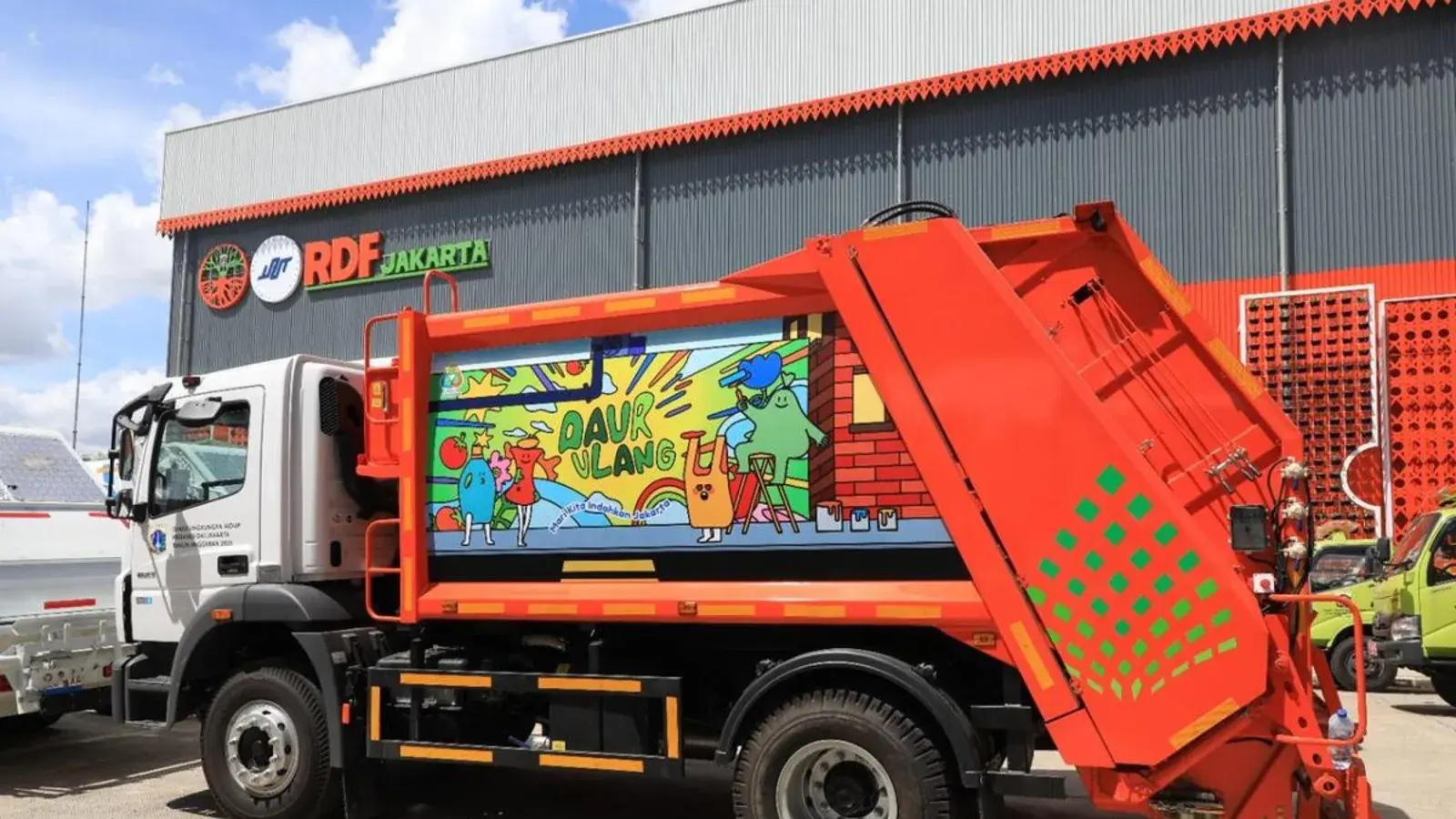
The deputy head of the agency, Purwanti Suryandari, described what that system looks like in practice. Residents sort at home. Waste is collected separately, transported without being remixed, and then directed to processing facilities according to type. That last point is the one households most often doubt. If sorted waste is thrown back together in the same truck, the effort at home is wasted and trust erodes quickly. The pilot addresses this directly. Collection vehicles, both pickups and carts, are allocated by waste type, drop points are set for sorted material, and collection crews are being trained not to recombine what residents have separated.
What happens to each stream
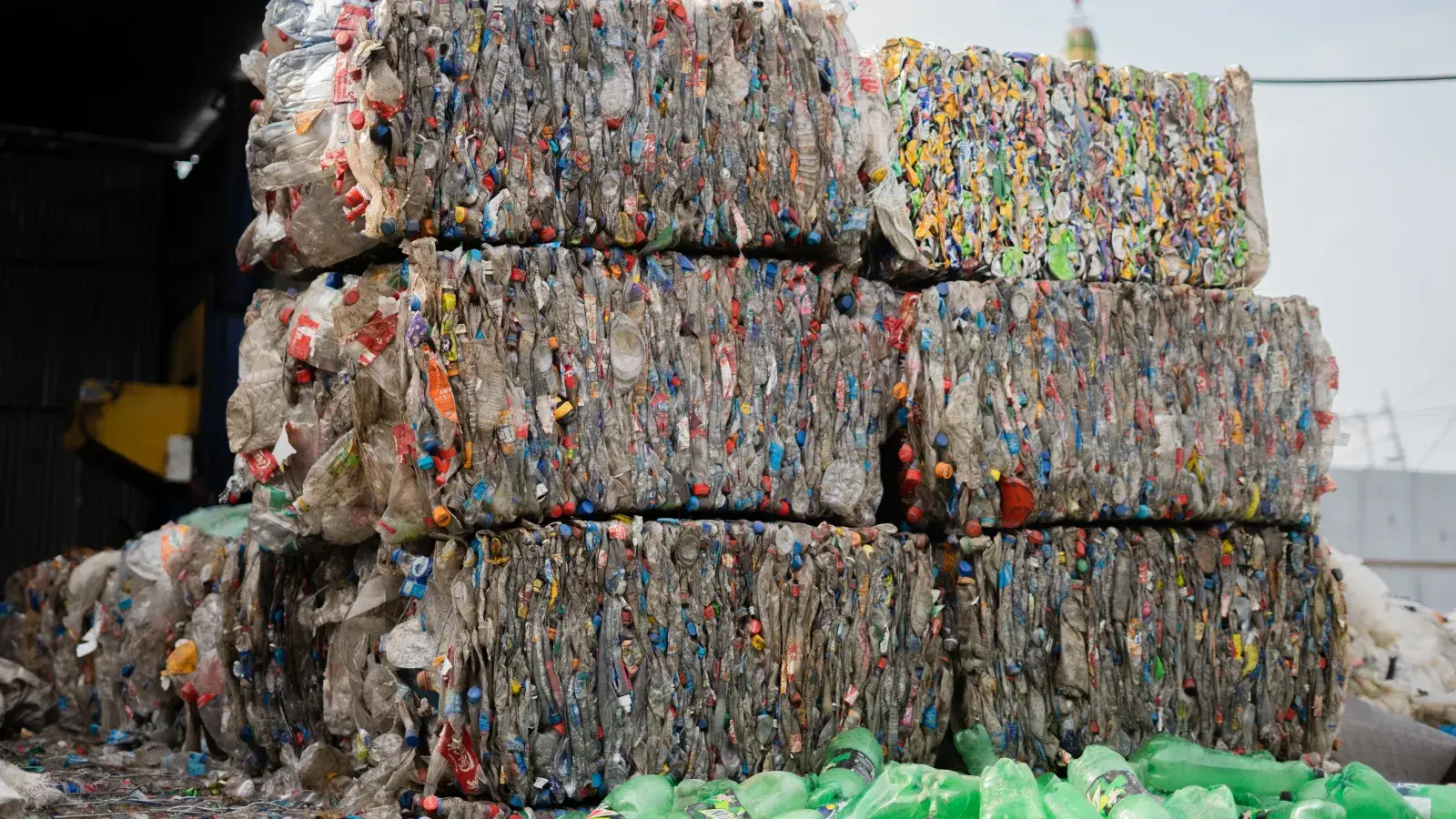
Governor's Instruction Number 5 sets out four streams, each with its own colour and its own destination. Organic waste, marked green, covers food scraps, fruit peel, leaves and kitchen waste, and is meant to be processed through composting, black soldier fly larvae or biodigesters. Inorganic waste, marked yellow, covers paper, cardboard, bottles, bags, packaging and metal, and goes to waste banks. Hazardous household items such as batteries and light bulbs, marked red, go to dedicated hazardous waste facilities. Only residue, marked grey, should travel to integrated processing at Bantargebang.
In RW 06 each of those destinations is local and named. Organic waste is handled through jumbo biopores and modern composting bins close to where it is generated. Inorganic material is taken to the nearest waste bank, which in this case is Bank Sampah Pandan Wangi in RW 06 itself. Residue moves on to TPS 3R facilities that apply reduce, reuse and recycle principles before anything is sent further.
The private sector contribution is concrete. Alfamidi, operated by PT Midi Utama Indonesia Tbk, distributed 300 sorting kits to residents so that organic waste can be kept apart from the start. The agency has also been providing buckets for organic waste to lower and middle income households, which removes a small but real barrier to participation.
Recognition, rules and the people who do the teaching
At the neighbourhood level, RW 06 is putting its own arrangements in place. The chair of RW 06, Anton Hardiantoni, set out a combination of recognition and rules. Residents who sort will be eligible for certificates and practical equipment such as composters and collection containers. A Rumah Memilah, a sorting house, has been established with coordinators at RW and RT level to oversee the effort. The neighbourhood also intends to write a sanctions clause into its own local rules, under which residents who do not sort could see their population administration requests held until they do. Governor's Instruction Number 5 itself provides for administrative sanctions, so the neighbourhood's approach sits within the city framework.
The agency has been candid that education is the step that takes the most people. Purwanti Suryandari noted that the agency does not have enough staff to carry out door-to-door education on its own, and that volunteers are currently doing much of that work directly with residents. The response is to widen the circle: partnering with the private sector, mobilising volunteers and training collection officers so that the message and the service line up. Implementation is being phased to avoid the illegal dumping that can follow when rules move faster than infrastructure.
A day later, on 29 September, the agency extended the same invitation to businesses. Erni Pelita Fitratunnisa, head of pollution control and environmental damage at the agency, asked companies to strengthen sorting at source, noting that the height of the waste mound at TPST Bantargebang has passed 50 metres, the maximum designated limit. Every tonne sorted and processed upstream is a tonne that does not add to that height.
How a neighbourhood fits the citywide picture
The pilot builds on progress that is already measurable. Iwan Santoso, Assistant for Economy and Development of the South Jakarta administration, reported that around 21,000 homes in Jagakarsa already sort their waste at source, supported by organic processing facilities. Citywide, household participation in sorting rose from 5.31 percent when the movement launched in May to 23.14 percent by August 2026.
That trajectory is encouraging, and it also explains the purpose of a pilot like RW 06. The first wave of participation tends to come from households that are already motivated. The next wave depends on the system around them working reliably: a bin at the right moment, a collection that keeps streams apart, a waste bank within reach and a visible result. RW 06 is where Jakarta is testing that whole chain at once, with the intention of taking the model to areas where participation is still lower.
Sirkularium's view
The Srengseng Sawah pilot is a practical example of how a city turns a policy instrument into a working service. Governor's Instruction Number 5 set the obligation. The KSBB framework brings in the partners. The pilot shows how the pieces fit together at the level where waste is actually generated.
For city and regency governments considering source separation, Sirkularium draws four lessons. First, secure the chain before scaling the ask. Residents will keep sorting only if they see separate collection, so vehicle allocation, drop points and crew training deserve as much attention as public messaging. Second, keep processing local wherever possible. Biopores, composting bins and a neighbourhood waste bank shorten the distance between effort and outcome, and they reduce haulage costs. Third, treat volunteers and cadres as part of the delivery system, with training, materials and recognition, since they are carrying much of the education workload. Fourth, lead with recognition and support, and apply sanctions consistently and transparently once the service is in place, so that rules are seen as fair.
For financing, the model shows how corporate contributions can be directed at specific gaps, such as sorting kits, rather than at general campaigns. Aligning such contributions with a published list of neighbourhood needs would make them easier to target and to report.
What to watch next is measurement. The most useful indicators from RW 06 will be the share of households sorting consistently after three months, the tonnage leaving the neighbourhood as residue compared with before the pilot, and how quickly the model is adopted in a second and third neighbourhood. If those numbers move in the right direction, Jakarta will have a replicable template, and one that other Indonesian cities facing the same pressure on their landfills can adapt.
Sources
- ANTARA News, RW 06 Srengseng Sawah becoming a pilot for collaborative sorting and hauling
- ANTARA News, 21,000 homes in Jagakarsa already sorting at source
- ANTARA News, RW 06 preparing recognition and sanctions for sorting
- ANTARA News, the environment agency on staffing and the role of volunteers in sorting education
- ANTARA News, the environment agency inviting companies to strengthen sorting at source
- Koran Jakarta, RW 06 Srengseng Sawah as a Jakarta waste management pilot project
- Investortrust, Alfamidi distributing 300 sorting kits in Srengseng Sawah
- KabarJakarta, Jakarta changing how it manages waste, from the home rather than the landfill
- Jakarta JDIH, Governor's Instruction Number 5 of 2026 on sorting and processing waste at source
- ANTARA News, Jakarta household sorting reaching 23.14 percent by August