A permitting file closes in Gresik and the one million gas connection target gets a date
By Sirkularium Editorial Team, 9 min read

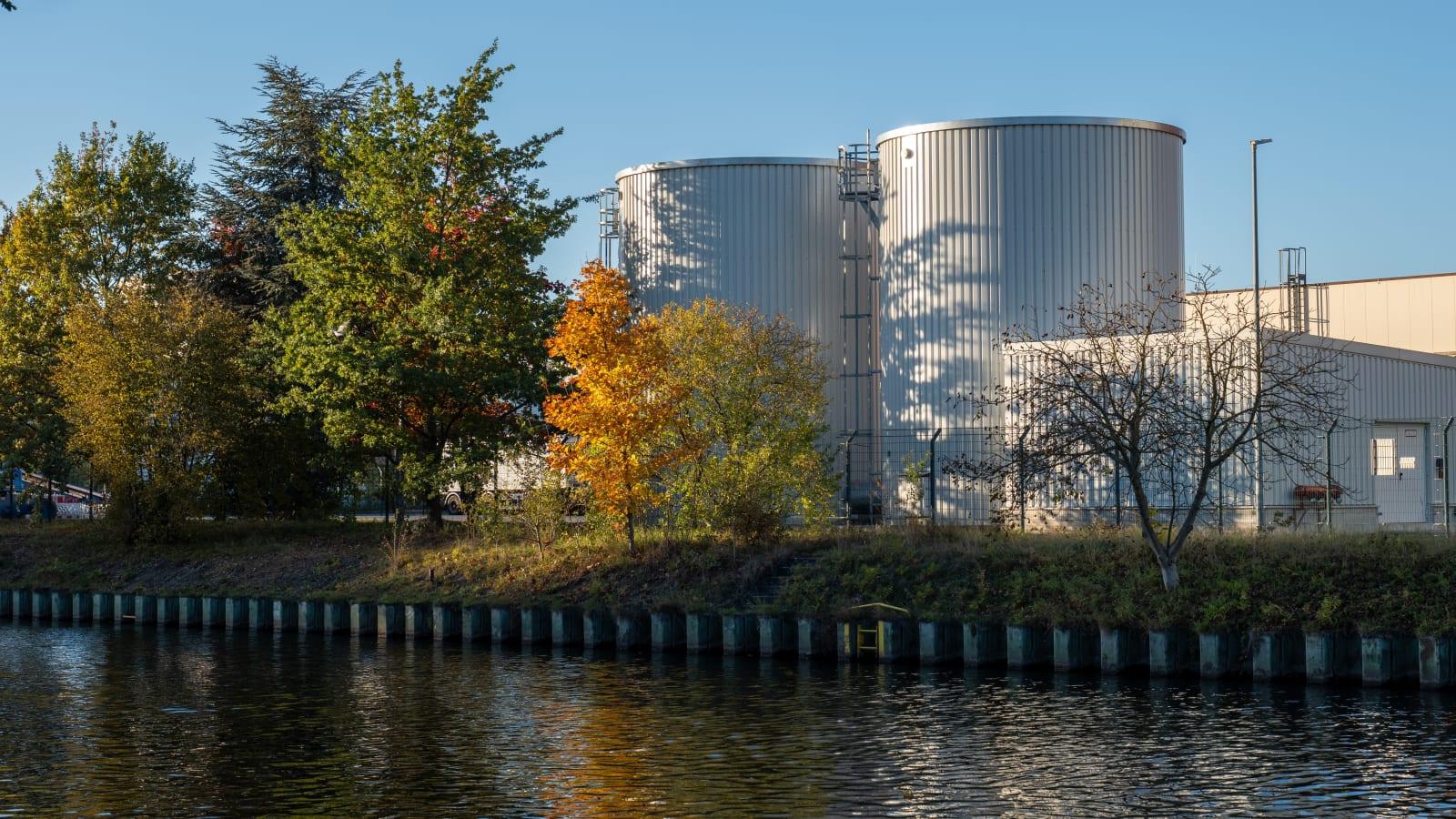
On 18 September 2026 the Head of Presidential Staff inspected household gas network readiness in Gresik, East Java, and set 2028 as the completion date for one million piped gas connections. The visit mattered less for the target than for what it confirmed: the environmental and crossing permits that had held up operations are now cleared, and physical work in Gresik stands at 95.4 percent.
Indonesia's household gas network programme acquired a firm completion date on 18 September 2026. Inspecting operational readiness in Gresik, East Java, the Head of Presidential Staff, Dudung Abdurachman, stated that construction of one million household connections would be finished by 2028. The target itself is not new. It sits inside the National Medium Term Development Plan 2025 to 2029 and carries National Priority Programme status under President Prabowo Subianto. What changed in Gresik was narrower and more useful. The permits that had been holding up commissioning are now signed.
That distinction is worth holding onto. Household gas networks, known in Indonesia as jargas, rarely stall because the pipe is difficult to lay. They stall in the space between mechanical completion and first gas, where environmental approvals, road crossing consents and river crossing recommendations sit with several different authorities at once. Gresik had reached 95.4 percent physical progress, which reporting on the visit put at 4.6 percentage points ahead of the schedule for that stage. The gas was not yet flowing.
What the site visit actually resolved
The inspection closed a specific administrative file. Environmental management and monitoring approvals, the UKL and UPL documents, were issued for both Gresik and Sidoarjo. Technical recommendations for road crossings in Gresik regency were completed, and the recommendation covering river crossings was signed. Those clearances involved the Ministry of Environment and Forestry, the Ministry of Public Works, the Ministry of Agrarian Affairs and the National Land Agency, the East Java provincial government and the two district governments, coordinated through a series of meetings convened by the Presidential Staff Office.
The permitting obstacles that had been holding back operations have now been resolved.
That statement, delivered by Dudung Abdurachman at the Gresik site, is the substance of the day. It describes a coordination function rather than a construction one, and it is the function that determines whether a finished network becomes a working one.
The Regent of Gresik, Fandi Akhmad Yani, joined the inspection alongside Agung Kuswandono, Director of Planning and Infrastructure Development at the Ministry of Energy and Mineral Resources, and Herry Murahmanta, Director of Infrastructure and Technology at PT Perusahaan Gas Negara. The division of responsibilities set out at the visit is instructive. The energy ministry appoints the managing entity and issues gas business licences. SKK Migas secures the gas allocation and the delivery points. BPH Migas sets the household price, with the explicit instruction that it stay below the cost of a 3 kilogram LPG cylinder.
The numbers in two districts
The current phase of the programme covers 119,379 household connections across 15 districts and cities during 2025 and 2026. Gresik accounts for 7,363 of those connections and Sidoarjo for 7,223, a combined 14,586 households in the two East Java districts visited.
The consumption effect is measurable. Those 14,586 connections are projected to reduce demand for subsidised 3 kilogram cylinders by roughly 36,600 units every month. For the household, the arithmetic is simpler still. Dudung put monthly piped gas spending at around Rp20,000 against roughly Rp70,000 for cylinder LPG, a gap that the Ministry of Energy and Mineral Resources has elsewhere described as a saving of about 40 percent when a home switches from cylinders to the network.
Both figures carry the same message from different directions. The subsidy line falls because fewer cylinders are drawn. The household bill falls because piped gas is priced below the cylinder it replaces. Programmes that move both numbers in the same direction are uncommon, and they tend to be the ones that survive changes in fiscal circumstance.
Why import substitution is the frame
Roughly 80 percent of national LPG demand is currently met by imports. Ministry data cited in 2025 put the five year average import volume at 6.67 million tonnes a year, rising at about 8.02 percent annually. That trend line, more than any emissions target, is what gives jargas its urgency in budget discussions.
The subsidised quota tells the same story in state budget terms. The 3 kilogram LPG allocation was set at 8.03 million tonnes in 2024, 8.17 million tonnes in 2025 and 8.31 million tonnes for 2026, with Rp80.3 trillion allocated for the subsidy in the 2026 draft budget. Sources differ on the 2025 comparison, with the ceiling reported at Rp87.6 trillion against realised spending of Rp80.21 trillion in 2024, so the budget path is best read as broadly flat in rupiah while the physical quota keeps climbing. The quantity is what matters for import exposure.
Against volumes on that scale, one million connections will not close the gap on its own. It does something more modest and more durable. It converts a share of household demand from an imported, cylinder distributed fuel into a domestically piped one, and it does so in the dense urban and peri urban areas where the distribution cost per household is lowest.
Building on infrastructure that already exists
The programme is not starting from zero. By 2024 installed household connections had reached approximately 943,000, comprising about 703,000 funded through the state budget and about 240,000 through non state budget schemes, with service available in 86 cities and regencies. One source reports the non state budget figure closer to 400,000 as of September 2024, so the cumulative base is best treated as a range rather than a single number until a reconciled count is published.
Forward funding is already committed. The energy ministry has allocated Rp5.2 trillion in its 2027 budget for 959,232 household connections under a multi year contract structure running from 2026 to 2028, within a total ministry budget of Rp27.33 trillion for that year, of which 82 percent, about Rp22.48 trillion, is directed to strategic programmes and physical infrastructure. Transmission investments run alongside it, including the Dumai to Sei Mangkei pipeline at Rp3.9 trillion, the Semarang to Solo to Yogyakarta line at Rp702.3 billion and the Cirebon to Bandung line at Rp577 billion.
The multi year contract is the quietly important instrument here. Household distribution networks are built in small increments across many jurisdictions, and annual appropriation cycles tend to fragment exactly that kind of work. A contract that spans 2026 to 2028 lets the physical programme and the completion date share a calendar.
Sirkularium's view for government and public institutions
For policy, the Gresik visit is a reminder that the binding constraint on distribution infrastructure is administrative rather than technical. A network at 95.4 percent physical completion waiting on crossing recommendations is not a construction problem. Institutions planning the remaining tranche of the one million target would gain from treating environmental and crossing approvals as scheduled deliverables with their own milestones, cleared in parallel with civil works rather than after them. The coordination model used in Gresik and Sidoarjo is replicable precisely because it is procedural.
The lesson travelling out of East Java is not that a pipe was laid. It is that permits can be sequenced as project milestones, and when they are, a completed network starts delivering gas in weeks rather than waiting on a calendar nobody owns.
For financing, the combination of multi year contracting and a price cap set below the 3 kilogram cylinder gives both the builder and the household a predictable position. The open question is the role of non state budget schemes in reaching the longer term ambition, which government statements have placed at 5.5 million connections by 2030. State budget funding alone has delivered roughly 703,000 connections over many years. Scaling well beyond one million will require partnership structures to carry a larger share.
For implementation, the metric that deserves attention next is utilisation rather than connection. A connected household that keeps buying cylinders delivers no import saving. Tracking gas offtake per connection, alongside connection counts, would let the programme demonstrate its effect on the LPG quota directly, and would give the fiscal argument a number that auditors can verify.
Three things are worth watching over the coming months. First, whether the 2027 tranche of 959,232 connections holds its Rp5.2 trillion allocation through the budget cycle. Second, whether SKK Migas allocation and delivery point decisions keep pace with completed networks, since gas supply is the other way a finished pipe can sit idle. Third, whether the permitting sequence demonstrated in East Java is written into the standard programme design for the remaining districts, which would turn a successful site visit into a repeatable method.
Subsidised 3 kg LPG quota set in the state budget
Values in million tonnes
Sources
- ANTARA News, KSP targetkan pembangunan 1 juta jargas selesai pada 2028
- Bisnis Indonesia, Pemerintah Targetkan 1 Juta Sambungan Jargas Rampung 2028
- Bisnis Indonesia, KSP Tuntaskan Perizinan untuk Percepat Jargas Rumah Tangga
- detikNews, 1 Juta Jaringan Gas Bumi Rumah Tangga Ditargetkan Rampung di 2028
- detikFinance, 1 Juta Jaringan Gas Ditargetkan Rampung 2028
- Okezone Economy, Percepat Jargas Kurangi Impor LPG, Target 1 Juta Sambungan Rumah di 2028
- ANTARA News, ESDM siapkan Rp5,2 triliun untuk jargas rumah tangga pada 2027
- CNBC Indonesia, Kuota LPG 3 Kg Subsidi Ditetapkan 8,31 Juta Ton di RAPBN 2026
- Tempo, Kuota dan Anggaran Subsidi Gas LPG 3 Kilogram