A second well at Lumut Balai shows how Indonesia adds geothermal capacity without opening a new field
By Sirkularium Editorial Team, 9 min read
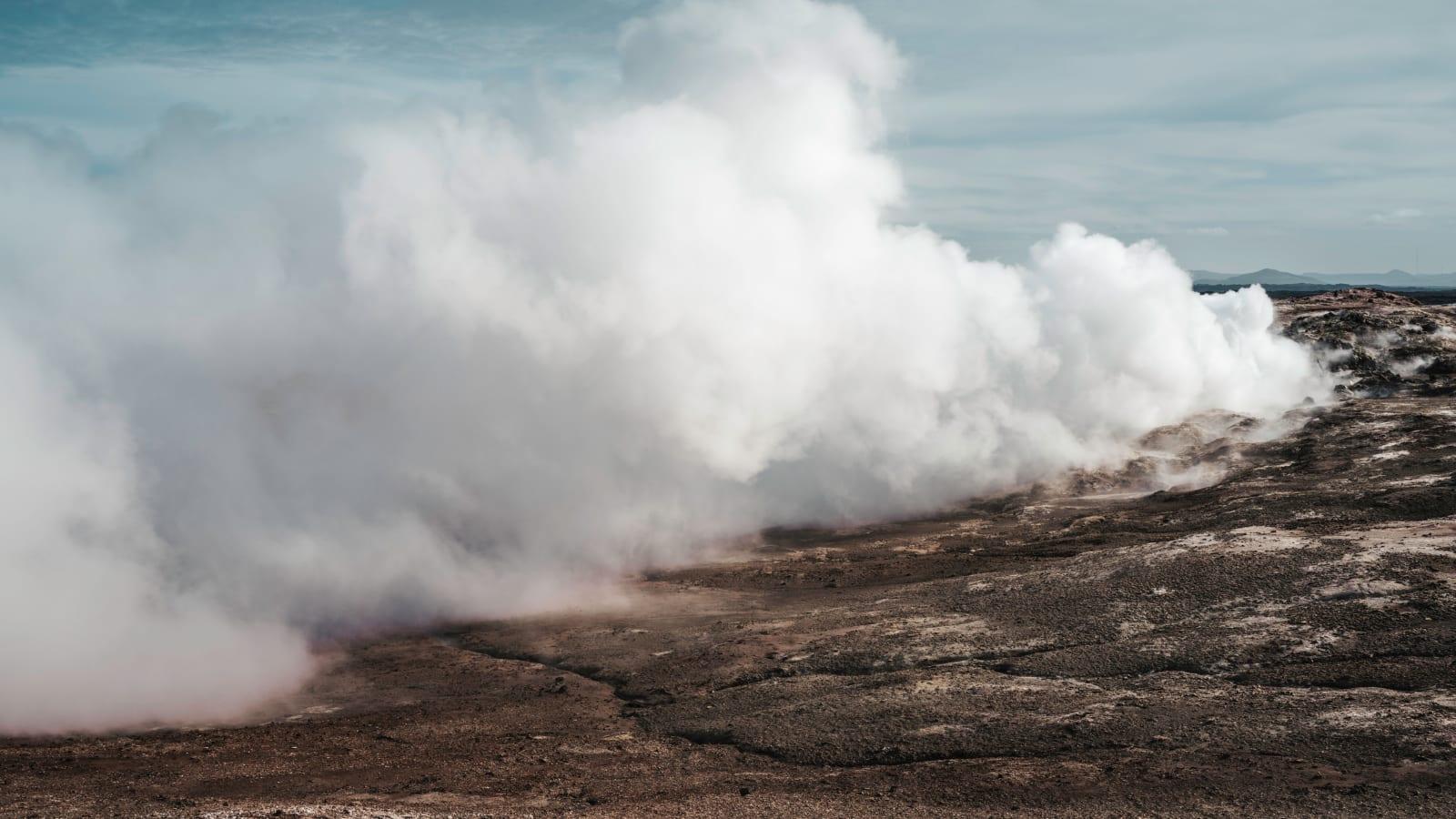
Pertamina Geothermal Energy began drilling well LMB-19.4 in South Sumatra on 17 September 2026, the second well supporting the 55 megawatt Lumut Balai Unit 3. The project sits inside a field that has been producing since 2019, which is why it carries a different cost and risk profile from greenfield development.
A rig turns to the right in Semende Darat Ulu
At 22:00 WIB on 17 September 2026, PT Pertamina Geothermal Energy Tbk (PGE) began drilling well LMB-19.4 in the Lumut Balai geothermal working area in South Sumatra. The rig is GDAP#123. The target depth is roughly 2,500 metres and the programme is scheduled to take 40 days. The well is the second drilled in support of Lumut Balai Unit 3, a 55 megawatt geothermal power plant targeted for commercial operation in 2030.
The announcement was carried on 21 and 22 September 2026 by detikFinance, the Hijau desk of Bisnis Indonesia, Pasardana, Listrik Indonesia and Seremonia. It follows the spud of the first well, LMB-19.3, in July 2026 at Desa Babatan in Semende Darat Ulu district, drilled by the same rig to the same target depth.
Heri Susanto, Project Manager for Lumut Balai Unit 3 and Unit 4, framed the new well as a continuation of a completed piece of work rather than a fresh start, with safety and quality standards set as the governing priorities for the 40 day window. Catur Hendro Utomo, General Manager of PGE Area Lumut Balai, said the drilling confirms that field development is running to plan.
Ahmad Yani, Chief Executive Officer of PGE, placed the well in a longer frame. Indonesia is marking one hundred years since the first geothermal exploration drilling at Kamojang in 1926.
The momentum of a century of national geothermal energy is a reminder for us to keep accelerating development, one example being the Lumut Balai Unit 3 geothermal power plant.
The field this well is drilled into
The significance of LMB-19.4 is easier to see once the existing field is laid out. Lumut Balai Unit 1 has been running since late 2019 with 55 megawatts of capacity. Unit 2, also 55 megawatts, entered service in June 2025. Development work on Unit 4, a further 55 megawatts, started in April 2026. Unit 3 therefore lands in the middle of a staged build on ground that already carries access roads, a steam gathering system, a switchyard and a resident operating team.
That matters for the economics. In brownfield geothermal development, the subsurface risk that dominates a new prospect has already been retired by production history. Wells are drilled into a reservoir whose pressure, temperature and chemistry are known from years of operating data rather than from a survey. Surface infrastructure is extended rather than built from zero. The result is a megawatt that costs less and arrives more predictably than the same megawatt at an unproven field.
The production record supports the point. PGE reported that Lumut Balai Units 1 and 2 together raised output by 108.2 percent year on year in the first half of 2026, as Unit 2 moved through its first full period of commercial operation. Unit 3 will draw on the same reservoir and the same operating organisation.
The operating numbers read as an efficiency story
Across its portfolio, PGE reported 2,745 gigawatt hours of electricity generation in the first half of 2026, up 13.62 percent from 2,416 gigawatt hours in the same period of 2025. The company's full year 2026 consolidated target is 5,255 gigawatt hours. Revenue reached USD 235.027 million, up 14.7 percent, with net income of USD 79.605 million, up 15.48 percent, and gross profit of USD 130.4 million, up 8.11 percent.
The reliability figures are the ones worth dwelling on. PGE recorded an availability factor of 99.71 percent, an unplanned outage rate of 0.11 percent, and a capacity factor of 90.42 percent against a global geothermal average in the range of 75 to 80 percent. A capacity factor above 90 percent means the installed plant is producing close to the physical maximum its nameplate allows.
Every point of capacity factor above the global average is a megawatt hour delivered without a single additional well, a single additional hectare, or a single additional rupiah of capital.
This is the same logic Sirkularium applies to industrial energy efficiency. The cheapest unit of clean energy is the one recovered from plant that has already been financed and built. Geothermal is unusual among renewable sources in being able to run at these load factors, which is why its contribution to a grid is measured not only in installed capacity but in firm, dispatchable hours.
Financing, permits and the national frame
Lumut Balai Unit 3 is not an isolated corporate decision. The project appears in the Blue Book and Green Book 2025 to 2029 maintained by the Ministry of National Development Planning, the standing register of projects eligible for foreign financing support. In June 2026 the project secured access to a foreign loan facility of USD 158.86 million.
At company level, PGE directly operates 727 megawatts of installed capacity across six operating areas. A further 1,205 megawatts sits under joint operating contracts, bringing total managed capacity to 1,932 megawatts across 15 geothermal working areas, or roughly 70 percent of Indonesia's installed geothermal fleet. PGE reports that these operations avoid approximately 10 million tonnes of carbon dioxide each year. Identified resources exceed 3 gigawatts across 10 work areas, and the company targets 1 gigawatt of self-operated capacity by 2028 and 1.8 gigawatts thereafter.
One figure is reported inconsistently and is worth flagging rather than smoothing over. PGE's own first quarter 2026 release and the September 2026 coverage put the 1.8 gigawatt milestone at 2034, while ANTARA's August 2026 reporting of the half year results places it at 2033. The difference does not change the direction of travel, but institutions building it into planning documents should confirm the year against the company's latest disclosure.
Indonesia's total geothermal potential is estimated at around 24 gigawatts, among the largest endowments in the world. Present installed capacity remains a small fraction of that. The gap is not primarily geological.
Sirkularium's read for government and public institutions
Three observations follow for policy, financing and implementation.
First, brownfield expansion deserves a distinct place in planning frameworks. Unit 3 and Unit 4 at Lumut Balai are not the same product as a new working area tender, and treating them identically in permitting queues, financing windows and tariff discussions understates how much faster and more cheaply they can move. A staged unit on a producing field is closer to a plant upgrade than to an exploration venture. Planning instruments that recognise this distinction would let proven fields carry more of the near term capacity task.
Second, the reliability record is an argument for the role geothermal plays alongside the national solar programme. A grid adding large volumes of variable solar generation needs firm capacity that runs through the night and through the wet season. A 90.42 percent capacity factor is precisely that service. Provincial and national system planners assessing the balance between solar, storage and firm renewable capacity now have a domestic, operating benchmark to work from rather than an imported assumption.
Third, the financing pathway is repeatable. A project registered in the Blue Book and Green Book, supported by production history and matched to a USD 158.86 million facility, describes a route that other proven fields can follow. The public institution role here is administrative continuity: keeping the register current, keeping permitting predictable, and keeping the drilling calendar aligned with the interconnection plan so that steam and grid capacity arrive in the same year.
What to watch next is straightforward. The LMB-19.4 drilling window closes in late October 2026, and the well result will indicate whether the steam supply for Unit 3 is on track for the 2030 commercial operation date. Beyond that, the sequencing of Unit 4 against Unit 3 will show whether Indonesia can compress the interval between units at a single field. Lumut Balai took nearly six years to move from Unit 1 to Unit 2. Shortening that interval, on a field that has already proven itself, is one of the more accessible gains available in the national energy transition.
PGE self-operated installed capacity and stated targets
Values in MW
Sources
- detikFinance, Pengeboran Sumur Kedua Pengembangan PLTP 55 Megawatt Dimulai
- Bisnis Indonesia Hijau, Pertamina Geothermal (PGEO) Mulai Pengeboran Sumur Kedua PLTP Lumut Balai Unit 3
- Pasardana, PGE Mulai Bor Sumur Kedua Lumut Balai, Proyek PLTP 55 MW Dikebut
- Listrik Indonesia, PGE Mulai Bor Sumur Kedua untuk PLTP Lumut Balai
- Seremonia, Lumut Balai Unit 3: PGE Mulai Pengeboran Sumur Kedua LMB-19.4
- PGE corporate release, first quarter 2026 results and capacity profile
- ANTARA News, PGE catat produksi listrik 2.745 GWh sepanjang semester I 2026
- CNBC Indonesia, PGE Mulai Tajak Sumur Lumut Balai 3, Kapasitas PLTP Bisa Naik 55 MW