Indonesia's landfills begin operating without open dumping as the 1 August national date takes effect
By Sirkularium Editorial Team, 9 min read
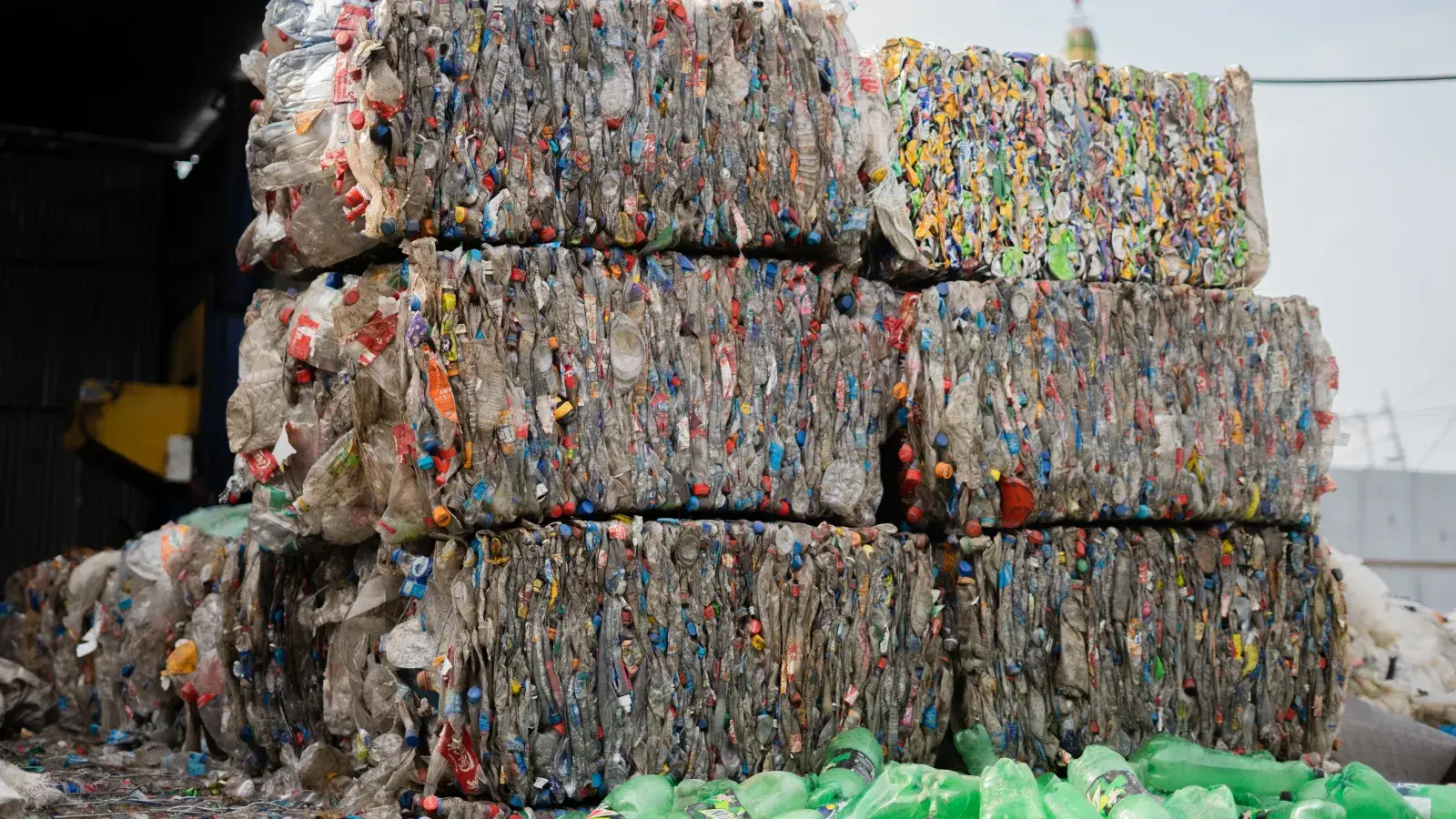
From 1 August 2026, final processing sites across Indonesia moved to controlled and sanitary operation, with Jakarta, Makassar, Denpasar and Samarinda among the first to switch. The shared national date turns a long-standing legal requirement into daily operating practice and puts source separation at the centre of municipal service design.
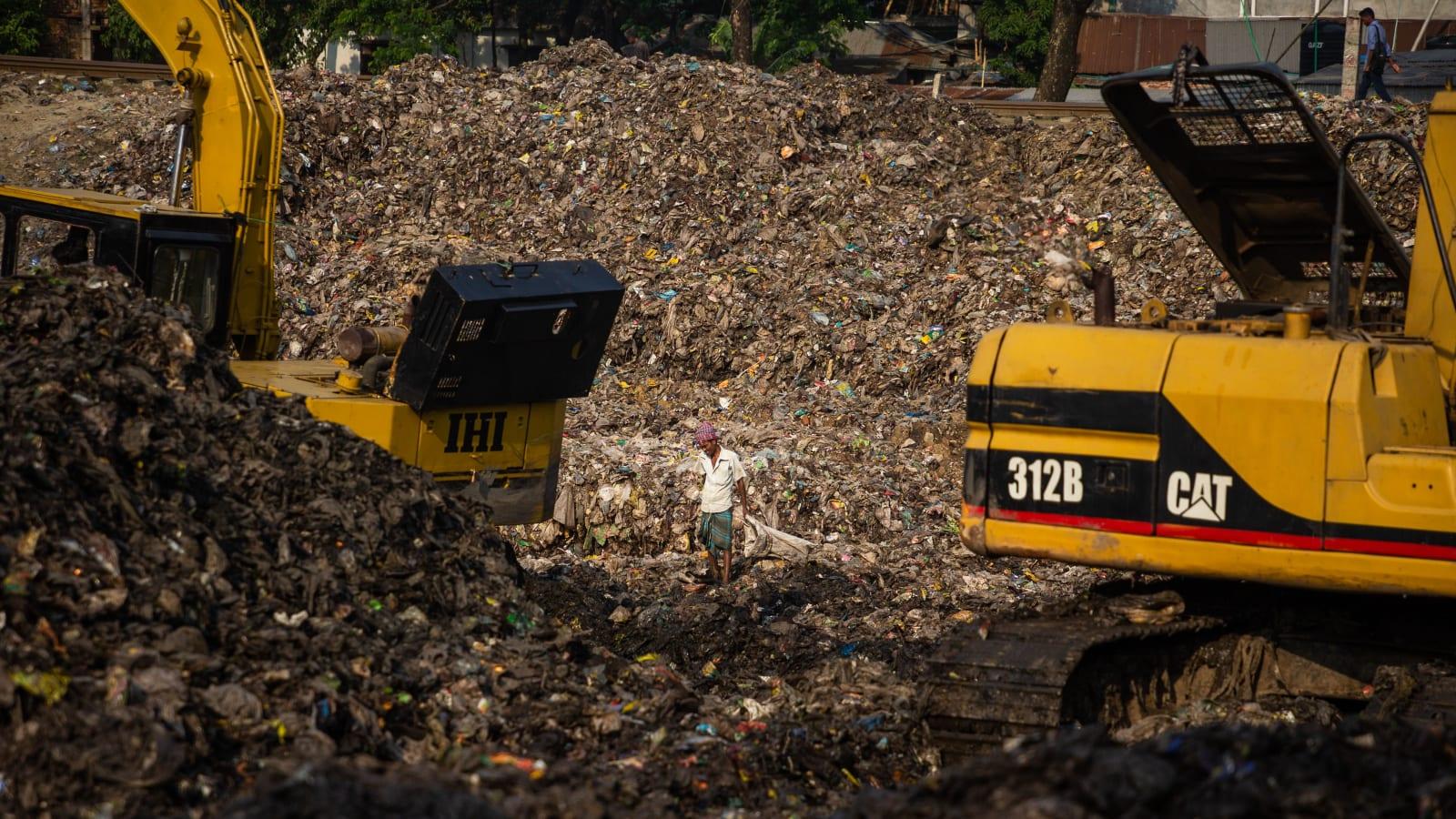
On 1 August 2026, final processing sites across Indonesia, known locally as TPA, began operating under one shared national rule. Open dumping stops. Waste arriving at a disposal site is to be compacted, covered, and managed with leachate and methane controls, and increasingly it is to arrive already separated at source. The date had been circulated by the Ministry of Environment for months, which gave provinces, cities, and regencies a common planning horizon rather than a series of separate local deadlines.
For most households the first week felt unremarkable, and that was by design. Collection continued on its normal schedule. The change sits behind the truck, at the working face of the landfill and in the network of transfer and processing facilities that now stand between the kerb and the disposal site.
What actually changed on 1 August
The instruction does not close landfills. It changes how they operate. Sites move from open dumping, where mixed waste is tipped and left exposed, to controlled or sanitary landfill practice, where each day's delivery is compacted, covered with soil, and paired with leachate treatment and methane control. That distinction has been stated repeatedly by the Ministry of Environment, and it matters for regional budgets: the requirement is for engineering and operating discipline at existing sites, not for new land acquisition in every district.
The requirement itself is not new. Law No. 18 of 2008 on waste management already prohibited final processing sites from accepting and abandoning unsorted waste, and administrative instruments were strengthened in March 2026. What 1 August 2026 supplies is something regulations alone rarely deliver, which is a single, visible, nationally shared switchover date that every regional administration can plan procurement, staffing, and public communication around.
In Jakarta, the head of the provincial environment agency, Dudi Gardesi Asikin, framed the transition in practical terms for residents.
For residents on 1 August, collection continues as usual, and our officers will handle it. We ask those who already sort their waste not to change the pattern.
The national picture behind the date
The scale of the task is documented. Indonesia has 485 final processing sites. By the end of 2025, roughly 30 percent had already ceased open dumping, leaving 369 sites to complete the transition. National supervision has covered 388 sites, with administrative measures applied at 273 of them and 231 formally required to end open dumping practice.
The date is anchored in the medium-term development plan. Presidential Regulation No. 12 of 2025 sets a national waste management achievement target of 63.4 percent for 2026, and the Ministry of Environment has consistently paired the end of open dumping with acceleration of separation at source. The ministry's position is that the two cannot be separated. A controlled landfill that still receives fully mixed waste simply relocates the problem to a better engineered surface.
Environment Minister Mohammad Jumhur Hidayat set out the reasoning when the Bali timetable was announced, asking residents to begin simultaneous source separation from 1 July 2026 ahead of the disposal change one month later. In Bali, roughly 60 percent of waste generated is organic and around 17 percent is plastic, with households the dominant source. That composition explains why organic diversion is the fastest available lever for cutting landfill volume.
Jakarta moves from collect and dump to sort, collect, and process
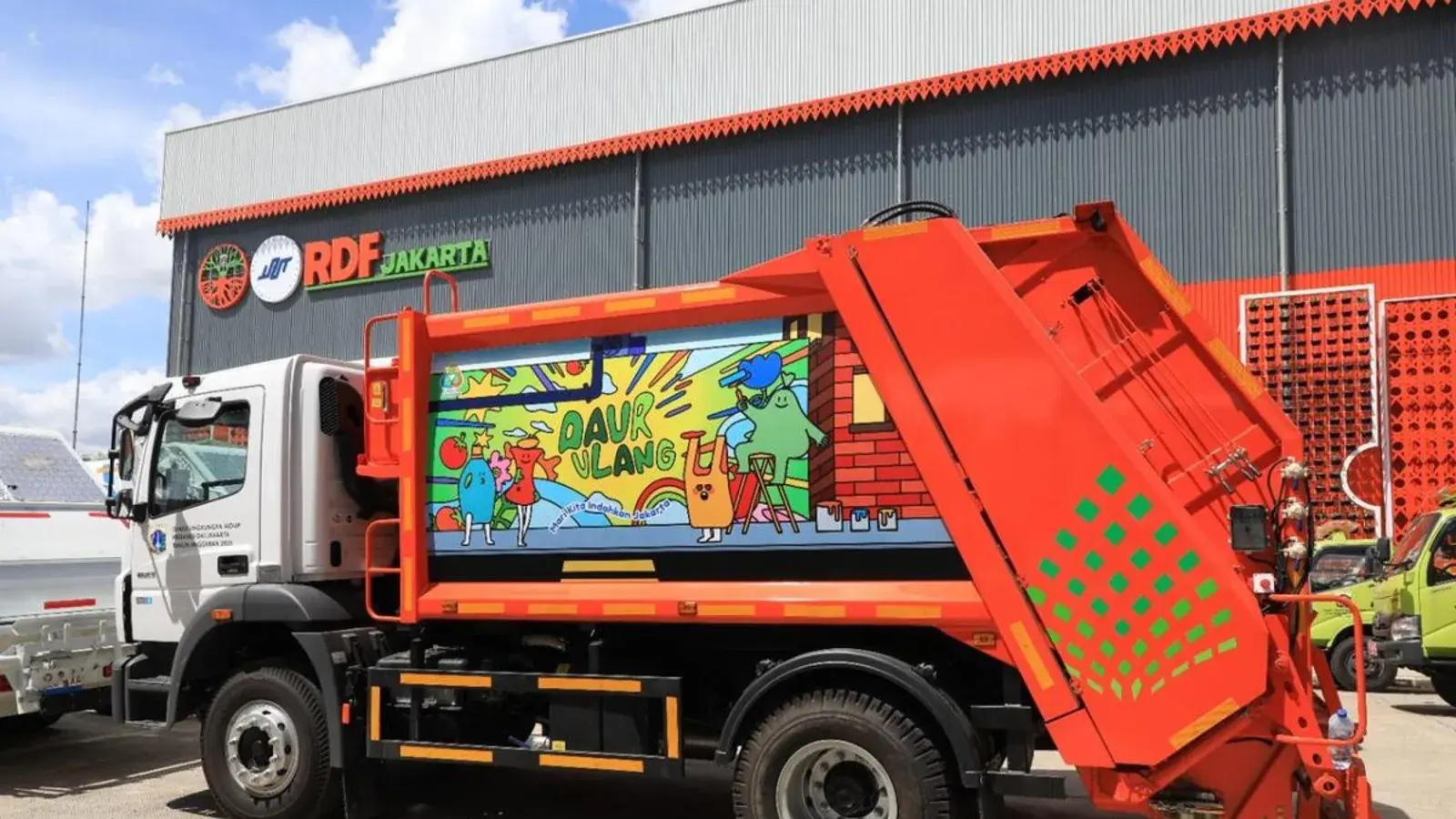
Jakarta illustrates the operating model most fully. Under Gubernatorial Instruction No. 5 of 2026, the capital moved on 1 August to a system in which households separate into four streams, organic, inorganic, hazardous household material, and residue, and only residue is directed to TPST Bantargebang. Governor Pramono Anung described the shift in a single line.
If it used to be collect, transport, dispose, now it becomes sort, transport, process.
The supporting numbers show both the ambition and the distance still to travel. Jakarta and its service area handle 9,059 tonnes of waste a day. In the second quarter of 2026, 72.56 percent of that volume went to open dumping, 19.85 percent had not yet been collected, and 7.59 percent was processed. The city currently operates 29 TPS 3R facilities at roughly 21 percent of combined capacity, which means significant headroom exists inside assets that are already built.
The demonstration site is TPS 3R Menteng Atas, operated in partnership with PT Morego Green Indonesia under chairman Wing Indrasmoro. It has design capacity of 25 tonnes a day, expandable toward 132 tonnes, and currently handles 6 to 8 tonnes. The intended output profile is close to 90 percent compost and refuse derived fuel, with about 10 percent residue continuing to Bantargebang. Jakarta also plans thermal capacity of 7,500 tonnes a day across three units, alongside a 40 hectare organic processing site at Ciaingir in Banten. The provincial target is zero open dumping by 2029.
Regions reach the same milestone by different routes
The value of a shared date is visible in how differently regions arrived at it.
Makassar issued Circular Letter No. 1 of 2026, following Ministry of Environment Decision No. 1262 of 2026, directing that TPA Antang Tamangapa accept only residue from 1 August. Mayor Munafri Arifuddin confirmed that mixed waste would no longer be received and that separation into four categories applies across households, offices, schools, universities, commercial areas, and public facilities.
Samarinda took an infrastructure route. Regional Secretary Neneng Chamelia Shanti confirmed that Zone 2 at TPA Sambutan became operational on 30 July, ahead of the national date, with Zone 1 closing. The city allocated Rp 11.3 billion for the site and built the new zone around layered cover, leachate treatment, and methane control.
Bali committed to simultaneous provincial closure of open dumping, coordinated with Governor Wayan Koster and supported by a preparatory month of source separation. Central Java worked through district and city administrations, with the ministry signalling that regions demonstrating genuine commitment and measurable progress would be supported through the technical transition rather than penalised for sequencing.
The numbers that will define the next two quarters
Three indicators are worth tracking closely between now and December. The first is the residue share, meaning the proportion of material arriving at each disposal site that has genuinely passed through a processing step. Jakarta's early benchmark of roughly one quarter of incoming volume as processed residue is a useful reference point for other metropolitan areas.
The second is utilisation of existing decentralised assets. Jakarta's 29 TPS 3R sites at 21 percent utilisation point to a national pattern in which capacity already funded is not yet fully loaded. Raising utilisation is faster and less capital intensive than new construction.
The third is organic diversion. With organic material at around 60 percent of generation in a province such as Bali, composting, black soldier fly systems, and district scale organic processing determine whether landfill volume falls in practice rather than on paper.
Sirkularium's view
The significance of 1 August 2026 is institutional rather than technological. Indonesia has converted a long standing statutory requirement into a coordinated national operating change, executed on a single date, across every level of administration. That is a considerable achievement in intergovernmental sequencing, and it creates conditions that the circular economy has lacked in the sector until now.
For government and public institutions, three implications follow.
On policy, the binding constraint has shifted from the disposal site to the source. Regional regulations, service standards, and retribution structures should now be reviewed for whether they actively reward separation rather than merely permitting it. Commercial generators, particularly hotels, restaurants, and cafes, respond quickly to clear obligations paired with reliable offtake for separated material.
On financing, the immediate need is operating expenditure rather than capital expenditure. Controlled landfill practice requires cover material, compaction equipment, leachate treatment, and trained operators every day of the year. Multi year operating budgets, supported where appropriate by partnership models such as the Menteng Atas arrangement, will protect the transition more effectively than a further round of construction alone.
On implementation, the priority is measurement. Provinces that publish monthly residue share, facility utilisation, and organic diversion figures will be able to direct assistance where it is needed and to demonstrate progress against the 63.4 percent national target for 2026.
What to watch next is the first consolidated national reporting round after August, particularly how many of the 369 remaining sites complete conversion by December, and whether early adopters can hold residue quality steady as volumes normalise. Sirkularium will continue to track these indicators and to support regional administrations in translating the new operating baseline into durable circular economy value.
Jakarta waste handling profile, second quarter 2026
Values in percent of waste
Sources
- Kompas Megapolitan, Babak baru pengelolaan sampah di Bantargebang, open dumping ditutup mulai hari ini
- ANTARA News Foto, Praktik open dumping TPST Bantargebang mulai dihentikan per Agustus 2026
- Kementerian Lingkungan Hidup, Target nasional 2026, penghentian open dumping dan percepatan pemilahan sampah
- Pemprov DKI Jakarta, Siaran pers reformasi sistem pengelolaan sampah Jakarta
- CNN Indonesia, Reformasi sistem pengelolaan sampah DKI, Bantargebang khusus residu
- Kompas Denpasar, Menteri LH, mulai 1 Agustus 2026 Bali tutup open dumping di TPA selamanya
- ANTARA News Makassar, Pemkot Makassar hentikan buang sampah terbuka di TPA Antang
- Nomor Satu Kaltim, Kejar target KLH, Samarinda akhiri open dumping di TPA Sambutan
- JPNN Jateng, Seluruh daerah di Jateng diminta tinggalkan open dumping per 1 Agustus 2026