PLN bundles 7,046 megawatts of hydropower into single procurement packages to speed up the 11.7 gigawatt pipeline
By Sirkularium Editorial Team, 8 min read
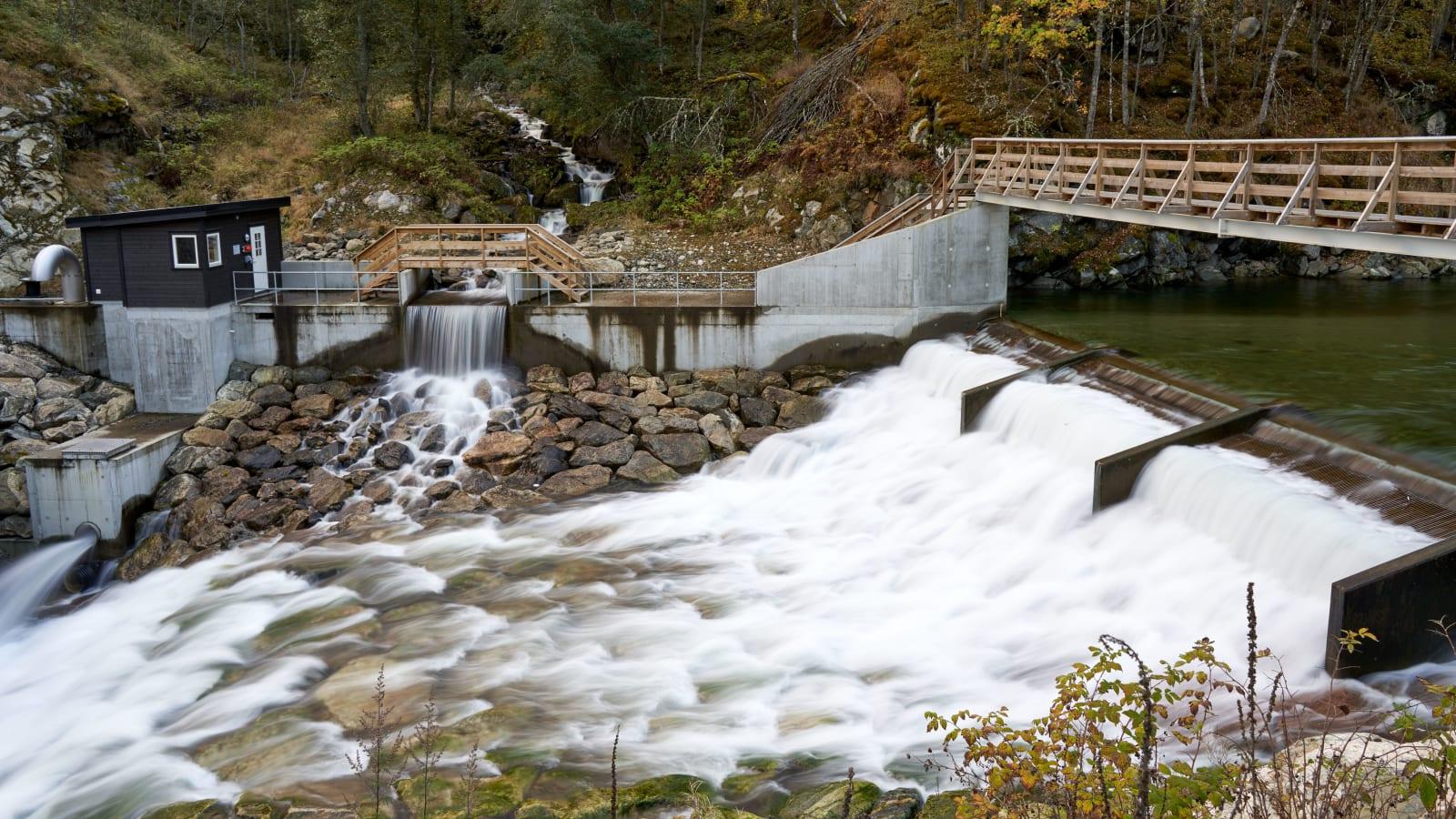
At the Indonesia Hydropower Summit 2026 in Jakarta, PT PLN set out a bundled procurement design covering 7,046 megawatts of hydropower across Sumatra, Kalimantan, and Sulawesi, part of an 11,689.99 megawatt programme in the 2025 to 2034 electricity plan that will need about USD 35 billion and will be built mostly by independent power producers.
A summit that turned potential into a procurement calendar
Indonesia has discussed its hydropower potential for decades. On Wednesday, 5 August 2026, that discussion moved a step closer to contracting. The Indonesia Hydropower Summit 2026, convened by the Indonesian Renewable Energy Society (METI) at the PT PLN (Persero) auditorium in Jakarta, carried the theme "Hydropower for Energy Security: Akselerasi PLTA sebagai Pilar Keandalan Sistem Kelistrikan dan Transisi Energi Indonesia". The substance matched the title. Rather than restating resource estimates, PLN used the forum to publish the shape of the tenders it intends to run.
Suroso Isnandar, Director of Project Management and New and Renewable Energy at PT PLN (Persero), set out a bundled procurement design covering 7,046 megawatts of hydropower. Instead of tendering dozens of individual sites one at a time, PLN groups them into regional packages: a Sumatra peaker package of 1,071 megawatts, a Sumatra baseload package of 1,800 megawatts, a Kalimantan peaker package of 150 megawatts, a Kalimantan baseload package of 825 megawatts, and two Sulawesi baseload phases of 1,400 megawatts and 1,800 megawatts respectively. The Sumatra peaker package, at roughly 1,000 megawatts, is already in tender. The Sumatra baseload package will be released in stages, beginning with about 350 megawatts.
The logic is procedural rather than technical. Each standalone tender consumes the same institutional effort regardless of size, and Indonesia's hydro pipeline contains a very large number of small sites. Bundling converts that administrative load into a smaller number of larger, more attractive competitions.
"More participants, more competitive. Larger scale yields better results," Suroso Isnandar told the summit, describing why PLN grouped the packages rather than tendering site by site.
The numbers behind the 11.7 gigawatt programme
The bundled packages sit inside a much larger commitment. The 2025 to 2034 Electricity Supply Business Plan, known as the RUPTL, allocates 11,689.99 megawatts to hydropower and mini hydropower across 315 projects. That figure is part of a national plan to add 69.5 gigawatts of generating capacity over the decade, of which about 76 percent is expected to come from renewable energy and storage.
The ownership split is the most striking element. Independent power producers are assigned 10.55 gigawatts across 262 projects, comprising 48 large hydropower plants totalling 9,441 megawatts and 214 mini hydropower plants totalling 1,110.16 megawatts. PLN itself takes 7 hydropower projects of 361 megawatts and 20 mini hydro projects of 51.15 megawatts. PLN subholdings take a further 17 hydropower projects of 698.1 megawatts and 9 mini hydro projects of 28.58 megawatts.
"Independent power producers will hold a very large role, larger than that of PLN or the subholding," Suroso Isnandar said of the allocation.
The capital requirement follows from the volume. Delivering 11.7 gigawatts of hydropower needs roughly USD 35 billion, or about Rp627.38 trillion at an assumed rate of Rp17,925 to the dollar, based on an indicative benchmark of about USD 3 million per megawatt of installed capacity. Suroso framed hydropower as one of the foundations of the transition toward the 2060 net zero emission target rather than as a standalone asset class.
Readiness, not ambition, is the binding constraint
The clearest contribution from the public planning side came from Abdul Malik Sadat, Deputy for Infrastructure at the Ministry of National Development Planning (Bappenas). His argument was that capital is available for hydropower in Indonesia, and that what determines whether it arrives is the quality of preparation before a project reaches the market.
Sadat identified four practical obstacles: overlapping spatial planning, a mismatch between where hydro resources sit and where electricity demand is concentrated, institutional and regulatory constraints, and incomplete project readiness documentation. None of these are technical questions about turbines. All of them are solvable through earlier and better coordinated preparation.
Bappenas is promoting two instruments to address this directly. HydroSelect is an early screening tool that assesses 12 environmental, social, and governance risks before a site advances, so that problems surface at concept stage rather than at financial close. The Hydropower Sustainability Standard is a performance assessment framework applied from preparation through to operation.
"It is important that we apply HydroSelect and the Hydropower Sustainability Standard from the outset, so that bankability improves," Sadat said.
Sadat also pointed to the financing structure itself, noting that many project owners, including state enterprises, do not carry balance sheets strong enough to fund development alone, and encouraging greater diversification through blended finance. Development partners already active in the sector, including the World Bank, JICA, KfW, and the Asian Development Bank, provide the concessional layer that such structures depend on. The Upper Cisokan pumped storage project illustrates the timescale involved, with a development cycle of roughly 15 years from concept to delivery.
Why hydropower earns its place in a grid absorbing more solar
KH Ali Masykur Musa, Independent Commissioner at PT PLN (Persero), set out the system case. Hydropower draws on a domestic resource and produces low emission electricity, which addresses both energy security and climate objectives at once. Beyond the energy it generates, it contributes reliability and operational flexibility to the system.
That second attribute becomes more valuable as Indonesia adds solar capacity. Variable generation needs a partner that can be dispatched quickly and can hold output through the evening peak. This is precisely why PLN has separated peaker packages from baseload packages in its procurement design. The peaker capacity in Sumatra and Kalimantan is being bought for flexibility, and the baseload capacity in Sumatra and Sulawesi is being bought for firm supply. Buying them as distinct products makes the system service explicit rather than incidental.
Ali Masykur Musa framed the central question as how to convert resource potential into projects that are ready to build, able to obtain financing, and completed on schedule. His conclusion was that acceleration cannot be partial and must be delivered end to end, from licensing and land through to commissioning.
Sirkularium's view for government and public institutions
For government and public institutions, three practical implications follow from this week's announcements.
First, the centre of gravity has shifted from planning to transaction design. With 262 of 315 projects assigned to independent producers, the decisive public sector skill is now the ability to structure and run competitive procurement, and to administer contracts over long asset lives. Bundling is a sound response to administrative capacity limits, and its benefits will be realised through disciplined tender preparation and clear evaluation criteria.
Second, project readiness deserves to be treated as budgeted infrastructure work in its own right. Feasibility studies, environmental and social assessment, land arrangements, and hydrological records are the inputs that make a project financeable. Applying HydroSelect and the Hydropower Sustainability Standard at concept stage is a low cost intervention with a high influence on the cost of capital that a project eventually pays.
Third, regional governments have a specific and constructive role. Overlapping spatial planning and the distance between resource and demand centres are addressed most efficiently at provincial and district level, through spatial plans that recognise hydro sites and through coordinated transmission planning. Sulawesi, with 3,200 megawatts across two baseload phases, is the clearest example of a region where local preparation will determine the pace of delivery.
What to watch next: the outcome of the Sumatra peaker tender now in the market, the release schedule for the remaining Sumatra baseload capacity beyond the initial 350 megawatts, and the first blended finance structures assembled around the Sulawesi packages. Those three signals will indicate whether the bundled approach is converting Indonesia's hydropower potential into contracts at the pace the RUPTL assumes.
Bundled hydropower procurement by package
Values in MW
Sources
- ANTARA News, PLN accelerates hydro projects through bundled procurement of 7,046 MW
- ANTARA News, independent power producers to build the majority of hydro projects in RUPTL 2025-2034
- ANTARA News, Bappenas on project readiness as the key to accelerating hydropower investment
- Liputan6, PLN needs Rp627 trillion to build 11.7 GW of hydropower
- Liputan6, PLN focuses on hydropower execution for low emission electricity
- CNN Indonesia, PLN engages private developers for 262 hydro and mini hydro projects to 2034
- Koran Jakarta, hydropower financing depends on project readiness