
Pertamina's shipping arm expands solar-powered green shipping toward nine vessels by 2029
By Sirkularium Editorial Team, 8 min read
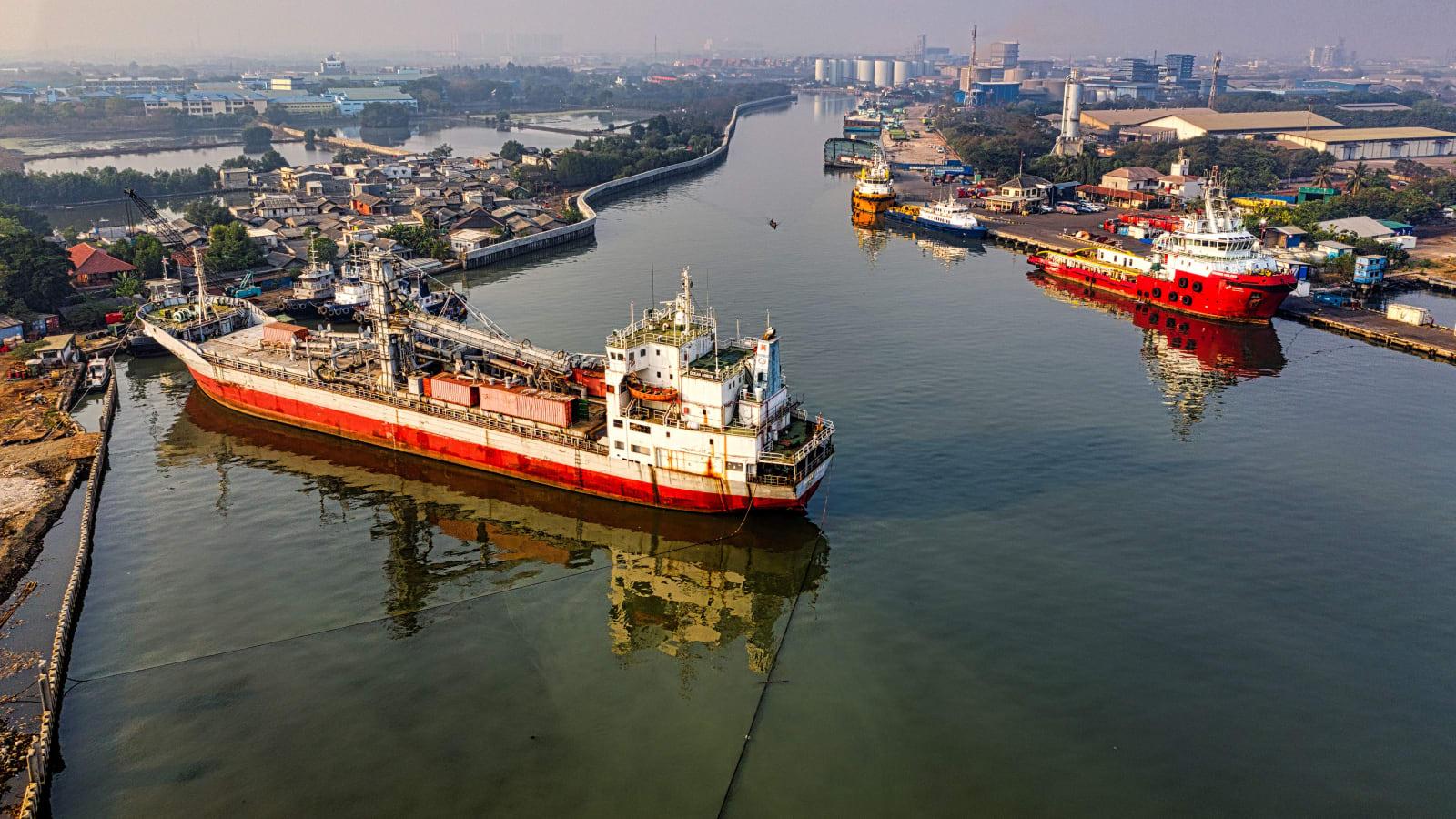
PT Pertamina Trans Kontinental is scaling up solar-plus-battery power on its fleet, building on a documented case that already cuts 79.2 tons of CO2 and 28.08 kiloliters of diesel a year per vessel, with cargo ships joining the program from 2026.
What happened
PT Pertamina Trans Kontinental (PTK), the fleet-management subsidiary of PT Pertamina International Shipping (PIS), announced this week that it is expanding its use of solar power across its vessels as part of a broader green shipping program. Two ships in its fleet already run on solar-plus-battery systems. PTK plans to add one cargo vessel in 2026, then six more in stages through 2029, bringing the total to nine solar-equipped vessels by the end of the decade.
Dewi Susanti, PTK's Director of Fleet, described the plan directly: "Selanjutnya kami merencanakan pemasangan panel surya pada enam kapal kargo lainnya secara bertahap hingga 2029" (Next, we plan to install solar panels on six other cargo ships gradually through 2029). She noted that the panels support onboard electrical equipment, cutting the fossil fuel a vessel needs to burn during operations.
The expansion builds on a documented installation completed in June 2026 aboard the oil barge OB Patra 2303, developed jointly by PT Pertamina New & Renewable Energy (PNRE) as the technology provider, PTK as fleet operator, and PIS as the marine logistics subholding. That project offers the clearest publicly available figures for what solar-plus-battery retrofits deliver on an Indonesian commercial vessel today, and it is the reference point PTK is now scaling from.
The numbers behind it
The OB Patra 2303 installation uses an 11.5 kWp off-grid solar array paired with a 32 kWh Battery Energy Storage System (BESS). Together they can supply up to six hours of the vessel's daily auxiliary power needs. Pertamina reports that this configuration avoids 79.2 tons of CO2 emissions and saves 28.08 kiloliters of diesel every year, figures confirmed consistently across Antara, CNBC Indonesia, Jawa Pos, and Ecobiz Asia coverage of the project.
Company-wide, PTK says its Green Energy Program, which combines low-carbon fuel switching, LNG dual-fuel technology, solar power, and batteries, avoided 66,721 tons of CO2 equivalent across 2025. Measured against the per-vessel savings documented on OB Patra 2303, scaling solar to nine vessels by 2029 would meaningfully add to that running total, though PTK has not yet published a fleet-wide projection for 2029.
Extending solar to cargo vessels carries more engineering complexity than fitting support craft. Because oil and cargo carriers must meet stricter safety codes, PTK is running technical studies with PT Biro Klasifikasi Indonesia (BKI), the national ship classification body, before each installation. The company also plans to pilot an upgraded Battery Management System starting in 2027, a step toward more capable onboard storage as the fleet grows.
"Pemanfaatan energi surya yang dipadukan dengan baterai menunjukkan bahwa dedieselisasi tidak hanya dapat dilakukan di darat, tetapi juga di laut," said Agung Wicaksono, Pertamina's Director of Business Transformation and Sustainability. Solar paired with batteries, he said, shows that moving away from diesel is possible not only on land, but at sea.
Why it matters
Shipping and marine logistics are an overlooked corner of Indonesia's energy transition conversation, which tends to focus on the power grid, the 100 GW solar rollout, and heavy industry. Yet Pertamina's own maritime subholding operates a large domestic fleet moving fuel, cargo, and equipment across an archipelago where sea transport is the default, not the exception. Efficiency gains here compound: less diesel burned per voyage lowers operating costs for a state-owned enterprise while cutting emissions that would otherwise be difficult to abate through grid decarbonization alone.
The program also demonstrates a template that other Indonesian shipping operators and port authorities, several of which have separately begun pursuing green and smart port certification this year, could adapt without waiting for grid-scale renewable capacity to arrive. A solar-plus-battery retrofit is a discrete, measurable, self-contained upgrade that a fleet operator can finance, install, and verify against clear savings figures, exactly the kind of intervention that energy efficiency programs prioritize because it delivers near-term, quantifiable results.
Eko Cahyadi, PTK's Acting Director General, pointed to the added complexity of doing this work safely: installation on hazardous-cargo vessels "requires far stricter safety standards" than on support craft, which is why the BKI coordination step matters as the program scales past its first two ships.
This distinction between support vessels and cargo carriers is not a minor technical footnote. A support vessel or barge typically has more deck space and fewer cargo-related fire and pressure constraints, so fitting solar panels and a battery bank is comparatively straightforward. A tanker or cargo ship carrying flammable or hazardous freight has to satisfy additional classification rules covering electrical isolation, battery placement, and fire suppression before a class society like BKI will sign off. That is precisely why PTK frames its 2026 cargo vessel as the next real test of the program, rather than simply the third data point in an existing pattern.
What comes next
The near-term milestone is the 2026 cargo vessel installation, which will be the first solar-plus-battery retrofit PTK has attempted on a cargo-carrying hull rather than a support vessel or oil barge. Success there, verified through BKI's safety review, would set the technical precedent for the six further cargo ship installations planned through 2029.
The 2027 Battery Management System pilot is worth watching too. A more sophisticated BMS would let PTK manage charge cycles and load distribution more precisely across a growing solar fleet, which matters as the company moves from isolated pilot vessels to a coordinated nine-ship program spread across different vessel types and routes.
PTK has not yet disclosed the capital cost of the retrofit program or named a financing source for the six additional cargo vessels planned through 2029, details that would help outside observers judge how replicable the model is for smaller, less capitalized shipping operators. Government stakeholders and multilateral partners tracking maritime decarbonization in Indonesia should watch for that disclosure, since cost transparency is what would let the approach travel beyond a single state-owned fleet.
Sirkularium's view
For government and public-sector stakeholders working on Indonesia's energy transition, PTK's program is a useful illustration of what "industrial decarbonization" looks like away from headline gigawatt targets. The figures are modest in isolation, 79.2 tons of CO2 and 28.08 kiloliters of diesel per vessel, but they are real, measured, and repeatable, and the scaling path from two vessels to nine is concrete rather than aspirational.
Policymakers overseeing state-owned enterprise decarbonization commitments should treat this kind of documented, vessel-level case study as a model for reporting: clear before-and-after figures, a named technology partner, a phased timeline, and an explicit safety-review step for higher-risk applications. Ministries and financing institutions looking to support similar retrofits across Indonesia's wider commercial and fishing fleets would do well to study the BKI coordination process PTK has built, since safety certification, not technology cost, is often the binding constraint on maritime solar adoption. Sirkularium will continue to track how this program's cargo-vessel phase performs once BKI safety reviews are complete.
PTK vessels running on solar-plus-battery power
Values in vessels
Sources
- Antara News, PTK memperluas penerapan "green shipping" lewat panel surya kapal
- Antara News, Pertamina gunakan panel surya di kapal minyak untuk dekarbonisasi
- Republika ESG Now, Pertamina Trans Kontinental Manfaatkan Panel Surya di Kapal OB Patra 2303, Guna Efisiensi Energi
- Jawa Pos, Gunakan Panel Surya di Kapal Minyak, PNRE Hemat 28,08 KL Diesel dan Kurangi 79,2 Ton CO2 per Tahun
- Detik Finance, Pertamina Perluas Energi Bersih Lewat Pemasangan PLTS di Kapal Oil Barge
- CNBC Indonesia, Kapal Minyak Pertamina Pangkas Emisi 79 Ton Karbon per Tahun
- Ecobiz Asia, Perluas Pemanfaatan Energi Bersih, Pertamina Pasang PLTS di Kapal Oil Barge