Pupuk Indonesia maps a 96 percent emission cut and turns its carbon dioxide into soda ash
By Sirkularium Editorial Team, 9 min read
At the Katadata SAFE 2026 forum in Jakarta, PT Pupuk Indonesia set out a decarbonisation roadmap aiming to cut greenhouse gas emissions by 96 percent by 2050, equal to about 24.9 million tonnes of carbon dioxide equivalent. The instructive part is the sequence: energy efficiency at plants that already exist, then carbon dioxide converted into a saleable industrial product.
A roadmap presented in Jakarta, and why the order of operations matters
PT Pupuk Indonesia (Persero) used the Katadata SAFE 2026 forum, held on 16 and 17 September 2026 at Sudirman Hall in Sequis Tower, Jakarta, to set out the decarbonisation roadmap it has prepared for its fertiliser and petrochemical complexes. Coverage of the presentation carried through the weekend across ANTARA, tvOne News, Jawa Pos, Okezone and Katadata, which is a reasonable signal of how closely the ammonia industry is now being watched.
The headline commitment is a 96 percent reduction in greenhouse gas emissions by 2050 through technology based initiatives, with the remaining share closed by nature based solutions to reach a full 100 percent.
Erlangga Rismantojo, Senior Project Manager for Sustainability and Clean Ammonia at Pupuk Indonesia, framed it as a document already drafted rather than an aspiration still being debated.
Pupuk Indonesia has drawn up a decarbonisation map. By 2050 our target is to bring emissions down by 96 percent, or around 24.9 million tonnes of carbon dioxide equivalent.
What deserves attention is less the end point than the order in which the company proposes to get there. The roadmap lists five working parts: energy efficiency, circular economy, green energy, nature based solutions, and clean ammonia. Four of those five act on plants that are already built and already running. Only the last requires a genuinely new asset class.
Ammonia is an energy question before it is a chemistry question
Ammonia production is one of the most energy intensive processes in Indonesian industry. Natural gas serves as both feedstock and fuel, so every unit of energy saved inside the plant shows up twice, once as a lower gas bill and once as a lower carbon intensity per tonne of product. This is why Pupuk Indonesia places energy efficiency at the front of its sequence, describing it as the modernisation and optimisation of existing production facilities so that energy use falls and carbon intensity falls with it.
That framing is useful for public institutions because it separates two things that are often merged in transition debates. Replacing an industrial plant is a capital decision measured in years and in billions of rupiah. Improving the efficiency of a plant that is already producing is an operating decision that can begin inside a single maintenance cycle. The first is necessary. The second is available now.
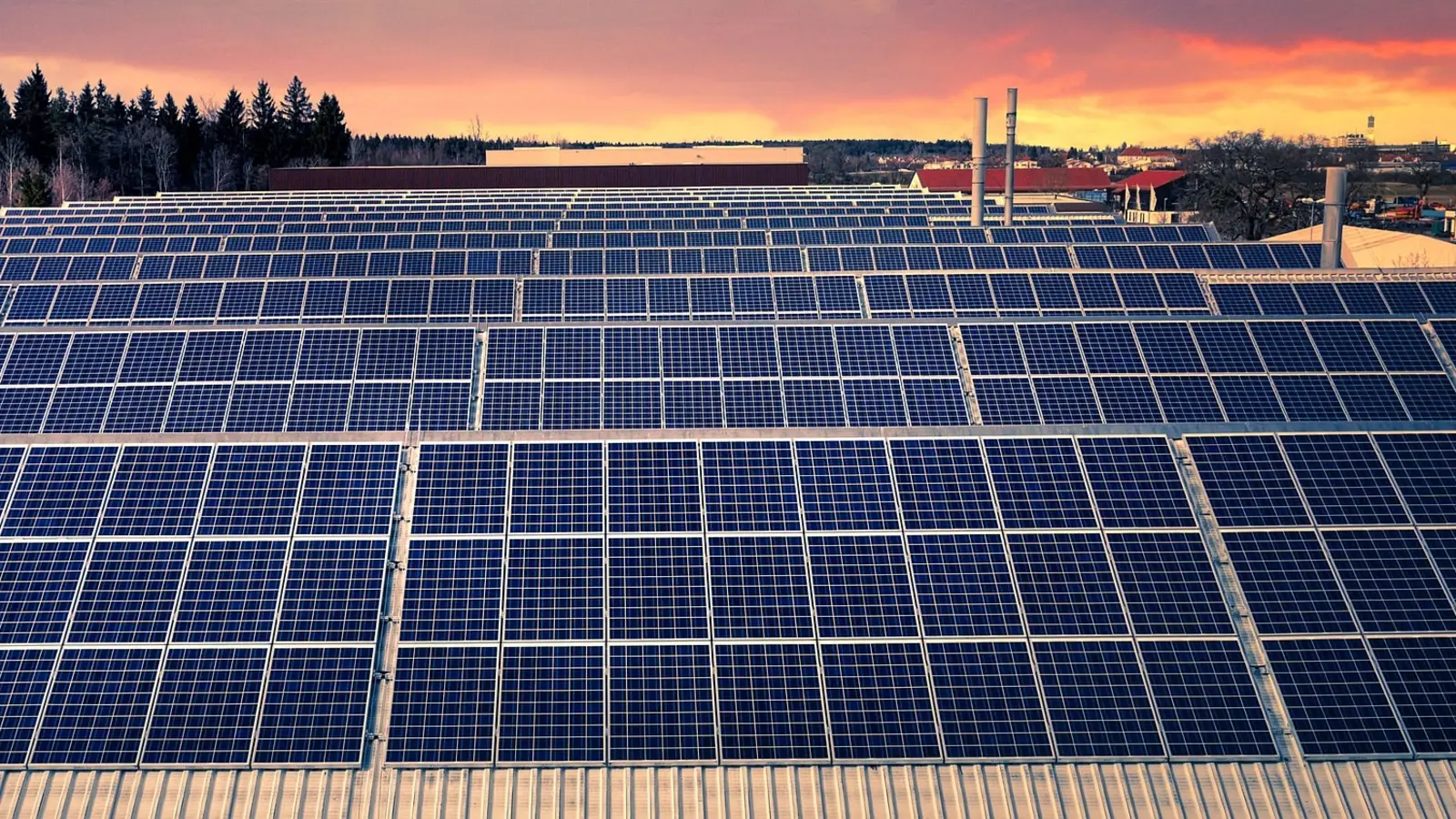
The short term stage of the company roadmap, covering 2023 to 2030, reflects that thinking. It leans on renewable electricity drawn from PLN, including hydropower, to displace oil and gas fired generation inside the fertiliser plants themselves, alongside solar photovoltaic installations, biomass and renewable energy certificates. None of that requires the ammonia process to change. It changes what powers the process.
Carbon dioxide reclassified as a raw material
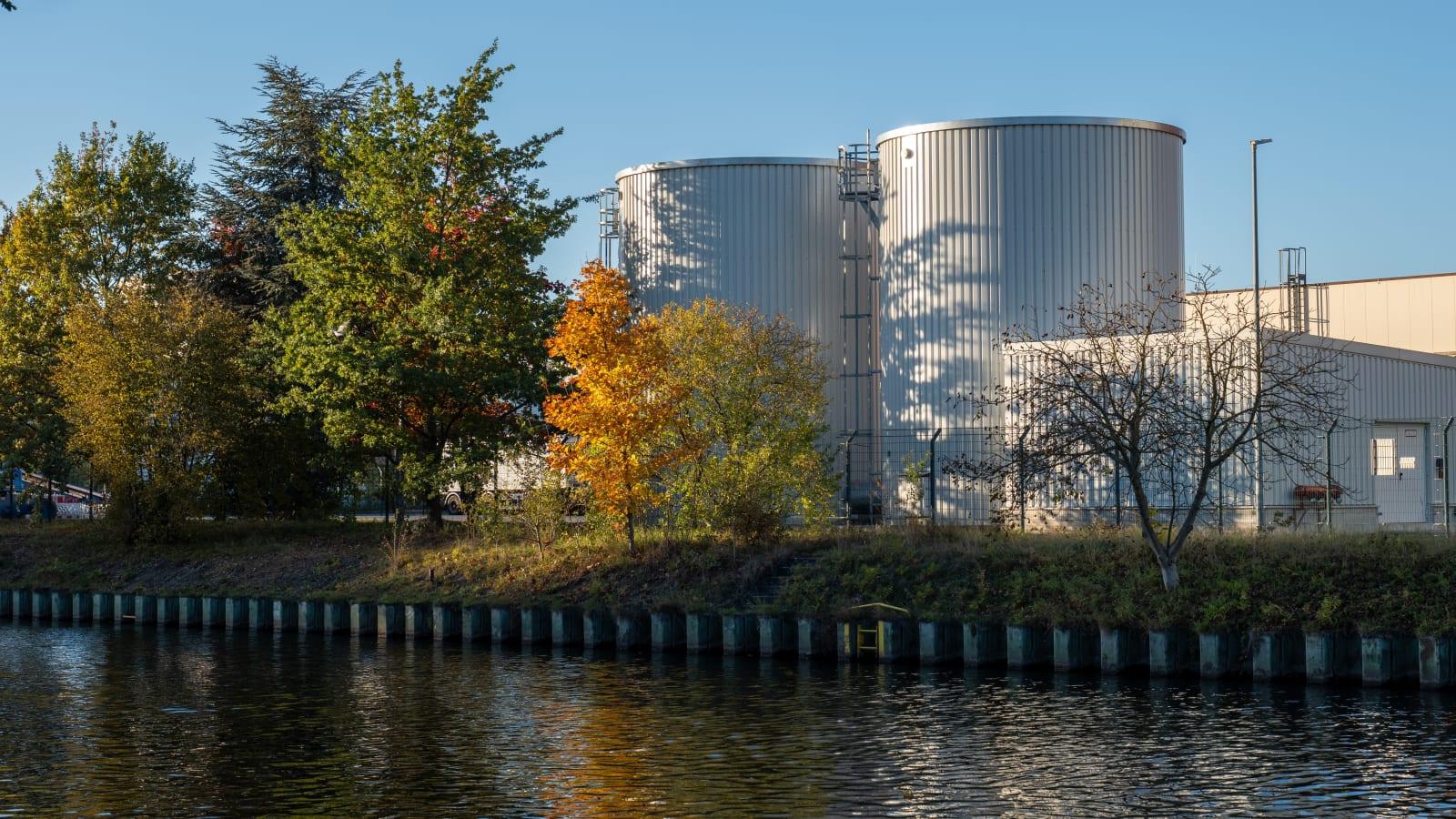
The most concrete element of the roadmap sits in Bontang, East Kalimantan, where Pupuk Indonesia is building the first soda ash plant in the country through its subsidiary Pupuk Kaltim, inside the Kaltim Industrial Estate. Soda ash is an input to glass and detergent manufacturing, and it is made from ammonia and carbon dioxide. Both are already present at Bontang, the first as a main product and the second as a by product of existing production units.
The plant is designed for 300,000 tonnes of soda ash per year. Reaching that output consumes roughly 105,000 tonnes of ammonia and about 350,000 tonnes of industrial salt annually, and absorbs approximately 174,000 tonnes of carbon dioxide each year from facilities already operating on the site. Earlier reporting on the project cited a figure of up to 170,000 tonnes, and the two numbers are best read as the same commitment stated at slightly different stages of engineering rather than as a revision. The process also yields 300,000 tonnes per year of ammonium chloride, which returns to the fertiliser business as a nitrogen source.
Astri Agustina, Vice President for Business Development at Pupuk Kaltim, has described the project as a response to high national demand that still depends on foreign supply. Construction began in 2025, with commercial operation targeted for March 2028. The build phase engages around 800 workers, and roughly 100 permanent operational roles follow.
A carbon dioxide stream that was previously an emission to be counted becomes an input to be purchased, and the economics of capture change accordingly.
The import bill the same plant addresses
Indonesia currently imports essentially all of its soda ash. Data from Badan Pusat Statistik put imports at around 1 million tonnes per year as of 2025, with demand projected to rise toward 1.2 million tonnes per year by 2030. A 300,000 tonne domestic plant therefore covers close to 30 percent of present national demand.
Pupuk Indonesia estimates foreign exchange savings of about Rp1 trillion per year from soda ash substitution, plus a further Rp250 billion per year from the ammonium chloride that comes with it. Rahmad Pribadi, President Director of Pupuk Indonesia, has positioned the facility within the national downstream industry agenda, while Gusrizal, President Director of Pupuk Kaltim, has tied it to environmental, social and governance practice and to circular economy principles.
This is the part that makes the story a circular economy story rather than only a climate one. The carbon reduction and the import reduction are produced by the same asset, from the same molecules, at the same time. Neither has to be subsidised by the other.
Where clean ammonia fits, and where it does not yet
Beyond efficiency and carbon utilisation, Pupuk Indonesia is assessing green ammonia at existing facilities using renewable electricity, and blue ammonia supported by carbon capture and storage. These are the longer dated items, and they carry the familiar conditions: firm renewable supply at industrial scale, storage geology that has been characterised and licensed, and offtake at a price that supports the cost premium.
The company is also diversifying supply for imported phosphate, potassium and sulphur, and extending nature based solutions through community forest and agroforestry programmes. At the same forum, Pupuk Indonesia was named Social Pillar winner in the chemical and packaging category of the Katadata ESG Insight Awards 2026 for that community work.
Sirkularium's view for government and public institutions
For ministries, regional governments and state institutions, three practical points follow.
First, the measurable near term gains in industrial decarbonisation are concentrated in efficiency at installed capacity. Policy instruments that reward verified improvement in energy intensity per tonne of product, rather than only new capacity added, would reach the larger share of the abatement that is actually available before 2030. Energy audits, minimum performance standards for industrial equipment, and recognition of efficiency gains in carbon market crediting all point in that direction.
Second, carbon utilisation deserves a clearer regulatory home. The Bontang project shows that a captured stream can carry a market price when a downstream product exists for it. Government can shorten that path for other sites by mapping where ammonia, cement, steel and petrochemical facilities sit close enough to a potential offtaker for utilisation to be commercially sensible, and by ensuring that permitting for by product conversion is as straightforward as permitting for primary production.
Third, import substitution and emission reduction should be assessed together in project appraisal. Public financing decisions that score only one of the two will undervalue assets like this one, where a single investment addresses a Rp1 trillion annual outflow and an industrial carbon stream at the same time.
What to watch next is straightforward. The commissioning schedule at Bontang through 2027 and into March 2028 will show whether the timeline holds. The interim milestones Pupuk Indonesia publishes for its 2023 to 2030 phase will show whether the near term efficiency work is being measured as carefully as the 2050 target is being stated. And the pace at which renewable electricity supply arrangements with PLN scale will determine how much of the early reduction is deliverable at all. Those three items, taken together, will indicate whether a 2050 roadmap is converting into results this decade.
National soda ash demand and the first domestic plant
Values in thousand tonnes per year
Sources
- ANTARA News Megapolitan, Pupuk Indonesia bidik pangkas 96 persen emisi karbon melalui inisiatif hijau
- tvOne News, Pupuk Indonesia kejar penurunan emisi 96 persen pada 2050
- Katadata, Pupuk Indonesia dorong nol emisi lewat clean ammonia, soda ash dan NBS
- Jawa Pos, Peta jalan menuju net zero emission, targetkan penurunan emisi 96 persen pada 2050
- Okezone Economy, Menuju nol emisi 2050, industri pupuk ubah cara produksi
- ANTARA News, Pupuk Kaltim: proyek soda ash substitusi impor dan pacu hilirisasi
- Pupuk Indonesia, Pupuk Indonesia bangun pabrik soda ash pertama di Tanah Air