Semarang contains Jatibarang landfill fire as the city readies its 1,000 tonne waste-to-energy transition
By Sirkularium Editorial Team, 8 min read
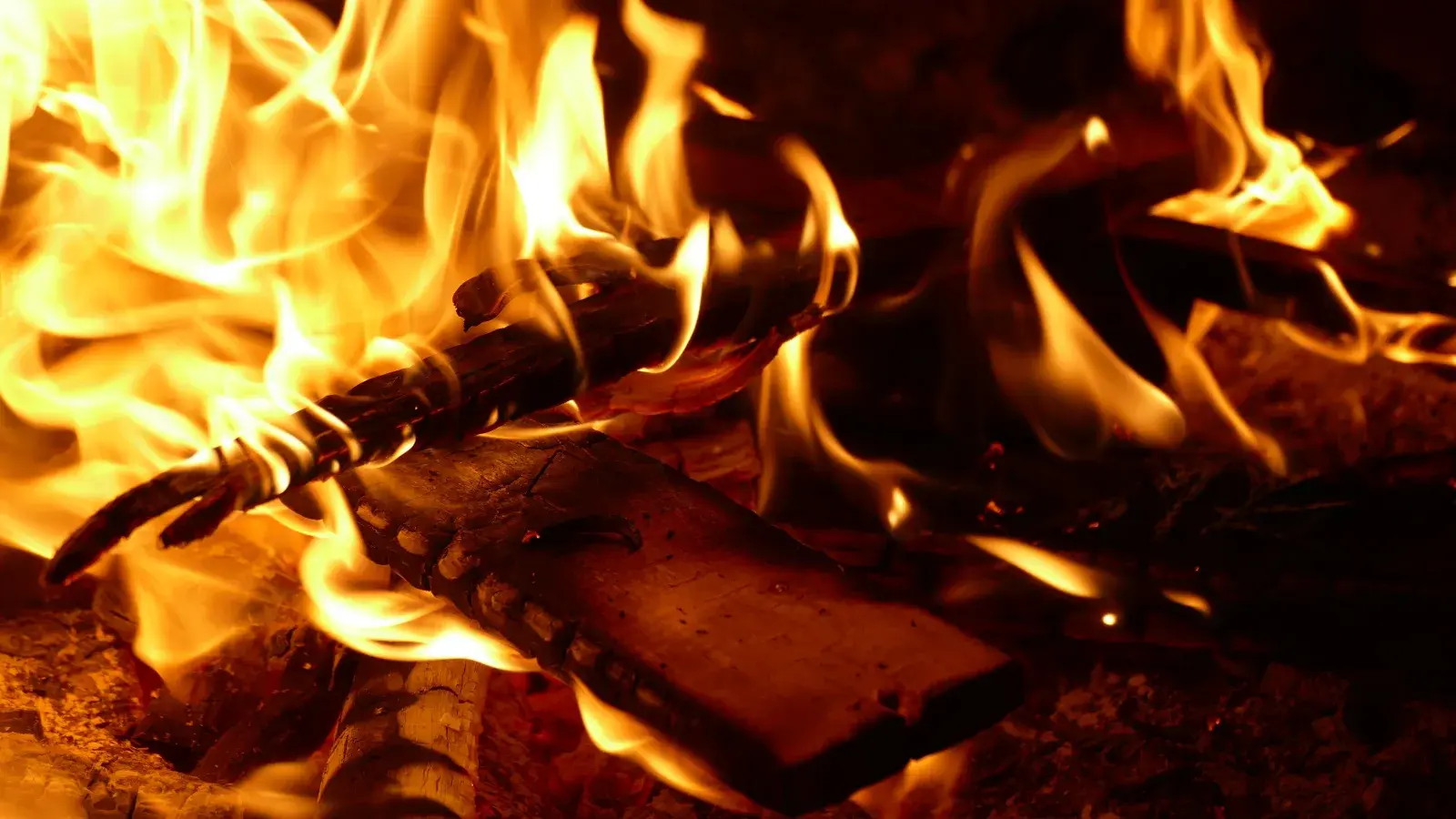
Semarang's fire service mobilised around 50 personnel to contain a methane-driven fire across the active zones of TPA Jatibarang on 30 September. The city is treating the dry-season incidents as a bridge period to PSEL Semarang Raya, a 1,000 tonne per day waste-to-energy plant targeted for groundbreaking in December 2026.
On the evening of Wednesday 30 September 2026, fire broke out in the active disposal zones of TPA Jatibarang, the final processing site that serves the city of Semarang in Mijen district. Semarang's fire and rescue service mobilised around 50 personnel and seven fire engines, supported by water tankers and partner agencies, and shifted early to a containment strategy suited to a landfill with high methane content. It was the third fire at the site in under two weeks, following incidents on 18 and 28 September.
The response matters, and so does the context. Semarang is roughly two years away from a structural answer to the pressure on Jatibarang. PSEL Semarang Raya, a waste-to-energy plant designed to process 1,000 tonnes per day from Semarang City and Kendal Regency, is targeted for groundbreaking in December 2026 and operation by the end of 2028. The city is now managing a bridge period, and how it manages that bridge offers useful lessons for other Indonesian cities on the same path.
What happened over three nights
Reports place the start of the 30 September fire at about 18:04 WIB in zone 1, from where it spread into zones 2 and 3. Tantri Pradono, Head of Operations and Rescue at the Semarang City fire service, told detikNews that direct suppression was not possible because methane levels in the waste were high, so crews focused on isolating the burning area. Sih Rianung, head of the Semarang City fire and rescue service, told ANTARA the priority was to localise the fire and stop it expanding. Support came from the regional water utility PDAM, the Indonesian Red Cross, the city Environment Agency and volunteer groups.
Estimates of the affected area vary between outlets, which is normal for a fire still under control operations at night. ANTARA reported around 10 hectares across zones 1, 2 and 3. Jatengnews cited approximately 8.43 hectares for zones 1 and 2 and about 3.8 hectares for zone 3, which together would be somewhat larger. Sirkularium reports both and expects the city's own post-incident assessment to settle the figure.
Two nights earlier, on 28 September, a fire had been reported at about 22:10 WIB in zone 3, which Muhammad Ariawan, head of the TPA Jatibarang technical unit, described to iNews as a passive disposal area. Strong wind and dry material helped it spread. The sources again differ on scale: detikJateng reported roughly 1,000 square metres, while iNews described more than one hectare. What is consistent is the outcome. Crews used heavy equipment to expose hidden hot spots beneath the waste, sprayed them directly, and completed cooling by midday on 29 September before withdrawing personnel. No casualties were reported.
The earliest of the three, on 18 September, affected two to three hectares of the old, closed section of Jatibarang, where decades-old dry waste served as fuel. Ekuatorial reported that ten fire units, a PDAM water tanker and the Red Cross brought the surface fire under control within about two hours.
Why methane changes the firefighting playbook
Landfill fires behave differently from building or grassland fires. Organic material decomposing without oxygen produces methane, which collects in pockets under the waste mass. When a surface fire reaches those pockets, it can burn deep and reappear after the visible flames are out. Pouring water onto the surface does little to reach the source.
This is why Semarang's crews have adopted a targeted method. Listiyono, head of rescue at the city fire service, explained to Ekuatorial in September that the team does not use an attacking approach on waste fires, and instead works point by point. On 28 and 29 September that meant heavy machinery opening up the pile so that hidden embers could be reached. On 30 September it meant creating firebreaks around the burning area rather than attempting to drown a methane-rich zone.
Methane is both the hazard at Jatibarang and a resource the city has already tried to put to work. The bridge to 2028 is about managing the first while building the systems that can turn waste into value.
Mayor Agustina Wilujeng Pramestuti addressed this directly on 30 September. She said the lower layers of the pile contain methane that becomes especially hazardous in the dry season with strong winds, and noted that blue flames seen in earlier incidents in 2024 and 2025 pointed to its presence. The city will station fire crews at Jatibarang to respond faster to any further ignition, according to Radar Semarang.
The numbers behind the pressure
Jatibarang receives a large and steady flow of material. Semarang Environment Agency data reported by Disway show an average of 935.38 tonnes per day entering the site in the three weeks before the 2026 school holiday, falling to 865.78 tonnes per day during the holiday period of 22 June to 13 July, a reduction of around 69.59 tonnes per day. Glory Nasarani, head of the city Environment Agency, attributed the fall mainly to lower household food and kitchen waste, which is the largest stream arriving at the site. Earlier in the year, during Lebaran, daily arrivals reached 1,080 to 1,090 tonnes on 18 to 20 March.
The seasonal drop is itself instructive. When organic waste generation eases, the load on the landfill eases with it. That points to source-level organic management, through composting, maggot cultivation and TPS3R facilities, as a practical lever the city can pull now, in parallel with the larger plant.
Nasarani has been candid that current landfill engineering is extending Jatibarang's life only temporarily. The mayor described the same reality on 30 September, saying the city will carry the waste load until 2028, when the new processing facility is built.
PSEL Semarang Raya and the bridge to 2028
The long-term plan is well advanced. At a meeting on 8 September, Central Java Governor Ahmad Luthfi said groundbreaking could come within about four months. Fadli Rahman, CEO of PT Daya Energi Bersih Nusantara (Denera) and Director of Investment at Danantara Investment Management, set the target as December 2026, with waste processing under way by the end of 2028 and a 30-year operating period. The plant will sit on 6 hectares prepared by the city within the Jatibarang area and will serve Semarang City and Kendal Regency together, a regional arrangement that spreads both the waste supply and the benefits.
Investor appetite has been strong. In June, the Semarang city government reported that 85 investors from several countries had expressed interest in the Jatibarang PSEL, with an investment value of around Rp3 trillion, and several companies made direct site visits. The Environment Agency described market sounding responses as very positive.
The mayor also outlined a complementary step for the legacy waste already in place. The city intends to use pyrolysis to gradually reduce existing deposits while preventing further build-up. She noted that an earlier initiative to use Jatibarang's methane for power, developed with partners, did not meet the grid operator's technical standards when it reached PLN. That experience is useful. It shows that gas capture projects succeed when fuel quality and grid specifications are designed together from the start, which is exactly the kind of integration a large PSEL with a defined offtake arrangement can provide.
The provincial picture is supportive too. Central Java has set a target of zero waste by 2029, has around 2,000 village-level waste management programmes, runs refuse-derived fuel schemes in Cilacap, Banyumas and Magelang, and already has an operating waste-to-energy facility at Putri Cempo in Surakarta. Semarang is joining a regional system rather than building in isolation.
Sirkularium's view
For government and public institutions, the Jatibarang sequence carries three practical lessons.
First, landfill fire readiness is now a standing operational function, not an emergency one. Semarang's decisions to station crews at the site, use heavy equipment to reach hidden embers, and switch early to containment reflect a maturing playbook. Cities with large, methane-rich landfills can adopt the same protocols ahead of the dry season, including pre-positioned water supply agreements with PDAM and cover-soil stockpiles to smother hot spots. The national discussion on mandatory landfill firefighting equipment gives this a policy home.
Second, the bridge period deserves its own plan. Between today and a PSEL's first firing, the most effective tools are those that reduce what reaches the landfill, especially organics. Semarang's own data show that daily arrivals fall by close to 70 tonnes when household food waste eases. Scaling TPS3R capacity, household composting and waste banks in the most productive neighbourhoods would lower both the fire risk and the methane load while the plant is built.
Third, methane should be designed in as a resource. The earlier gas-to-power attempt at Jatibarang is a lesson in specification, not a reason to abandon the idea. Landfill gas capture on the closed cells, paired with the new plant, could reduce fire risk and generate value, provided the gas treatment standard is agreed with PLN before investment.
What to watch next: the city's post-incident assessment of the 30 September fire, the formal procurement and financial close for PSEL Semarang Raya ahead of the December groundbreaking target, the start of the pyrolysis programme for legacy waste, and the waste supply agreement between Semarang and Kendal. If these move on schedule, Jatibarang can become a model for how an Indonesian city manages the transition from a single overloaded landfill to an integrated, energy-producing waste system.
Sources
- ANTARA News, fire at TPA Jatibarang Semarang (30 September 2026)
- detikNews, TPA Jatibarang fire and high methane content (30 September 2026)
- Jatengnews, fire across zones 1, 2 and 3 with area figures (30 September 2026)
- detikJateng, zone 3 fire extinguished and cooled (29 September 2026)
- iNews, UPTD TPA Jatibarang on the zone 3 fire (29 September 2026)
- Beritajateng, Mayor of Semarang on methane accumulation and pyrolysis (30 September 2026)
- Mata Semarang, Mayor of Semarang on earlier methane utilisation efforts (30 September 2026)
- Ekuatorial, fire in the old Jatibarang landfill zone (19 September 2026)
- Jatengnews, PSEL Semarang Raya targeted for December 2026 groundbreaking (8 September 2026)
- ANTARA News, PSEL Jatibarang draws interest from 85 investors (4 June 2026)
- Disway Jateng, daily waste arriving at TPA Jatibarang during the school holiday (18 July 2026)
- Radar Semarang, Mayor Agustina to station fire crews at TPA Jatibarang (29 September 2026)
- Halo Semarang, TPA Jatibarang nearing capacity as DLH accelerates waste-to-energy (5 April 2026)