Waste banks move from community project to municipal infrastructure as source separation becomes compulsory
By Sirkularium Editorial Team, 9 min read
Indonesia's network of roughly 27,631 waste banks handles 136,860 tonnes of material and turns over about Rp 2.8 billion a month. As cities make household separation compulsory, Semarang, Gunungkidul, Banjarbaru and Makassar are treating these community units as formal collection infrastructure rather than voluntary initiatives.
Indonesia's waste banks have spent more than a decade as neighbourhood initiatives, run by volunteers, measured in kilogrammes, and celebrated mainly for their educational value. That characterisation is now out of date. With household separation becoming compulsory in a growing number of cities from 1 August 2026, the bank sampah has become the point where a national policy either connects to a household or does not.
The network is larger than its informal reputation suggests. National records count 27,631 waste bank units handling 136,860 tonnes of material, with aggregate turnover of about Rp 2.8 billion a month and employment reaching into the hundreds of thousands. Those are the figures of a distribution system, not a pilot scheme.
Why the timing matters
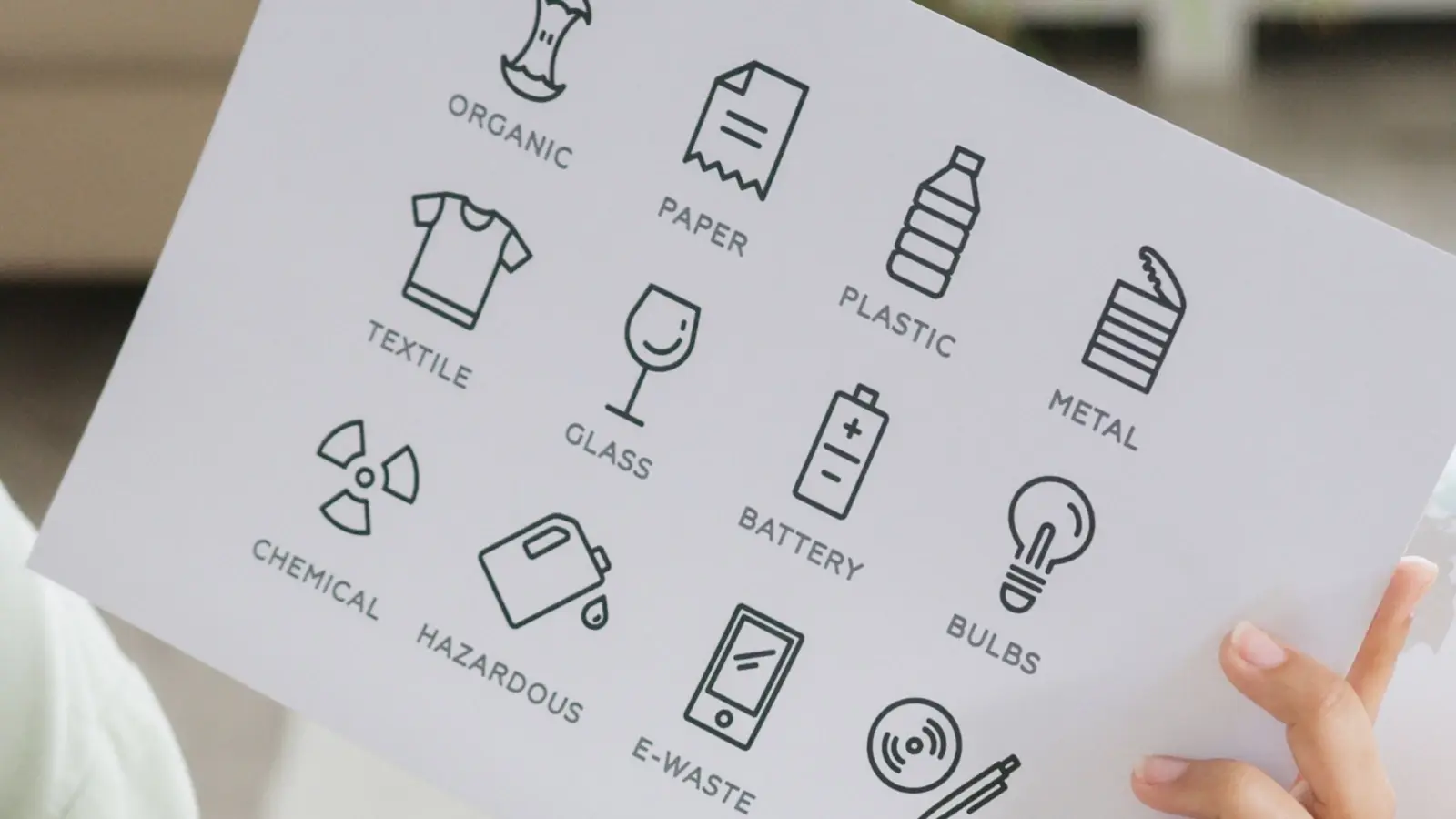
Cities that require households to separate waste need somewhere for the separated fractions to go. Organic material can be composted, fed to black soldier fly larvae, or routed to a processing facility. Inorganic material that still carries market value needs a buyer close enough to make collection worthwhile. Without that buyer, separation collapses back into mixed disposal within weeks.
Makassar built this into the design of its 1 August rule. Under the city's approach, organic waste is directed to teba pits, biopori infiltration holes managed at neighbourhood level, and TPS 3R facilities, while inorganic waste is directed to waste banks and to the city's Sentra Tukar Sampah exchange points precisely because it retains economic value. The routing is explicit, and it treats the waste bank as a designated destination in a municipal service chain rather than as a community extra.
The national framing supports this. The Ministry of Environment has consistently paired the end of open dumping with acceleration of separation at source, and Presidential Regulation No. 12 of 2025 sets a national waste management achievement target of 63.4 percent for 2026. Separation without offtake does not move that number. Separation with reliable offtake does.
Semarang shows what municipal scale looks like
Semarang offers the clearest picture of a waste bank network operated as city infrastructure. As of 2025 the city recorded 857 active waste banks serving 15,725 registered members, managing 1,705.7 tonnes of material a year and generating Rp 1.99 billion in circular economy value. For 2026 the city has set a target of 1,486 waste banks and roughly 2,823.4 tonnes handled annually, which is a planned increase of about 65 percent in throughput within a single year.
Mayor Agustina Wilujeng has presented these figures as an economic result rather than an environmental one, and the framing is deliberate. Environment Minister Jumhur Hidayat drew the same conclusion when discussing the city's model.
From a neighbourhood unit in Semarang comes the realisation that waste is in fact profitable, and that is the circular economy.
Two details in the Semarang numbers deserve attention from other administrations. The first is the member count. A registered membership of 15,725 households means the city knows who is participating and can measure retention, which is not possible where participation is anonymous. The second is that the 2026 target expands both the number of units and the tonnage per unit, which indicates the city is planning for density of coverage rather than a longer list of registrations.
Gunungkidul plans the reduction it needs
Gunungkidul Regency in Yogyakarta illustrates how the arithmetic works at district level. The regency currently generates 50 to 60 tonnes of waste a day and has set a target of bringing the volume requiring final disposal down to roughly 20 tonnes a day. The infrastructure it intends to use for that reduction already exists in the form of nearly 400 waste banks and 21 TPS 3R facilities.
Edy Basuki, head of the regency's environmental agency, has framed the objective in terms of household capability rather than facility construction, with the expectation that households process a share of their own organic material and that organic waste becomes compost with practical agricultural use. Regent Endah Subekti Kuntariningsih has positioned the environmental agency as the lead institution for the effort.
The Gunungkidul target implies diverting roughly 60 percent of current generation before it reaches a disposal site. That is demanding, and it is also the kind of target that becomes plausible when 400 collection points already exist and the task is to raise their utilisation rather than to build them.
The household economics that make participation stick
The reason waste banks work, where they work, is that they pay. In Banjarbaru, South Kalimantan, Bank Sampah Jolali converts household inorganic material such as plastic bottles, cardboard, and paper into savings and income for participating residents. The programme is supported by PT PLN through its community development arm and received a Gold Indonesian SDGs Award in 2025.
Iwan Soelistijono, general manager of PLN UID Kalimantan Selatan dan Kalimantan Tengah, has described the initiative as showing that environmental care can produce economic benefit while strengthening community capability. Margiono, who manages the unit, has been candid that building a sorting habit required sustained effort over time, and that residents only became consistent once they could feel the benefit. Elma, a participating resident, described the outcome in terms that explain retention better than any policy document.
We now sort our waste as a matter of routine. The proceeds help with daily needs, and just as importantly our environment is cleaner and our children learn that waste has value when it is managed properly.
That last point is the operative one for policy design. Households sustain separation when it produces a visible return, whether financial, environmental, or social. Where cities have relied on obligation alone, participation has tended to decay after the initial campaign period.
What is still missing
Three gaps limit how far the network can carry the new obligations.
The first is price stability for recovered material. Waste bank income depends on scrap prices set well outside the neighbourhood, and a sharp fall in plastic or paper prices removes the incentive that holds households in the system. Mandatory extended producer responsibility for packaging, which the government is advancing as a central circular economy instrument, is the most direct route to a more predictable revenue floor.
The second is organic capacity. Waste banks handle inorganic material well. Organic material, which typically forms the largest share of household generation, needs composting, larvae systems, or district scale processing, and these carry operating costs that no scrap price covers. Makassar's approach of having the city's central waste bank purchase compost and larvae output is one workable answer, because it creates a buyer where the market does not naturally provide one.
The third is data. National waste bank figures in wide circulation date from March 2024. Cities that publish current unit counts, membership, tonnage, and value, as Semarang does, can direct support accurately. Those that do not are managing an asset they cannot see.
Sirkularium's view
The 1 August source separation requirements have changed what waste banks are for. They are no longer principally instruments of environmental education. They are the collection layer of a municipal system, and they should be planned, budgeted, and measured accordingly.
For government and public institutions, three practical implications follow.
On policy, waste banks should be named explicitly in regional waste management regulations and service standards, with defined roles, minimum service expectations, and a clear relationship to TPS 3R and final disposal. Makassar's routing model, which specifies where each fraction goes, is a useful template because it removes ambiguity for both households and collection crews.
On financing, the requirement is modest but recurring. Weighing equipment, storage space, transport to aggregation points, and a small operating allowance for unit managers determine whether a waste bank stays open. Combined with a buyer of last resort for compost and larvae output, this is among the lowest cost interventions available in the sector, particularly compared with capital investment in downstream facilities.
On implementation, the priority is measurement of participation rather than of tonnage alone. Registered membership, active member share, and deposits per member per month reveal whether a separation policy is being sustained. Semarang's 15,725 registered members give the city a baseline that most others currently lack.
What to watch next is whether cities that made separation compulsory on 1 August report waste bank throughput growth in the September and October figures. Sustained growth would indicate that the collection layer is absorbing the new volume. Flat throughput alongside falling landfill deliveries would suggest material is moving somewhere unmeasured, and would warrant early attention. Sirkularium will continue tracking these indicators and supporting regional administrations in formalising waste banks as durable circular economy infrastructure.
Sources
- ANTARA News, PLN ubah sampah jadi penghasilan warga lewat Bank Sampah Jolali
- Kompas Regional, Kelola ribuan ton sampah per tahun, bank sampah di Semarang hasilkan Rp 1,99 miliar
- ANTARA News, Pemkab Gunungkidul targetkan sampah terkelola di tingkat rumah tangga
- Katadata, 27.631 bank sampah di Indonesia hasilkan omzet Rp 2,8 M per bulan
- Kompas Makassar, Warga Makassar wajib pilah sampah mulai 1 Agustus 2026, ini alasan Pemkot
- Kementerian Lingkungan Hidup, Target nasional 2026, penghentian open dumping dan percepatan pemilahan sampah