Antam mined 433 kilograms of gold and sold 18,080, and the gap explains where mining value actually sits
By Sirkularium Editorial Team, 8 min read
Antam's first half 2026 operating figures show production down across almost every segment while sales of ferronickel rose 32 percent and bauxite 24 percent. The company sold roughly forty times more gold than it mined, a ratio about to change as Freeport's Gresik smelter comes online.
PT Aneka Tambang released its operating figures for the first half of 2026 at the end of July, and the numbers reward a second reading. On the surface they describe a company producing less of almost everything. Underneath, they describe something more interesting: a business whose economic value has largely detached from the quantity of ore it removes from the ground.
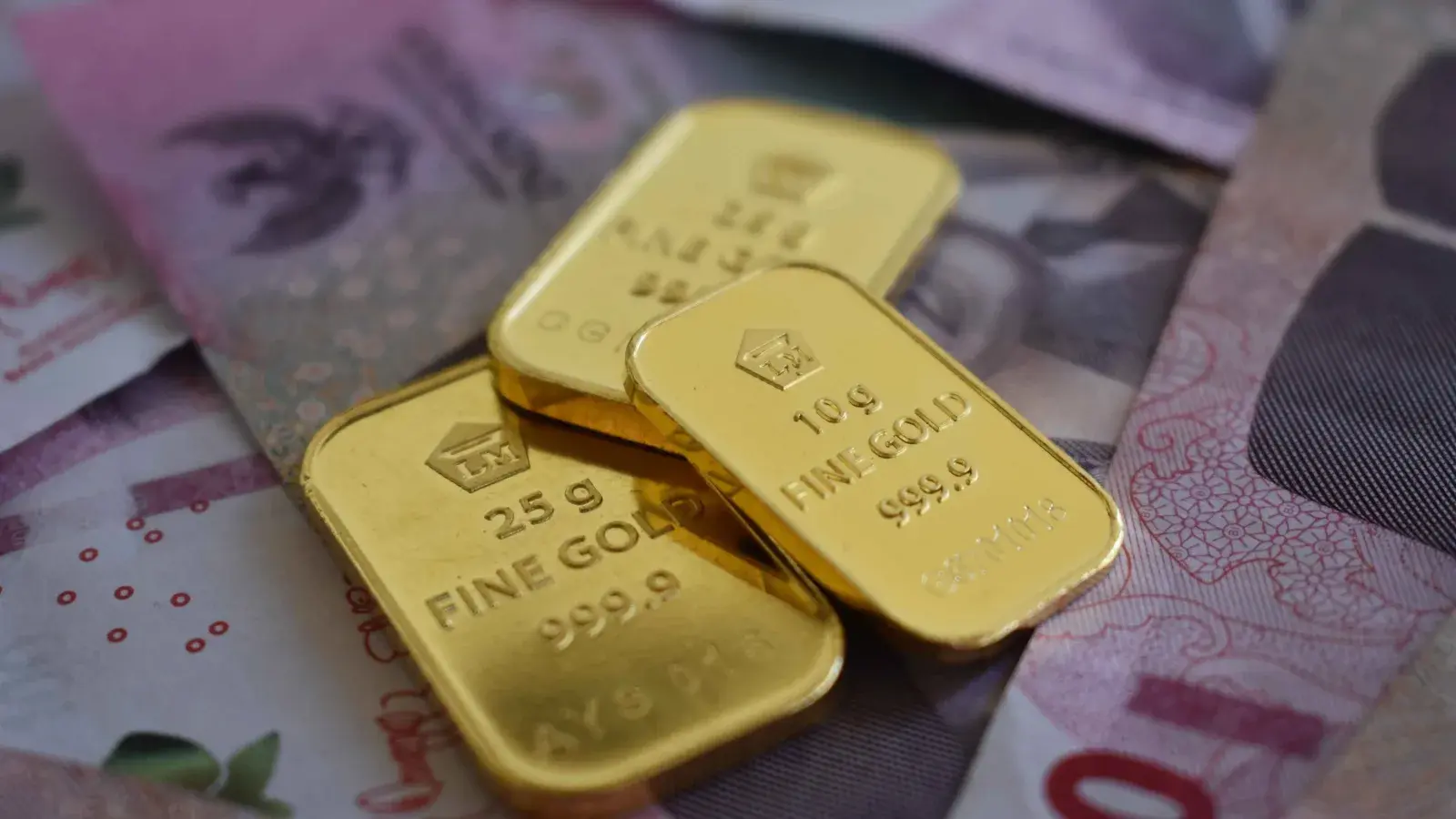
Start with the headline pair. Antam mined 433 kilograms of gold in the first half, equivalent to 13,921 troy ounces, marginally below the 438 kilograms produced in the same period of 2025. Over the same six months it sold 18,080 kilograms of gold, or 581,286 troy ounces. The company sold roughly forty times more gold than it dug up.
The refiner is the business
That ratio is not an anomaly to be explained away. It is the shape of Antam's gold franchise. The company operates as Indonesia's principal precious metals refiner and its dominant retail gold brand, so the great majority of what it sells is metal it has acquired, processed, certified and distributed rather than metal it has extracted. Mining supplies a small fraction of the input. The value is created downstream, in refining capacity, brand trust and distribution reach.
Read with that in mind, the first half tells a coherent story. Mined gold output in the second quarter alone actually rose 12 percent year on year, to 232 kilograms from 208 kilograms. Sales volume, by contrast, fell 38.2 percent in both the quarter and the half, from 29,262 kilograms in the first half of 2025 to 18,080 kilograms. Production and sales moved in opposite directions because they are answering to different markets. One responds to mine plans and ore grades. The other responds to the domestic retail gold market, where a sharply higher gold price through the period made buyers slower to accumulate and quicker to realise gains.
A company that sells forty times what it mines is not primarily valued on its reserves. It is valued on the processing and distribution capacity sitting between the reserve and the customer.
Production down, sales up, across three commodities
The pattern repeats across the other segments, and this is where the half becomes genuinely instructive. Nickel ore production fell 14.6 percent to 7.78 million wet metric tonnes from 9.10 million. Ferronickel production fell 14.1 percent to 7,788 tonnes of contained nickel from 9,067 tonnes. Yet ferronickel sales rose 32 percent to 7,605 tonnes of contained nickel, shipped principally to China, India and South Korea. Bauxite production fell 7.4 percent to 1.28 million wet metric tonnes, while bauxite sales rose 24 percent to 1.26 million wet metric tonnes. Chemical grade alumina, the only segment where production rose, was up 12 percent to 100,257 tonnes with sales up 10 percent to 100,437 tonnes. Silver production fell 6.8 percent to 2,512 kilograms.
Production down, sales up, across three separate commodity lines. That combination means inventory was converted into revenue, and it means the constraint on the business during the period was demand and processing throughput rather than resource availability.
What changes in September
The gold ratio is about to be reset by an event outside Antam's own operations. PT Freeport Indonesia's copper smelter at JIIPE in Manyar, Gresik, is scheduled to begin processing concentrate in August 2026 and to reach production in September. Precious metals recovered from that concentrate flow to Antam under a cooperation agreement that covers up to 30 tonnes of gold a year, and potentially more depending on demand.
Tony Wenas, President Director of PT Freeport Indonesia, has set out the trajectory. The company plans roughly 26 tonnes of gold in 2026, all of it destined for Antam, rising to 39 tonnes in 2027 and approximately 43 tonnes in both 2028 and 2029. Those volumes are underpinned by the recovery of the Grasberg Block Cave mine, which ran at around 50 percent of capacity through the first half of 2026 and is scheduled to reach 65 percent in the second half, 75 percent in the first half of 2027, and full capacity from the second half of that year. Before the operational incident that curtailed it, the mine supported roughly 3.2 million tonnes of copper concentrate annually.
To put 26 tonnes in perspective against Antam's own mine: the company produced 433 kilograms of gold in six months. Twenty six tonnes is 26,000 kilograms. Elsewhere in the sector, Amman Mineral Nusa Tenggara is targeting gold output above 16 tonnes in 2026 from its own Sumbawa operations. Indonesia's domestic gold value chain is being rebuilt around refining and smelting capacity rather than around mine expansion.
Sirkularium's view
For government and public institutions, the first half figures carry a lesson that applies well beyond one company's quarterly release. The economic value of Indonesia's mineral endowment is increasingly determined by what happens after extraction, and the metrics most commonly used to govern the sector still measure extraction.
Production quotas, reserve statements and export tonnages remain the working vocabulary of mineral policy. Antam's half year shows the limits of that vocabulary. A 14 percent production decline accompanied by a 32 percent sales increase is not a story tonnage can tell. Neither is a mined to sold ratio of one to forty. If the policy objective is capturing more value inside the country, then the indicators that matter are processing capacity utilisation, recovery rates, product mix and the margin retained at each step, and these are not yet reported with the same regularity or prominence as output figures.
The same reasoning strengthens the environmental case rather than weakening it. When a company sells forty times what it mines, the environmental footprint per rupiah of revenue falls sharply, and that is a genuinely favourable position that ought to be measurable and stated. At present few Indonesian producers can demonstrate it, because the environmental side of the ledger is documented in permit compliance language rather than in economic terms. An operator that can show revenue per hectare disturbed, or environmental cost per tonne of contained metal sold, calculated using GIS measurement of actual footprint and the methodology recognised under Permen LH No. 7 Tahun 2014, holds an argument that a compliance certificate cannot make on its own.
For the ministries tracking downstream policy, the September smelter start is the more consequential date on the calendar than any quota decision this year. It shifts a substantial volume of precious metal value from export in concentrate to domestic refining, and it will show up in Antam's sales figures long before it shows up in anyone's production statistics.
What to watch next is the fourth quarter, when the Gresik smelter output first reaches Antam in volume, and whether retail gold sales volumes recover as buyers adjust to the higher price level. Together those will indicate whether the first half decline in sales was a demand pause or a durable shift in how Indonesian households hold gold.
Freeport Indonesia gold output planned for delivery to Antam
Values in tonnes
Sources
- IDX Channel, Antam first half 2026 production report
- Sumbar Bisnis, Antam segment by segment sales performance
- Kompas, quarterly gold production and sales breakdown
- ANTARA News Jawa Timur, Freeport gold output planned for Antam
- ANTARA News, Freeport Gresik smelter production timeline
- CNN Indonesia, Antam offtake of smelter gold output
- Bisnis Indonesia, Amman Mineral 2026 gold production target