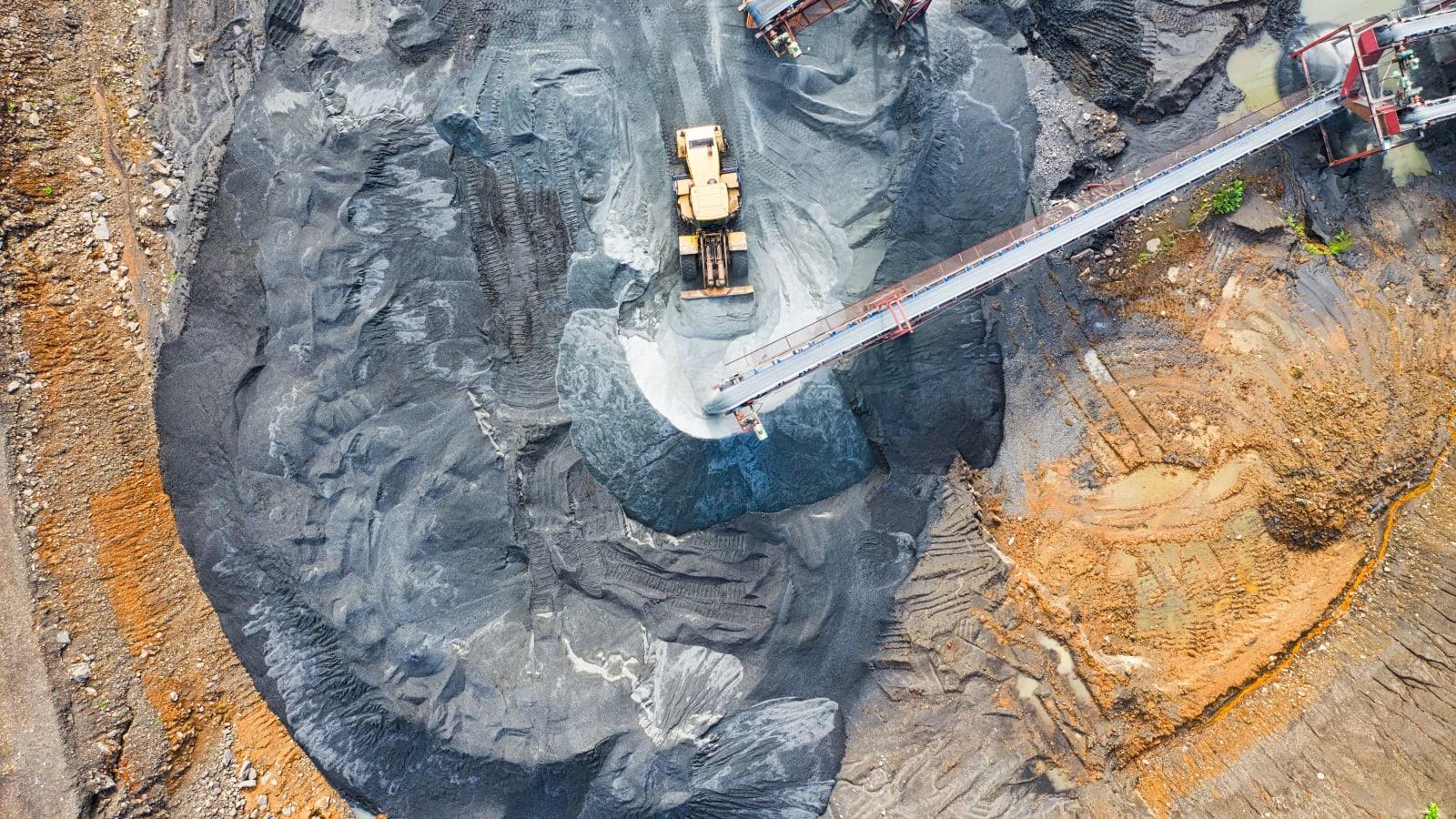
Central Sulawesi wants its minerals to leave as finished products, and its own economic accounts show why the last step matters
By Sirkularium Editorial Team, 8 min read

On 27 September 2026 Deputy Governor Reny A. Lamadjido said nickel and other minerals from Central Sulawesi should no longer leave the province half processed. The province's accounts already show the pattern behind that instruction: manufacturing makes up 44.37 percent of the regional economy, mining and quarrying 13.79 percent.
A provincial instruction about where value is made
On Sunday, 27 September 2026, the Central Sulawesi provincial government set out a clear expectation for the minerals mined within its borders. Deputy Governor Reny A. Lamadjido said in Palu that downstream processing in the province should end in finished products, and that nickel and other commodities should no longer be exported in raw or semi-processed form.
Her reasoning was about price. A tonne of material is worth one amount at the mouth of the mine and a very different amount at the gate of the factory, and the province wants as much of that difference as possible to be earned locally. She added that a downstreaming scheme working well must be seen to deliver substantially greater added value, and that Central Sulawesi remains open to investors prepared to meet every regulatory requirement.
"For nickel and the rest, we will no longer export what is half finished. It has to be fully finished." Reny A. Lamadjido, Deputy Governor of Central Sulawesi (Sirkularium translation, as reported by ANTARA).
The statement matters beyond Palu. Central Sulawesi is home to Morowali and Morowali Utara, two of the most important nickel processing districts in the world. When the province speaks about the next step in the value chain, it speaks for a large part of Indonesia's downstreaming programme.
What the regional accounts already show
The useful feature of this story is that the province does not have to argue its case in the abstract. Its own gross regional domestic product (GRDP) data, compiled by Statistics Indonesia (BPS), already describes where value is created.
In the second quarter of 2026, manufacturing accounted for 44.37 percent of Central Sulawesi's economy. Agriculture, forestry and fisheries accounted for 15.60 percent. Mining and quarrying accounted for 13.79 percent. Together these three sectors make up 73.75 percent of the provincial economy.
Read as a valuation, those shares are revealing. The ore that leaves the ground is counted under mining. Once it is smelted and refined inside the province, most of the added value appears under manufacturing instead. The manufacturing share is roughly 3.2 times the mining share, and a large part of that manufacturing activity is nickel processing. In plain terms, the province's accounts show that processing already generates more recorded value than extraction itself.
The growth record points the same way. BPS recorded year on year growth of 8.32 percent in the first quarter of 2026, driven mainly by nickel processing in Morowali and Morowali Utara, against national growth of 5.61 percent. Growth eased to 5.06 percent in the second quarter, and cumulative growth for the first half reached 6.64 percent. Bank Indonesia's Central Sulawesi office projects full year growth of 6.5 to 8.1 percent, with manufacturing, particularly nickel based industry, remaining the main engine.
The investment behind the pattern
Capital flows confirm the shape of the economy. Investment realised in Central Sulawesi during the first half of 2026 reached Rp68.70 trillion, up 6.97 percent from Rp64.22 trillion a year earlier and equal to 73.17 percent of the annual target of Rp93.89 trillion. That placed the province fourth nationally, with 6.8 percent of Indonesia's Rp1,010.6 trillion total.
Downstream processing dominated. According to Moh. Rifani Pakamundi, head of the provincial investment and one stop service agency (DPMPTSP), downstream investment totalled Rp56.1 trillion, or 81.66 percent of everything invested in the province. That was the largest downstream figure of any province, 18.7 percent of the national downstream total of Rp300.1 trillion. Foreign investment made up Rp64.73 trillion, or 94.23 percent, and domestic investment Rp3.96 trillion.
The resource base that supports all of this is also counted. The province lists 151 mining business permits (IUP) and 293 permits for non-metal minerals and rock. That gives Central Sulawesi a defined register of 444 extraction sites whose output feeds, directly or indirectly, into the manufacturing figure above.
Why the last step is a measurement question
The deputy governor's instruction is, at heart, a statement about economic valuation. "More added value" is a quantity, and it can be measured at each stage: ore at the mine mouth, intermediate products such as nickel pig iron, matte or mixed hydroxide precipitate, and finished goods such as stainless steel, battery precursors or components. Each stage has a price, an input cost and an environmental footprint.
Three points follow for policymakers.
First, the headline shares describe gross output, not net value. GRDP records what is produced in a quarter. It does not subtract the depletion of the ore body or the change in the ecosystem services that surround a mine. A province that wants to show that downstreaming delivers greater value will make the strongest case if it can also show that the natural capital drawn down to produce that value is recorded and, where possible, restored.
Second, the tools for doing this are already Indonesian. Permen LH No. 7 Tahun 2014 sets out how to value ecological damage, environmental economic loss and recovery cost. The United Nations System of Environmental Economic Accounting, which BPS has piloted, gives a framework for recording mineral and ecosystem assets alongside GRDP. Remote sensing and GIS can map land cover change across the 444 permit areas, and AMDAL documents already hold baseline data for many of them.
Third, water and energy are part of the value chain. Earlier this month, smelters at the Morowali industrial park reduced output during an El Niño dry spell because river supply fell. A processing chain that extends further toward finished products will use more water and power per tonne of ore, and those inputs belong in any honest account of added value.
Sirkularium's view
Central Sulawesi has set a constructive and well founded direction. Its own statistics already show that value grows with each processing step, and its investment record shows that capital is responding. The next opportunity is to make the measurement of that value as rigorous as the ambition behind it.
For the provincial government, that means building a value chain ledger that follows ore from the 151 IUP sites through intermediate products to finished goods, with the price, the employment and the fiscal return recorded at each stage. It also means pairing that ledger with a natural capital account that records land, forest and water condition across the same permit areas, so that the gain in added value can be presented alongside a verified record of reclamation and restoration.
For mining and processing companies, the practical step is to commission independent economic valuation of their operations as routine practice rather than in response to a dispute. Valuation that combines GIS mapping with field data and applies the Permen LH 7/2014 methodology gives a company a defensible account of both its economic contribution and its environmental obligations, in the form that the Ministry of Environment and provincial agencies can review.
What to watch next: whether the province translates the finished product instruction into specific incentives or permit conditions, how third quarter GRDP data from BPS moves the manufacturing and mining shares, and whether Bank Indonesia's flagged risks around ore quotas and sulphur supply ease. Each of these will show how quickly the value that Central Sulawesi already generates can be deepened, measured and shared.
Structure of Central Sulawesi's economy, Q2 2026
Values in percent of GRDP
Sources
- ANTARA News, Pemprov Sulteng tekankan hilirisasi tambang harus hasilkan produk jadi, 27 September 2026
- Lingkar.news, Wajib produk jadi, Pemprov Sulteng tolak ekspor tambang setengah jadi, 27 September 2026
- Harian Mercusuar, Investasi Sulteng capai Rp68,7 triliun, hilirisasi sumbang Rp56,1 triliun, 5 September 2026
- Jurnas, Semester I 2026, realisasi investasi Sulteng capai Rp68,70 triliun, 3 September 2026
- ANTARA News Sulteng, Bank Indonesia: ekonomi Sulteng masih akan tumbuh tinggi pada 2026, 12 August 2026
- Harian Mercusuar, Triwulan I 2026, ekonomi Sulteng tumbuh 8,32 persen
- detikFinance, BPS: pertumbuhan ekonomi 17 provinsi triwulan II 2026 di atas angka nasional, 5 August 2026