PT Timah's record first half puts a number on both sides of the tin ledger
By Sirkularium Editorial Team, 8 min read
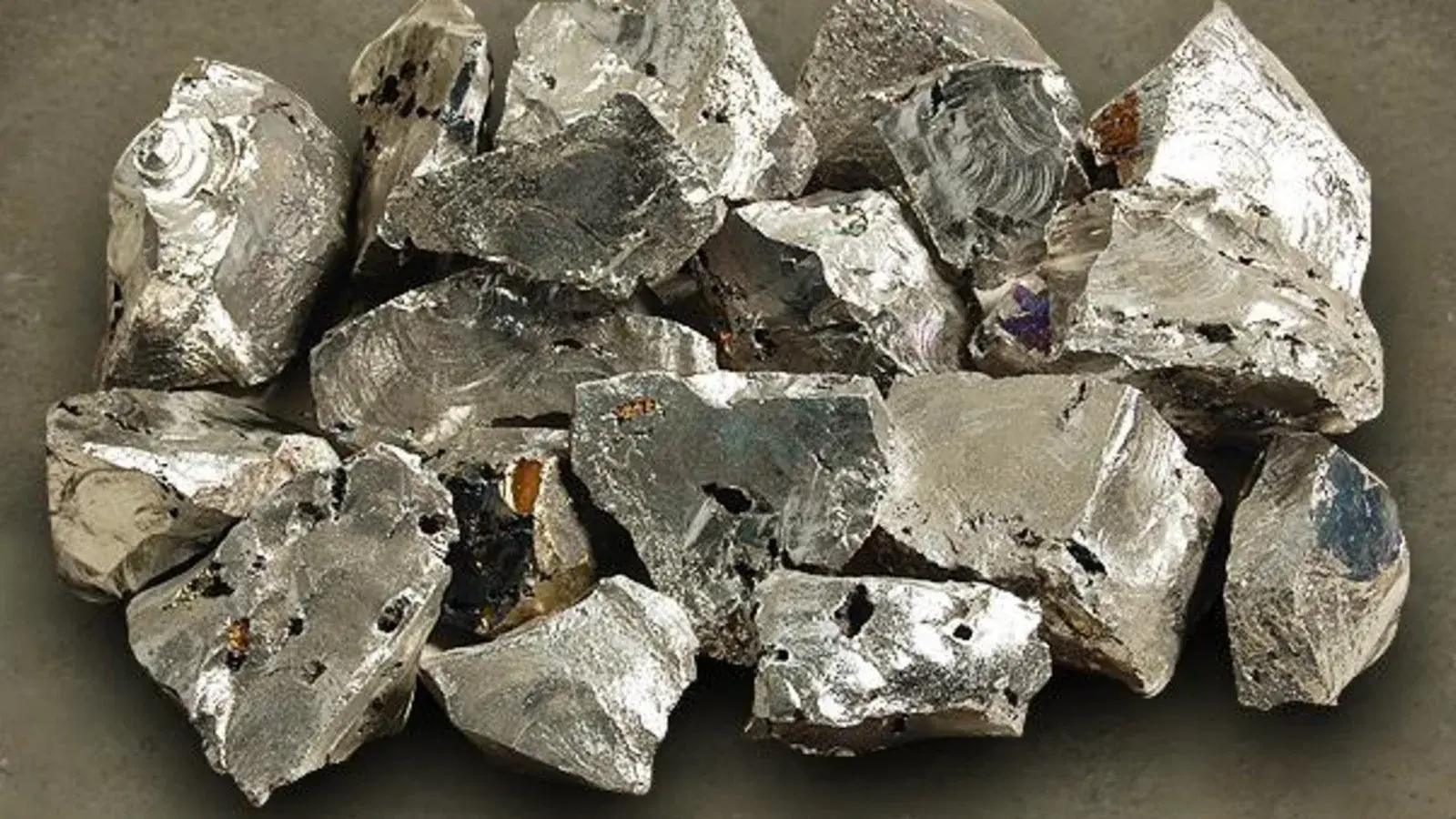
PT Timah closed the first half of 2026 with Rp10.42 trillion in revenue and Rp2.71 trillion in net profit, reaching 169 percent of its full year profit target at the halfway mark. The same six months saw 78.21 hectares of post-mining land returned to productive use, and the two figures together show what a complete economic valuation of mining activity looks like.
A first half that reset the tin ledger
PT Timah (Persero) Tbk has reported the strongest six month period in its recent history. Revenue for the first half of 2026 reached Rp10.42 trillion, against Rp4.22 trillion in the same period of 2025, an increase of 247 percent. Net profit attributable to the parent entity came in at Rp2.71 trillion, compared with Rp300.07 billion a year earlier. That profit figure is equivalent to 169 percent of the company's full year target of Rp1.61 trillion, achieved at the halfway mark.
The result matters well beyond the share register. PT Timah is the state controlled anchor of the tin economy in the Bangka Belitung Islands, a province where mining, land condition, coastal ecosystems and household income are bound tightly together. When the company's numbers move, the provincial economy moves with them. And the same reporting period in which PT Timah posted these figures also produced a second set of numbers that rarely share a headline with the first: 78.21 hectares of former mining land returned to vegetation, part of a 411.16 hectare reclamation programme registered for 2026 across six regencies.
Read together, the two disclosures describe the same asset from two directions. One measures what the orebody produced. The other measures what the land and the sea are being restored to. Indonesia's resource policy has spent several years building the instruments to hold both in view at once, and this earnings season is a useful moment to look at how far that work has come.
The numbers behind the turnaround
The recovery rests on volume and price moving in the same direction. Tin ore production reached 12,232 tons Sn in the first half of 2026, up 75 percent from 6,997 tons Sn a year earlier. Tin metal production reached 10,865 metric tons Sn, up 58 percent from 6,870 metric tons. Sales volume outpaced both, at 10,984 metric tons, an increase of 85 percent from 5,933 metric tons, indicating that inventory built in earlier periods was cleared into a firm market.
Price did the rest. The average realised price of refined tin was US$49,794 per metric ton, 52 percent above the US$32,816 recorded in the first half of 2025. The combination lifted operating profit to Rp3.48 trillion from Rp380 billion, and EBITDA to Rp3.90 trillion from Rp840 billion, a rise of 363 percent.
Margins tell the story more plainly than the absolute figures. Net profit margin moved to 26.05 percent from 7.11 percent, and operating margin to 33.24 percent from 9.01 percent. Return on assets stood at 16.50 percent and return on equity at 25.74 percent. The balance sheet strengthened alongside: total assets rose to Rp16.45 trillion from Rp13.64 trillion at the end of 2025, equity to Rp10.55 trillion from Rp8.41 trillion, while liabilities rose more modestly to Rp5.90 trillion from Rp5.23 trillion. A dividend payable of Rp657.11 billion sits within that liability balance, a direct channel from tin production to state revenue.
"The company's first half performance shows that the operational and business transformation strategy it has pursued is capable of producing quality growth."
That assessment came from Restu Widiyantoro, President Director of PT Timah. The word that carries weight in it is "quality". Volume growth of this scale in the tin sector has historically arrived with a governance question attached, and the distinguishing feature of this cycle is that the volume is coming through formal, permitted, and measurable channels.
Export composition underlines how internationally exposed the value is. Around 97 percent of refined tin sales went to export markets and 3 percent to domestic buyers, with China taking 36 percent, India 12 percent, South Korea 11 percent, Singapore 6 percent, and the Netherlands and Italy 5 percent each. Tin from Bangka Belitung is priced in a global market, which means the economic value of the resource is set largely outside Indonesia while the environmental condition of the land and seabed it comes from is managed entirely inside it.
The second ledger: land, sea, and 78.21 hectares
PT Timah reclaimed 78.21 hectares of former tin mining land in the Bangka Belitung Islands during the first half of 2026, following 354.05 hectares of terrestrial reclamation completed across 2025. The company has registered a reclamation plan of 411.16 hectares for 2026, to be carried out in six regencies and in cross regency areas.
The programme is sequenced rather than symbolic. It begins with integrated planning, including site survey and community consultation, then moves through land regrading, topsoil management, and revegetation. Species selection favours productive trees, fruit bearing plants and local varieties, which is a deliberate choice: the restored land is intended to carry economic function, not only vegetation cover.
"We plant thousands of productive trees, fruit plants and local vegetation on former mining land, which delivers economic impact for the community."
Anggi Siahaan, Department Head of Corporate Communication at PT Timah, framed reclamation as an integral part of environmental management rather than an obligation discharged at closure. The company's work extends offshore as well, through artificial reef deployment, restocking of cuttlefish and mangrove crab, and mangrove planting, reflecting the reality that tin extraction in Bangka Belitung is both a land and a marine activity.
Each of those interventions has an economic value that standard financial reporting does not capture. A hectare of revegetated post-mining land carries carbon sequestration, soil stabilisation, water regulation and eventual harvest value. An artificial reef and a restocked fishery carry direct income for coastal households. Indonesia already has a regulatory instrument for pricing exactly this class of value, in Permen LH No. 7 Tahun 2014 on environmental economic loss, ecological damage and recovery cost. It is applied most visibly in enforcement settings. It is applied far less often in the constructive direction, to quantify what a reclamation programme is actually building back.
What the earnings season signals for the sector
PT Timah's result arrives in the middle of a broad reporting period for Indonesian mining. BRI Danareksa projects second quarter 2026 revenue for the metal mining segment at around US$4.5 billion, up 12 percent quarter on quarter and 38 percent year on year. Over the month to 31 July 2026, TINS gained 14.98 percent to Rp3,760, INCO 28.03 percent to Rp5,275, ANTM 10.81 percent to Rp2,870, and PTBA 2.62 percent to Rp2,350.
Nafan Aji Gusta, Senior Market Analyst at Mirae Asset Sekuritas Indonesia, observed that issuers with better operational efficiency and stronger business diversification are positioned to attract a more positive market response, and that results exceeding expectations can support share prices in the near term.
The fiscal picture moves in step. The Ministry of Energy and Mineral Resources recorded non tax state revenue of Rp85.58 trillion as of 12 July 2026, equal to 62.84 percent of the Rp136.18 trillion annual target, as reported by Deputy Minister Yuliot Tanjung. Production levies, mineral and coal royalties, mining product sales and net profit from special mining permits make up that total. A strong commodity half year therefore reaches the state budget through several channels at once, of which corporate dividends are only one.
Sirkularium's view
The most useful thing about this reporting period is that both ledgers were published within days of each other. The financial value of tin production and the physical extent of land and marine restoration are, for once, visible in the same window. What is still missing is the step that converts the second into the same unit as the first.
For government and public institutions, three practical implications follow.
First, reclamation area is an input, not an outcome. Knowing that 78.21 hectares were revegetated in six months is valuable. Knowing what those hectares are worth in carbon, water regulation, fisheries productivity and future land use is what allows a regency government, a provincial planning agency or the Ministry of Environment to compare reclamation performance across companies and across years on a consistent basis. That requires standard methodology, GIS and remote sensing baselines, and ground verification, applied on a schedule rather than after an incident.
Second, high margin years are the right years to build the evidence base. Operating margin above 33 percent creates the fiscal space to commission rigorous, independently verified economic valuation of a company's land and coastal footprint. Doing this work while conditions are favourable produces a defensible record. Commissioning it under regulatory pressure produces a negotiation.
Third, valuation strengthens the case for the resource, not against it. A tin operation that can demonstrate, with mapped and monitored data, the ecological value it has restored alongside the Rp10.42 trillion it has generated is in a considerably stronger position with regulators, financiers and export markets that increasingly ask for both figures. Indonesia's tin already commands a global price. Its environmental stewardship record can be made equally legible.
What to watch next: whether the 411.16 hectare 2026 reclamation plan is met on schedule, whether provincial and regency authorities in Bangka Belitung begin publishing reclamation outcomes in valued rather than purely spatial terms, and whether the reclamation guarantee framework evolves from a compliance deposit into a working measure of restored natural capital. Sirkularium's position is that this measurement work belongs in ordinary practice, integrated into annual reporting cycles, so that the value of Indonesia's resources and the value of the landscapes that hold them are read from the same page.
PT Timah post-mining land reclamation
Values in hectares
Sources
- ANTARA News, PT Timah lampaui target laba bersih dengan capaian Rp2,71 triliun
- Liputan6, Laba Bersih PT Timah Tembus Rp 2,71 Triliun
- Bloomberg Technoz, TINS Peroleh Laba Rp2,71 T pada Semester I-2026
- ANTARA News, Analis: Kinerja keuangan tentukan arah pergerakan saham pertambangan
- ANTARA News, PT Timah hijaukan 78,21 hektare lahan bekas tambang timah
- Kepri Headline, PT Timah Reklamasi 354 Hektar Lahan Bekas Tambang, Target 411 Hektar pada 2026
- CNBC Indonesia, Realisasi PNBP Sektor ESDM Tembus Rp85,58 Triliun Sampai Juli 2026