Government sets a timetable to return Sarulla to 330 megawatts and open up a 1,100 megawatt geothermal field
By Sirkularium Editorial Team, 8 min read

The Ministry of Energy and Mineral Resources has set an October 2026 administrative deadline and a 2027 to 2028 works window to bring the Sarulla geothermal plant in North Sumatra back to its 330 megawatt installed capacity, in a field whose resource potential is estimated at 1,100 megawatts.
Indonesia has spent much of the past two years adding new renewable capacity. The decision announced this weekend points in a slightly different direction, and it may prove just as valuable. Rather than breaking ground on something new, the government is moving to recover capacity that already exists.
A working field returns to its design capacity
The Ministry of Energy and Mineral Resources has set out a schedule to bring the Sarulla geothermal power plant back to its full installed capacity of 330 megawatts. Deputy Minister of Energy and Mineral Resources Yuliot set out the plan following a visit to the site at the end of July, and it was reported across national outlets on 1 and 2 August.
The sequence is deliberately simple. Administrative matters, meaning permits, contractual arrangements and the investment framework, are to be settled by October 2026. Physical work to lift output follows across 2027 and 2028. Yuliot framed the second stage plainly, saying that after the administration is complete the government will pursue capacity production increases in 2027 and 2028.
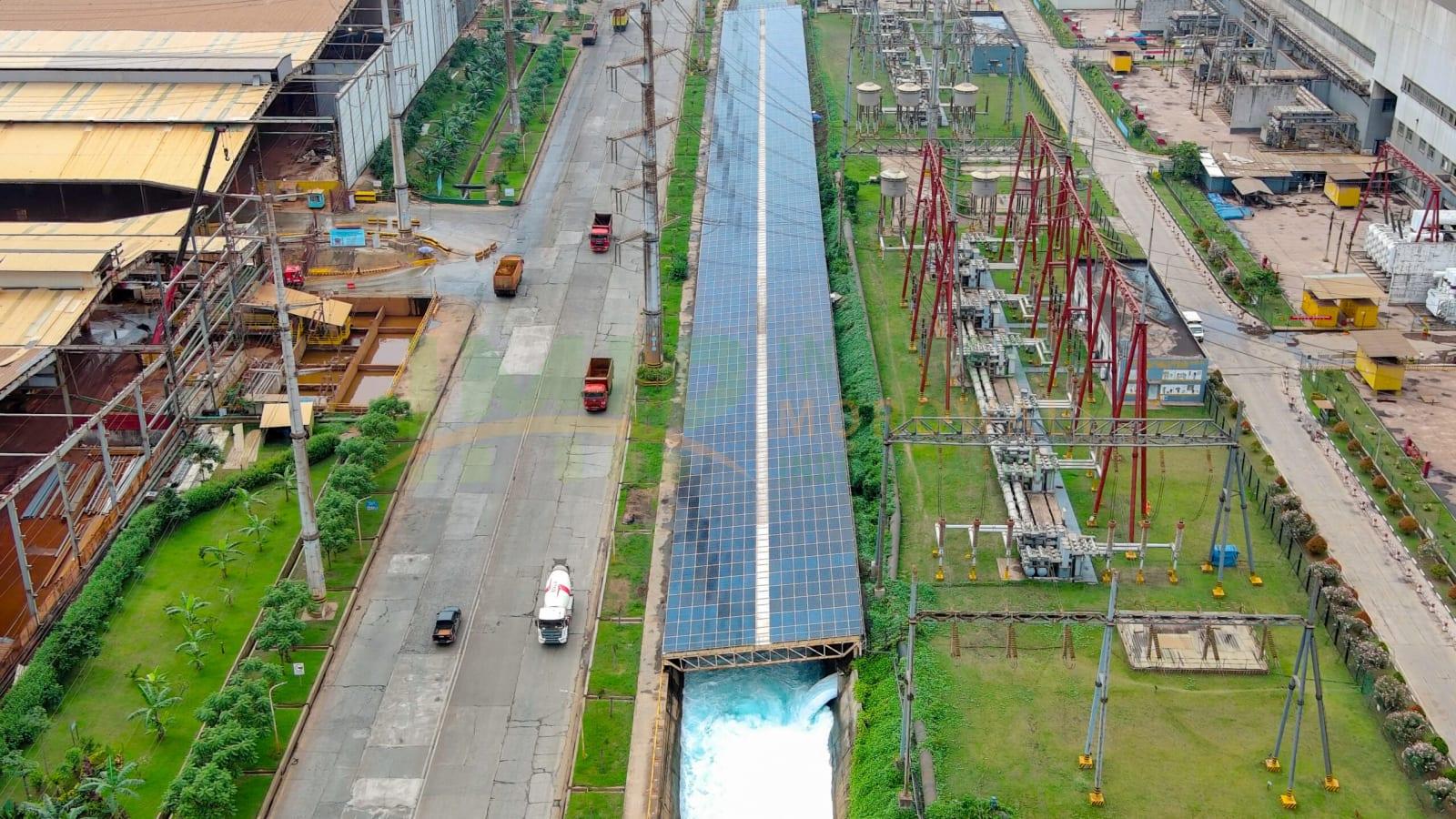
Sarulla sits in the Pahae Julu and Pahae Jae subdistricts of North Tapanuli Regency, North Sumatra, and is operated by the Sarulla Operations Ltd consortium. It is built as three units of 110 megawatts each. The Silangkitang unit entered commercial operation in March 2017, Namora I Langit 1 followed in October 2017, and Namora I Langit 2 in May 2018. For a period it ranked among the largest single geothermal complexes anywhere in the world.
Today the plant produces around 220 megawatts against that 330 megawatt design figure. The gap is not a construction defect. It reflects changes in steam pressure across the reservoir, which reporting on the announcement identified as the central technical challenge at the site. Geothermal fields are living systems. Pressure, temperature and flow shift as wells are drawn down, and sustaining output requires continuing investment in make up wells, reinjection strategy and surface equipment.
The numbers behind the decision
The government has indicated that roughly USD 270 million in new investment is needed to bring the plant back to 330 megawatts. Several outlets converted this to approximately Rp4.8 trillion, while Bisnis Indonesia reported the figure as Rp4.86 trillion. One report from Dunia Energi carried a direct quotation citing USD 160 million rather than USD 270 million, so the precise capital requirement should be treated as provisional until contractual documents are settled. What is consistent across every account is the destination: 330 megawatts restored, and a field assessed at around 1,100 megawatts of resource potential.
That last number is the one worth holding onto. Restoring 110 megawatts of lost output is useful. Establishing the technical and commercial basis to develop a further 770 megawatts in the same proven field is a different order of opportunity.
A field already drilled, already connected and already permitted is the least expensive megawatt in the national portfolio. Recovering it is faster than building it, and the grid connection is already there.
Why recovered capacity is worth more than its size suggests
A megawatt recovered at Sarulla is not equivalent to a megawatt added anywhere else. Three features make it unusually valuable.
The first is that the transmission connection already exists. Much of the delay in Indonesian renewable projects sits in grid interconnection rather than generation. Sarulla is already integrated into the North Sumatra system.
The second is that geothermal runs continuously. Solar and wind capacity is growing quickly and should continue to, but geothermal supplies firm output around the clock at high capacity factors. For a system operator balancing a rising share of variable generation, firm renewable capacity is the resource that makes the rest of the portfolio work.
The third is that the resource is domestic and price stable. Geothermal output is not exposed to imported fuel prices or exchange rate movements in the way that thermal generation is. For North Sumatra, where industry, agro processing and a growing services economy all draw on the same grid, that stability has direct economic value.
Geothermal is also delivering commercially
The Sarulla decision arrives in the same week that Indonesia's largest geothermal developer reported a strong first half. PT Pertamina Geothermal Energy Tbk recorded revenue of USD 235.027 million in the first half of 2026, equivalent to about Rp4.24 trillion, up 14.7 percent from USD 204.850 million a year earlier. Net profit attributable to owners of the parent reached USD 79.605 million, or roughly Rp1.44 trillion, an increase of 15.48 percent from USD 68.932 million.
Production explains most of that. PGEO generated 2,745 gigawatt hours in the first half of 2026, up 13.62 percent from 2,416 gigawatt hours in the same period of 2025. Gross profit rose to USD 130.440 million from USD 120.651 million, and operating profit to USD 114.558 million from USD 109.703 million. A foreign exchange gain of USD 5.050 million, against a loss of USD 13.441 million a year earlier, added to the reported result.
Chief Financial Officer Fransetya Hasudungan Hutabarat attributed the improvement to consistent execution and to plant reliability rather than to one off factors. The company currently operates 727 megawatts across 15 geothermal working areas, manages a large share of national geothermal activity, and targets 1 gigawatt of installed capacity by 2028 and 1.8 gigawatts by 2033. PLN's electricity supply plan for 2025 to 2034 sets a national geothermal figure of 5.2 gigawatts.
Read together, the two developments tell a coherent story. Geothermal in Indonesia is generating reliable revenue, reliability is improving, and the government is now directing attention to the capacity that has quietly slipped away from existing fields.
What this means for industry
Firm renewable power is the precondition for most credible industrial decarbonization pathways. Manufacturers pursuing efficiency gains, electrification of process heat and verified low carbon supply chains need clean electricity that is available at three in the morning as reliably as at midday. Rooftop solar and energy management systems reduce consumption, and they should remain the first move because they are cheap and quick. Beyond that, the emissions intensity of what a factory still draws from the grid is set by the generation mix.
North Sumatra hosts significant palm oil processing, pulp and paper, rubber and food manufacturing. Each of these sectors faces tightening buyer requirements on embodied emissions. A regional grid with a larger firm renewable component gives those industries a straightforward answer, without every individual site needing to build its own generation.
Sirkularium's view
For government and public institutions, three points follow.
On policy, the Sarulla case argues for treating capacity recovery at existing fields as a distinct programme line with its own targets, separate from new build. National reporting tends to measure progress in new megawatts commissioned. Megawatts recovered deliver the same energy at lower cost and shorter lead time, and they currently receive far less institutional attention.
On financing, the October 2026 administrative deadline is the load bearing element of this plan. Geothermal investment is sensitive to permitting certainty and to the clarity of the offtake arrangement. Meeting that date, and publishing the final capital figure once agreed, would resolve the discrepancy between the USD 160 million and USD 270 million figures now in circulation and give the market a clear reference point.
On implementation, reservoir management deserves the same standing as construction. Steam pressure decline is a manageable engineering condition, not a failure, provided make up drilling and reinjection are planned and funded on a continuous basis rather than addressed once performance has already fallen. Building that discipline into every geothermal concession agreement would prevent other fields from arriving where Sarulla is now.
The most efficient energy transition is one that keeps what has already been built running at full capability, then adds to it.
What to watch next: whether the administrative package genuinely closes in October 2026, whether the final investment figure is confirmed at the higher or lower end of the reported range, and whether the 770 megawatts of undeveloped Sarulla potential is brought into the next round of national planning rather than left as a note in a resource assessment.
Sarulla, from current output to full field potential
Values in MW
Sources
- ANTARA News, government accelerates Sarulla recovery to optimise 1,100 MW
- RRI, government accelerates Sarulla recovery with a 330 MW capacity target
- Koran Jakarta, 1,100 MW of Sarulla potential and the government development push
- Dunia Energi, Sarulla targeted to return to 330 MW from 2027 at the earliest
- Bisnis Indonesia, ESDM prepares Rp4.86 trillion to restore Sarulla capacity
- Kompas, Pertamina Geothermal revenue reaches Rp4.24 trillion
- ANTARA News, Pertamina Geothermal books USD 79.61 million in the second quarter of 2026
- Fortune Indonesia, PGEO revenue up 14.7 percent in the first half of 2026