Two thirds of one industrial operator's clean energy gain came from efficiency, not new generation
By Sirkularium Editorial Team, 8 min read

Harita Nickel reported first half 2026 revenue of Rp17.1 trillion alongside a 50 megawatt waste heat recovery plant targeted for the fourth quarter and a 40 megawatt peak solar plant at 99 percent construction progress, in a portfolio where energy efficiency has delivered roughly two thirds of the clean energy contribution.
Most industrial decarbonization coverage counts new generating capacity. A set of disclosures from the Obi Island industrial zone in South Halmahera, North Maluku, points at something less visible and, on the evidence, larger. The energy a plant stops wasting can outweigh the energy it newly generates.
Heat that used to leave the site
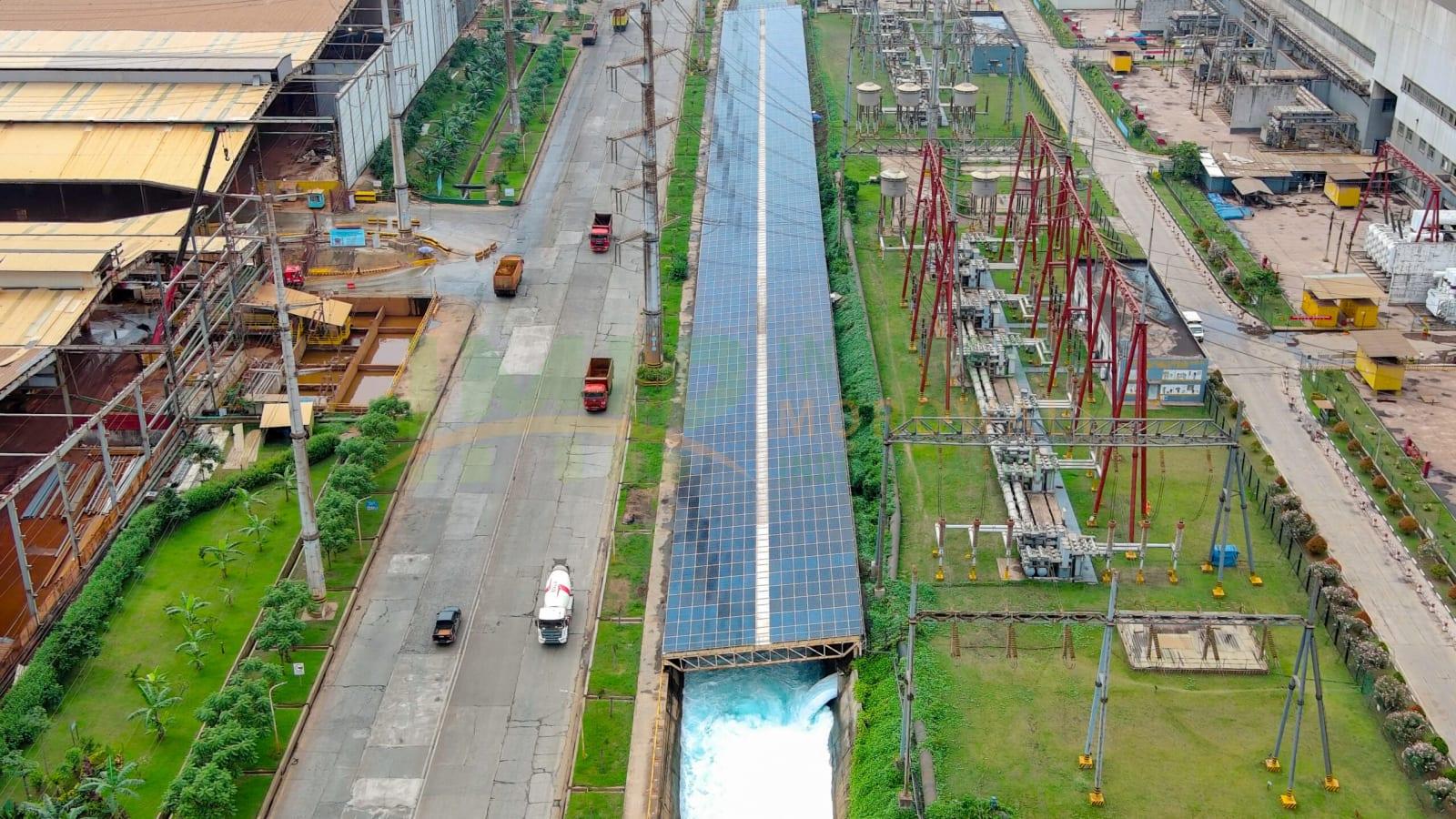
Harita Nickel is building a power plant that runs on waste heat. The unit captures residual heat and steam from the High Pressure Acid Leach process operated by PT Halmahera Persada Lygend and converts it into electricity, with a design capacity of up to 50 megawatts. Completion is targeted for the fourth quarter of 2026.
The company disclosed the timeline alongside its first half 2026 results, reported on 1 August, which showed revenue of Rp17.1 trillion. Chief Financial Officer Suparsin Darmo Liwan attributed the top line to production capacity optimisation feeding sales across several business segments, including an additional pyrometallurgical line at PT Karunia Permai Sentosa and the new PT Gane Tambang Sentosa mining area that began operating in the third quarter of 2025.
Running in parallel is a 40 megawatt peak solar plant, which reporting at the end of July placed at 99 percent construction progress. A third element sits behind both: an energy management system built to the ISO 50001 standard, which sets out how a site measures consumption, sets baselines and holds improvements in place once achieved.
The efficiency ledger behind the headline capacity
The proportions are the interesting part. Company disclosures reported earlier this year put total energy delivered through efficiency measures and renewable sources at 20,992,004 gigajoules. Of that, 33 percent came from renewable energy and 67 percent came from energy efficiency. Total emissions avoided across the same disclosure reached 1,610,582 tonnes of carbon dioxide equivalent, and waste heat recovery alone accounted for roughly 73 percent of the avoided emissions recorded for 2023.
Two thirds of the clean energy contribution came from not wasting energy in the first place. The generating assets, visible and photogenic as they are, delivered the smaller share.
The trend has continued. In the first quarter of 2026 the company recorded 977,278 tonnes of carbon dioxide equivalent in avoided emissions, an increase of 37 percent on the same quarter of 2025. Head of Investor Relations Lukito Gozali linked the improvement to waste heat recovery, the use of biodiesel and the application of coal gasification technology. Director of Health, Safety and Environment Tonny Gultom has noted that biodiesel content used for power generation and operations was raised from 30 percent to 35 percent, and put the capital cost of solar at roughly USD 1 million to USD 1.5 million per megawatt peak. The company works to a net zero target of 2060, consistent with the national timeline.
Why efficiency comes before generation
Sirkularium has argued consistently that efficiency is the first and cheapest step in industrial decarbonization, and the ordering matters for practical reasons rather than ideological ones.
Efficiency reduces the size of the problem before capital is committed to solving it. Every megawatt hour a process no longer needs is a megawatt hour of generating capacity that never has to be built, financed, connected or maintained. Sizing a solar array or a power purchase agreement against an unimproved load means paying for waste at clean energy prices.
Efficiency also pays back faster. Heat recovery, variable speed drives on motors and pumps, improved chiller and cooling tower performance, better compressed air management and automated controls typically return their cost in months to a few years. That payback comes from the operating budget rather than a strategic capital allocation, which matters for firms whose investment committees are cautious.
And efficiency compounds. A site with a functioning energy management system knows where its energy goes, which makes every later decision better informed. Without that measurement layer, renewable procurement is a guess dressed up as a strategy.
The economics behind the timing
Two conditions make this a sensible moment for Indonesian industry to act on the same logic.
The first is process heat. A large share of industrial energy demand is thermal rather than electrical, and thermal demand is where recovery opportunities concentrate. Cement kilns, smelters, refineries, pulp and paper mills, and food and beverage processing all reject substantial heat at temperatures still useful for power generation, preheating or drying. That heat is already paid for.
The second is regulatory. Government Regulation 33 of 2023 and the earlier energy conservation framework require large energy users to run a structured energy management system, appoint an energy manager, conduct periodic energy audits and act on the findings. Facilities consuming above the threshold are already inside this obligation. Treating it as a compliance exercise produces filed reports. Treating it as an operating discipline produces the kind of numbers described above.
What transfers to the rest of Indonesian industry
The Obi case is a large integrated site with unusual heat availability, and not every factory has 50 megawatts of recoverable heat sitting in its process streams. The transferable elements are the sequence and the measurement, not the scale.
The sequence is measure, recover, then generate. Install the energy management system first so the baseline is real. Recover the heat and eliminate the losses next, because that shrinks the load. Add renewable generation last, sized against the improved load rather than the original one.
The measurement is what makes the claim credible. Figures such as 20,992,004 gigajoules and 977,278 tonnes of carbon dioxide equivalent are only meaningful where the metering, sub metering and verification behind them are sound. For buyers applying supply chain emissions requirements, and for banks pricing sustainability linked facilities, the verification layer is increasingly the asset.
Sirkularium's view
For government and public institutions, three observations follow.
On policy, national industrial decarbonization reporting would benefit from separating efficiency gains from renewable generation gains. At present both tend to be aggregated into a single emissions reduction figure. Splitting them would show where the cheapest abatement actually sits and would let programme budgets follow the evidence. The 67 to 33 split disclosed here is the kind of number that should be routinely visible across sectors, not assembled case by case.
On financing, waste heat recovery projects have a distinctive profile. They are capital intensive, technically well understood, and produce a predictable stream of avoided energy purchases. That profile suits concessional or blended instruments, and it suits the energy service company model, where a third party finances the works and is repaid from verified savings. Indonesia's energy service company market remains small relative to the opportunity, and support for its development would extend the reach of every rupiah of public climate finance.
On implementation, the ISO 50001 requirement is where policy meets practice. Certification alone changes little. What changes outcomes is whether the appointed energy manager has budget authority, whether audit recommendations carry an implementation deadline, and whether savings are verified rather than estimated. Strengthening those three elements would raise realised savings across the existing regulated population without new regulation.
The most straightforward industrial decarbonization plan begins with an accurate measurement of where energy is currently lost.
What to watch next: whether the 50 megawatt waste heat recovery unit is commissioned within the fourth quarter 2026 window, whether the 40 megawatt peak solar plant completes on schedule, and whether comparable heat recovery projects begin to appear in the cement, steel and chemicals subsectors, where the technical case is similar and the aggregate opportunity is considerably larger.
Sources
- ANTARA News, Harita Nickel books Rp17.1 trillion in revenue in the first half of 2026
- RuangEnergi, Harita Nickel first half revenue and clean energy project progress
- Republika ESG Now, clean energy use raised and emissions avoidance up 37 percent
- Detik Finance, the green strategy behind emissions reduction and energy competitiveness
- SWA, operational efficiency strengthened amid pressure in the nickel industry
- Indonesian Mining Association, green strategy to cut emissions and maintain energy competitiveness