Indonesia will revise the RUPTL so the 100 gigawatt peak solar programme has a legal home
By Sirkularium Editorial Team, 9 min read

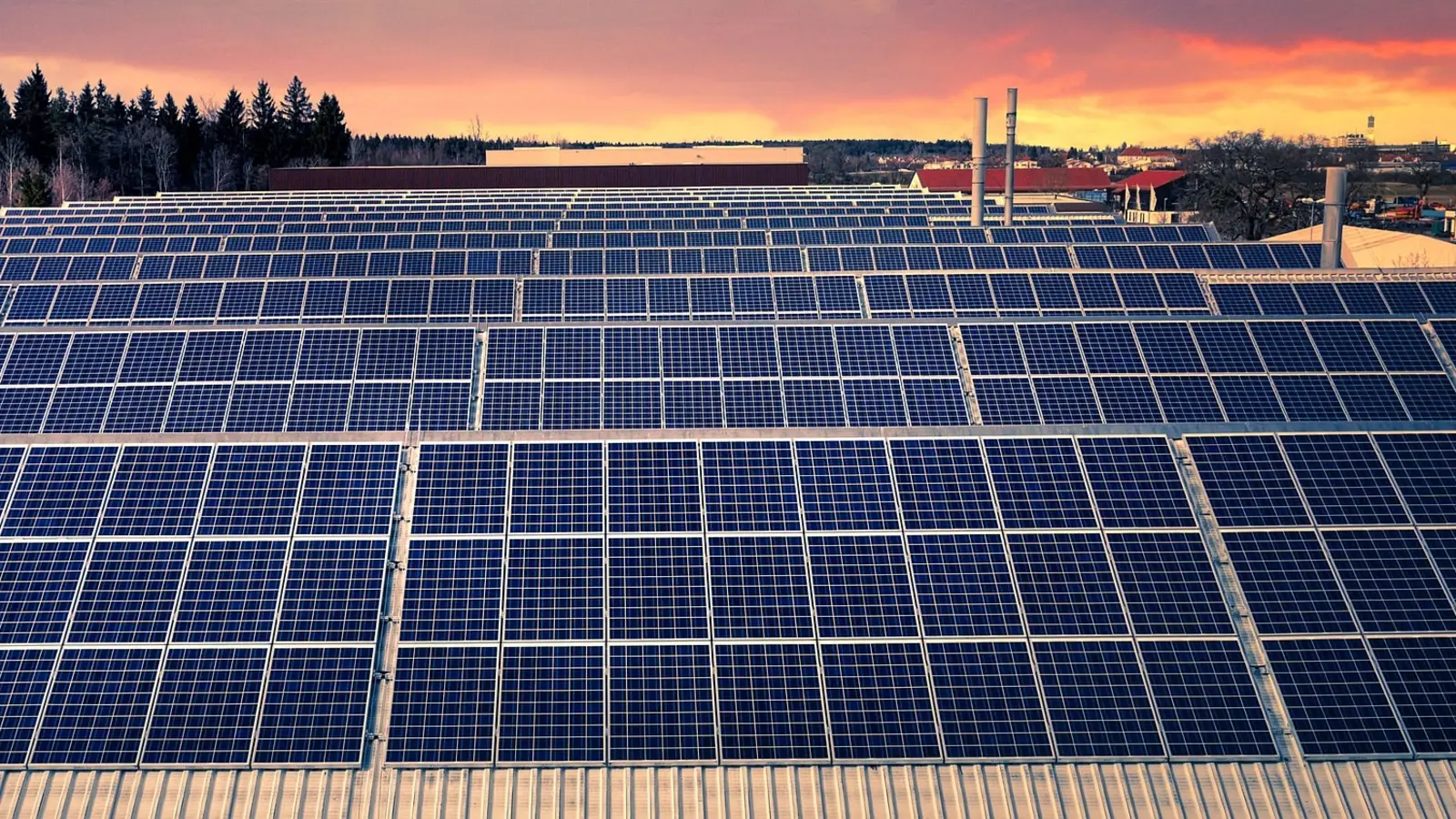
Opening Electricity Connect 2026 in Tangerang on 22 September 2026, Minister Bahlil Lahadalia said the national electricity supply plan will be adjusted to carry the 100 GWp solar programme. The revision matters because it moves a presidential target into the document that utilities, lenders, and manufacturers actually plan against.
Indonesia's 100 gigawatt peak solar programme has been visible on the ground for some time. Sites have been named, corridors have been mapped, and a first phase has been launched. What it has not had is a formal place in the document that utilities, lenders, equipment makers, and provincial planners actually build their schedules around. That gap is now being closed.
Opening Enlit Asia and MKI Electricity Connect 2026 at the Indonesia Convention Exhibition in BSD City, Tangerang, on 22 September 2026, Minister of Energy and Mineral Resources Bahlil Lahadalia said the government will revise the Electricity Supply Business Plan, the RUPTL, so the 100 GWp solar programme carries a regulatory basis. His reasoning was practical rather than ceremonial. A programme of that size cannot move through procurement, financing, and grid connection queues on the strength of a target alone. It needs to sit inside the plan that PT PLN (Persero) and its counterparties are legally working to.
What the minister announced
The announcement came at the start of a three day event running from 22 to 24 September 2026 under the theme "Powering Regional Sovereignty, Securing Energy Systems Resilience". The gathering drew more than 11,000 energy professionals, 280 international exhibitors, and over 300 speakers, according to organiser figures reported by Industry.co.id. Also on stage were PT PLN (Persero) President Director Darmawan Prasodjo, who serves as an adviser to the Indonesian Electricity Society (Masyarakat Ketenagalistrikan Indonesia, or MKI), PLN Director of Distribution Arsyadany Ghana Akmalaputri, and Enlit Asia portfolio director Simon Hoare of Clarion Events.
Bahlil framed the revision as the mechanism that turns commitment into schedule.
"Indonesia tak akan bergeming dan tetap konsisten untuk memenuhi target net zero emission kita di 2050 sampai tahun 2060. Caranya bukan hanya tema, langsung dibuat program konkret."
Translated, the minister said Indonesia will not waver and will stay consistent in meeting its net zero emissions target between 2050 and 2060, and that the method is not a theme but a concrete programme. He added, as reported by IDN Times, that adjustments to the RUPTL are certain because the programme cannot run without a legal basis.
The investment figure attached to the 100 GWp solar programme is estimated at US$70 billion to US$73 billion. President Prabowo Subianto has asked for the solar build to be completed in three years, a timeline Sirkularium has noted before as unusually compressed for infrastructure of this scale.
The numbers inside the existing plan
The revision lands on a plan that already carries substantial ambition. RUPTL 2025 to 2034 sets out 69.5 GW of generation capacity addition, with roughly 70 percent of it renewable. Periskop reports the technology breakdown as 17.1 GW of solar, 16.6 GW of fossil generation, 11.7 GW of hydro, 10.3 GW of battery storage, 7.2 GW of wind, 5.2 GW of geothermal, 0.9 GW of bioenergy, and 0.5 GW of nuclear. Those components sum precisely to the headline 69.5 GW, which is a useful sign that the plan is internally consistent rather than assembled from rounded slices.
Alongside generation, the plan carries 47,758 kilometres of transmission circuit, described in several reports as close to 48,000 circuit kilometres, and around 108,000 MVA of substation capacity. Periskop puts total investment need for the RUPTL at Rp2,967.4 trillion, with about 73 percent, or roughly Rp1,566.1 trillion, expected from independent power producers and other private parties. Readers should note a discrepancy across outlets here. ANTARA and Fortune Indonesia both report the RUPTL investment requirement as Rp2.6 trillion to Rp2.7 quadrillion in shorthand form, which does not reconcile cleanly with the Rp2,967.4 trillion figure. The capacity and transmission numbers are consistent across sources; the aggregate rupiah figure is not, and is worth confirming against the published document rather than press reporting.
Fortune Indonesia adds two further design numbers that explain why the 100 GWp programme is not simply the existing solar line item scaled up. Delivering it implies roughly 54 GWp of additional solar capacity beyond current planning and about 160 GWh of battery storage. Storage at that scale is the quiet half of the announcement. Solar without storage produces energy; solar with storage produces dispatchable capacity, which is what an industrial load or an evening peak actually requires.
Where industry and decarbonisation enter
The conference programme itself signals where the policy conversation is moving. Alongside grid modernisation, clean and thermal generation, and digitalisation and artificial intelligence, one of the four main tracks is Powering Industries and Decarbonisation. Specialist forums were convened on nickel power, nuclear, clean energy investment, and, new for 2026, data centre power.
That framing matters for Indonesia's manufacturing base. A solar and storage build of this size is, from the perspective of an industrial facility, a supply of firm low carbon electricity that can be contracted rather than a set of panels on a distant field. It is also a demand signal for domestic manufacturing. Bahlil was direct about sequencing on that point.
"Kami akan memprioritaskan bahan-bahan produksi dari dalam negeri. Sudah barang tentu kalau dalam negeri tidak cukup, kami akan membuka peluang untuk melakukan impor."
The minister said domestic production inputs will be prioritised, and that imports will be opened only where domestic supply is insufficient. Periskop reports the RUPTL is projected to open more than 836,000 job opportunities across manufacturing, construction, installation, operation, and maintenance. Local content policy applied to a programme of this duration is one of the few instruments capable of building a module, inverter, and cell supply chain that outlasts a single procurement round.
On regional integration, Bahlil confirmed Indonesia has not yet signed the ASEAN Power Grid commitment from the 48th ASEAN Summit in Cebu, with price negotiations continuing. He described the current terms as not yet balanced, noting that gains should be fair rather than weighted heavily to one side, and framed collaboration as mutual need and mutual benefit. Talks involve Malaysia and the BIMP-EAGA grouping, with the World Bank and the Asian Development Bank engaged on financing. Signing will follow once terms are equitable.
What this means for government and public institutions
Sirkularium's reading is that the RUPTL revision is the most consequential part of this week's announcements, and the least visually dramatic. Targets attract attention. Planning documents attract capital. Moving 100 GWp into the RUPTL changes what a lender can underwrite, what a grid connection study must account for, and what a provincial energy office can legitimately plan around.
Three practical implications follow for public institutions. First, the 160 GWh storage requirement means procurement design for storage deserves the same policy attention as generation tenders, because storage economics determine whether the solar build delivers usable capacity or surplus midday energy. Second, the 47,758 kilometre transmission programme is the binding constraint in most scenarios, and permitting and land acquisition timelines at provincial level will shape delivery more than module availability will. Third, the local content commitment is only as strong as the visibility manufacturers receive, so publishing a phased volume schedule alongside the revised RUPTL would materially improve investment decisions in domestic supply.
For industrial decarbonisation specifically, the opportunity is to connect this supply build to demand side action. Energy efficiency remains the cheapest unit of decarbonisation available to Indonesian industry, and a facility that reduces its load before contracting renewable supply needs less capacity, less storage, and less grid reinforcement. Pairing the revised RUPTL with the energy conservation obligations already in force would let the same 100 GWp serve more industrial output.
What to watch next: the publication timeline for the revised RUPTL, the phased volume schedule for domestic component sourcing, the storage procurement mechanism, and the outcome of the ASEAN Power Grid pricing negotiations. Each will say more about delivery than the headline capacity number does.
RUPTL 2025 to 2034 capacity addition by technology
Values in GW
Sources
- ANTARA News, Pemerintah dorong investasi kelistrikan 100 GW dan penguatan EBT
- ANTARA News English, Indonesia pushes 100 GW power investment to support net-zero goal
- Investor Trust, PLTS 100 GWp Masuk RUPTL, Investasi Energi Surya Tembus US$ 73 Miliar
- Periskop, Pemerintah Bidik Tambahan Listrik 100 GW, Butuh Investasi hingga US$73 Miliar
- IDN Times Banten, Buka Electricity Connect 2026, Bahlil Siapkan Revisi RUPTL
- Industry.co.id, Enlit Asia & Electricity Connect 2026 Resmi Dibuka, Bidik Kedaulatan Energi Regional
- Fortune Indonesia, Bahlil Revisi RUPTL untuk Program PLTS 100 GW
- Dunia Energi, Pemerintah Siap Dukung Investasi Tambahan Listrik hingga 100 GW
- ANTARA News, Indonesia masih negosiasi harga listrik untuk ASEAN Power Grid